Making Unadoptable Unacceptable

CCAI is founded upon the ideal that every child in the world both needs and deserves a safe, loving and permanent family. And we exist to identify the legal and policy barriers that prevent children from realizing this basic right. As we continue to celebrate National Foster Care month, it is important to remember that foster care is not meant to be a permanent solution for children. Children need families and yet of the 101,666 children available for adoption out of foster care in FY 2012, only 52,039 were adopted. Even more concerning, children age nine or older, while accounting for 48 percent of the total number of children in foster care, accounted for only 25 percent (13,184) of these adoptions (U.S. Department of Health and Human Services, 2013).

We are not the only ones who believe that there is no such thing as an unadoptable child.  Our friends and partners at the Dave Thomas Foundation for Adoption not only advance this message every day, they practice what they preach.  In celebration of National Foster Care Month, CCAI is excited to share the perspective of a social worker who has successfully recruited adoptive families for those children the foster care system said could not be adopted.  In his five years as a Wendy’s Wonderful Kids Recruiter in Wyoming, Bryan Cook has been instrumental in helping many kids find permanent homes.  Below he speaks of the tools he has on hand, as well as some of the challenges he faces in his daily work to connect children and youth with a loving forever family. 
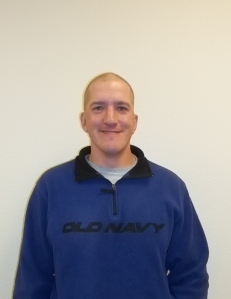
Bryan

Wendy’s Wonderful Kids (WWK) is a signature program of the Dave Thomas Foundation for Adoption. This program focuses on finding forever families for older youth in foster care. Our mantra is that every child/youth deserves a forever family, and our core belief is “unadoptable is unacceptable.” The Dave Thomas Foundation for Adoption was started in 1992 by the founder of Wendy’s Restaurants, Dave Thomas, and WWK began in 2004.

Many barriers exist in the search for adoptive families—Wyoming is the ninth largest state geographically but has the lowest population of any state, with roughly 500,000 residents. Because of our small population, there are fewer potential adoptive families, and our communities are spread out and rural. Many of the smaller communities in our state may not have the therapeutic, medical or educational services that youth on our caseloads will need when transitioning into their adoptive families.

Wyoming has a lack of pre- and post-adoptive support services for families. This lack of support often reduces the rate of permanency for youth from foster care. I’ve needed to become knowledgeable about all of the services provided in a given city, and researched many online support resources to provide this information to families.

I must be very creative in my search for families. I often partner with foster care coordinators and private adoption agencies to locate prospective families. I also use newspaper, radio, television and even social media to raise public awareness of the need for adoptive and foster families. I do a lot of file mining to locate birth family members for the youth as well as other connections. I then build a genogram for the youth and reach out to the identified family members. Building a genogram and family tree also helps the youth gain a sense of belonging and self. I contact large employers throughout our state to speak with their employees about adoption, and reach out to churches and religious organizations to educate them about the need.

WWK’s child-focused recruitment technique stresses the importance of face-to-face meetings with the youth as often as possible to build a strong relationship. It also helps recruiters better understand the needs of the children and identify the best possible family. This practice produces strong results and makes the youth feel as though they are part of the recruitment process and that their voices are heard. It’s especially important for the older youth on the case load because they typically have a history of multiple placements and abandonment. They long to feel as though they belong and to have lasting relationships.

Late last year I was able to attend the high school graduation for a young man on my caseload. It was a 600-mile round trip in wintry conditions, but I made it. I had promised him I would make it. His caseworker and family members did not attend the ceremony, so he was very glad to see me. By having a strong relationship with him I was able to be there on the proudest day of his life. We were able to take some pictures together, and we even ate the cake that he had made for the occasion. It made me very happy to do it, and I realized that even the smallest of gestures make a world of difference. Moments like this strengthen my resolve and remind me how important our job is.

I am proud to be a youth advocate, mentor and adoption recruiter for youth growing up in foster care. It truly is an honor.

Bryan Cook
Wendy’s Wonderful Kids recruiter
Wyoming
 

Thank You Mom: How Kevin Durant’s speech to his own mother spoke volumes to me.

“Thank You Mom: How Kevin Durant’s speech to his own mother spoke volumes to me.”

This past Tuesday, Kevin Durant received 119 of 125 first place votes and was named MVP for the NBA 2014 season. With tears in his eyes he described all he and his mother had overcome in life. In that moment, this is what he said about his mother, Wanda Pratt: “When something good happens to you, I don’t know about you guys, but I tend to look back to what brought me here…We weren’t supposed to be here. You made us believe. You kept us off the street, put clothes on our backs, food on our table. When you did not eat, you made sure we ate. You went to sleep hungry. You sacrificed for us. You’re the real MVP.”

And a little over a month ago, Actor Jared Leto said the following while accepting his Oscar: “In 1971, in Bossier City Louisiana, there was a teenage girl who was pregnant with her second child. She was a high school dropout and a single mom, but somehow she managed to make a better life for herself and her children. She encouraged here kids to be creative and work hard and do something special. That girl was my mother and she’s here tonight. I just want to say ‘I love you mom, thank you for teaching me to dream.” Fellow Oscar winner Matthew McConaughey also talked about the incredible impact his parents had on him as both a person and as an actor that evening. He said, “Dad, you taught me to be a man and Mama, you taught me and my little brothers to respect ourselves and in turn we learned to respect others.”

Like many of you, one of the highlights of this past winter for me was watching the Sochi Winter Olympics with my children. Appearing throughout the games broadcast on television was a commercial sponsored by Proctor and Gamble, the self proclaimed “Proud Sponsor of Moms.” This particular ad featured the lifetime of falls experienced by a budding figure skater, skier and hockey player, and the equal number of times the athletes’ mothers were there to help them get back on their feet. I was so moved by this ad that I dashed to my computer to learn more about the campaign. I quickly discovered that there were several ads, all designed to serve as a reminder that behind every great athlete there is a mother who drove them to the 5:30 am practices, paid for their first lessons and cheered them on in both victory and defeat.

These ads and speeches invoke a tear in the eye of many who see them because they feature a basic premise that we all know in our hearts of hearts to be true – a loving, supportive parent is the key that unlocks a child’s full potential. Some of us learned this lesson from personal experience. Others had it reinforced by decades of brain science that stresses the importance of the parent-child relationship in human development.

But on this day of all days, shouldn’t we be asking ourselves these questions: What happens to the potential of the child whose front row seat on opening night is empty? What if that Olympic gold medalist had no one there when learning to skate for the first time? And does the NBA MVP ever realize his dream if there is not a mother there to remind him that anything is possible when you believe?

I for one believe that each and every child in this world both needs and deserves a mother. I know the incredible impact my own mother had on my life. Not a day goes by where I am not cognizant of the fact that she made me the woman I am today. So we have a choice to make. We can sit idly by while future Oscar winners, MVPs and Olympians slip through our fingers, or we can connect them to that one loving adult who will champion them and help make all their dreams come true.

By Kathleen Strottman

Strange Birds and Birds of a Feather

Strange Birds and Birds of a Feather 

A Guest Blog by Mark Moore

Last week in the journal Science, a team of Spanish and Swiss researchers published the results of a 16-year-long study of two strange birds. The great spotted cuckoo and the crow have long enjoyed an interesting relationship, to say the least. Their relationship goes something like this: the spotted cuckoo sneaks in and lays its eggs in the nest of the crow. The crow then raises and feeds the cuckoo’s young, feeding and caring for it until it leaves the nest. Scientists called this a parasitic relationship, where one benefits greatly and the other sacrifices greatly in the relationship. At best it is a commensal relationship, meaning one benefits and the other is not significantly harmed. At least that was conventional wisdom for the last 50 years or more.

Conventional wisdom, that is, until last week’s paper turned it all on its ear. The Swiss and Spanish researchers noticed something interesting about nests that contained a cuckoo egg. The crows in that nest actually did better! Much better, in fact. At first the researchers suspected that perhaps the cuckoos had some innate ability to pick winners and lay their eggs only in high-performing crow nests. Eventually however, the truth came out; the crows, left to their own devices had poor outcomes in regards to survival of young, but a crow nest with one of those extra cuckoo eggs had young that thrived because of that cuckoo. In reality the crow/cuckoo arrangement is a symbiotic relationship – both benefit because of it.

In my former years working at CCAI, I learned a lot. I learned from my colleagues who, unlike myself, came to the adoption world with substantial awareness, expertise and training in adoption issues. But I learned the most from adoptive parents. I spent hundreds of hours on the phone and in face to face meetings with adoptive parents who taught and inspired me. One reoccurring theme from these parents was a tendency to dismiss any soft soap about what wonderful people they were for taking in an orphaned child. Over and over again, I would sit with moms and dads who sincerely and emphatically said something like, “We may have thought we were doing a good deed when we adopted our son or daughter, but the reality is that it is us who have been blessed.” Turns out it was the old crows who really benefited and their other young were actually saved by the little cuckoo in their nest.

Like any analogy it breaks down fairly quickly, since adoptive parents actually chose to adopt their children and do not just find them in the “nest” one day. In that regard, I should probably note that the researchers discovered that the baby cuckoo’s life-saving effect on a crow nest comes from the fact that they emit such a bad smell that all predators are repelled. That may actually be a handy nature fact to mention someday if your little adopted cuckoo takes too much pride in knowing that his or her presence “saved” your family. Just remind them nicely that it is the odor, not the sweetness, that makes the cuckoo so special. But I’m guessing you will take more joy in telling them the truth about their role in your family; that even if conventional wisdom says, “You were lucky to be adopted,” they should always reply with…“Maybe so! But it was pretty nice of me to save that family! Wasn’t it?”

 Mark Moore crowed proudly in various roles for CCAI from 2006 until 2008. He later founded and now runs MANA Nutrition, a company that makes emergency therapeutic food for severely malnourished children.  He and his wife Marnie and their entire cuckoo family live in Charlotte, NC.

World Social Work Day – Story of one incredible social worker

CCAI would like to take a moment to honor the tens of thousands of social workers who dedicate their lives to protecting our world’s most vulnerable children. We also will continue to fight for the policies and programs social workers rely on to ensure that each and every child has a safe, loving and permanent family. 

In honor of this special day, we are pleased to share the story of one such hero, Scott Lee, and the immeasurable difference he made in the life of his daughter Mary, a CCAI Foster Youth Intern alumna.

Children have many superheroes such as batman, he-man, superwoman, spiderman and even their parents. But what about the 400,000 children in foster care? Who are their superheroes? We know that many of these children experience multiple placements, separation from siblings, changes in schools and trauma. As a former foster youth, I can say that my superhero was my case manager, Scott Lee. He was the one person who I felt like I could trust, that went out of his way to make sure I was doing well and encouraged me to pursue my educational goals. As a case manager he had lots of children on his caseload, but he always took the time to check in on me. In fact, he would pick me up from school and drive me home just so he could ask about my foster home and how school was going. There were times he gave up his weekends with his family to transport me to various events. When I decided that I wanted to be adopted, he supported my decision and encouraged me not to give up on finding a forever family even though I was a teenager.

To my surprise, Scott and his family became my forever family when they adopted me one week before my 18th birthday. As my case manager, he knew everything about me including the complaints from my foster parents. But he and his wife opened their hearts and home to me anyway.  For the first time in my life I felt like I belonged and that I was loved.  I feel so very blessed to have found permanency with such a wonderful and caring family. I know that this is not the norm for many children in foster care, but we’re making progress with finding life-long connections for our young people. In the meantime, case managers can help ensure that children have a positive experience during their stay in care.

Mary Lee

Even today my dad is still my superhero. He is always there when I need him, and he continues to support me and my goals. I am in awe of the work he has done as a father and case manager. I hope the work I do has as much impact as his has and that I too can be a superhero for the children and families I work with.

My dad is not only a superhero to me, but also to his church, community, friends and co-workers. His super powers include compassion, selflessness, dedication, and sharing joy with others. Like many case managers he has a desire and calling to help foster children, and will go out of his way to make sure they get the care and attention they desire and deserve. To all social workers out there – I applaud you. I know it can be a tiresome and thankless job, but I can assure you that you are making a difference.

As a call to action, I ask legislators, child advocates, child welfare leadership and the public to continue the discussions around how we can best support case managers whether it is through increased training and supervision, smaller caseloads, and/or competitive salaries so they too can be superheroes, like my dad, for the vulnerable children they serve.

Mary R. Lee works as a National Transitional Living Coordinator at Youth Villages in Memphis, Tennessee. She is also a Congressional Coalition on Adoption Institute Foster Youth Intern Alumna.

CCAI Foster Youth Intern’s Congressional Report leads to FAFSA Fix at the U.S. Department of Education

During her summer in Washington, D.C., CCAI Foster Youth Intern (FYI) Maurissa Sorensen brought to light a troubling problem surrounding higher education and foster youth in the United States. In the 2012 Foster Youth Internship Report, Hear Me Now, Maurissa explained how the Free Application for Federal Student Aid (FAFSA) form was not designed to help alumni of U.S. foster care identify the federal resources for higher education that were created for them to access. As Maurissa explained in her report, “when I started community college, I was asked to fill out the FAFSA form, which included checking a box stating that I was a foster youth. I now understand that the purpose of this box is to separate out youth who will not be able to comply with the sections of the form that address parental income. I spent more than seven years in community college and filled out the FAFSA form each year. Unfortunately, during this time, no one from the federal government ever used this information that I was a foster youth to bring attention to the U.S. Department of Education that I was a student who may need additional resources and supports.”

A December 2012 CCAI blog post featured Maurissa and how her testimony and contribution to the FYI report (starting on page 19) prompted action by former Senator John Kerry who introduced the Foster Youth Higher Education Opportunities Act that same year after Maurissa interned in his office. The bill directed the Department of Education to ensure foster youth are aware of any and all potential assistance they can attain in pursuing a higher education. The bill was not passed into law, but Senators Feinstein, Inhofe and Landrieu picked up the idea as their former colleague transitioned to his role as Secretary of State.

On January 17, 2014, President Obama signed into law the Consolidated Appropriations Act of 2014. Senator Landrieu and her staff worked to ensure that Division H, Title III, Section 310 of the bill directs the Secretary of Education to modify the FAFSA form so that it contains an individual box for identifying students who are current or former foster youth, as well as to use that identification as a tool to notify those students of their potential eligibility for federal student aid.

On February 3, fourteen U.S. Senators sent a letter was sent to Secretaries Arne Duncan (DOE) and Kathleen Sebelius (HHS) on behalf of current and former foster youth regarding their educational outcomes. The letter noted that only three percent of foster youth graduate from college, and that in addition to recent changes to raise awareness of resources for foster youth more changes were needed. Specifically, the Senators’ letter asked that “the Department of Education and the Department of Health and Human Services coordinate dissemination efforts to reach foster youth and provide them with information about the resources that have been created to help them succeed.”

In response, Secretary Duncan sent a March 5, 2014 letter detailing plans for specific DOE outreach activities and other next steps to address the problem of insufficient awareness of information and resources for foster youth pursuing higher education. In his letter, Secretary Duncan listed a number of initiatives that were under way and planned to raise awareness about information and resources for foster youth, including Maurissa’s idea from the 2012 Foster Youth Internship Report: The Secretary’s letter announced that DOE will modify the 2015-2016 FASFA form to contain a box that identifies foster youth so that DOE can then notify them of their eligibility for federal higher education assistance specifically created for them.

Upon hearing this news, Maurissa responded:

As a foster youth alumni I have experienced the hardships and hurdles that many of our foster youth face, trying to juggle the balancing act of post-secondary schooling and managing personal finances. Foster youth are supposed to be able to access federal financial aid to offset some of the financial barriers of attending post-secondary education. In 2001 when I began my post-secondary educational journey I was not made aware of this funding, even though I filled out the FAFSA ever year and checked the appropriate box for foster youth. Over the last 13 years, without any of the funds created to assist me as a former foster youth in gaining my higher education, I have earned my Bachelors in Psychology from California State University, Chanel Islands, my Masters in Education from Harvard, and am now on track to earn my Masters in Social Work and Public Policy Administration in May 2016. I am overjoyed and excited to see the Department of Education taking initiative to use the FAFSA form as a tool to help identify and educate future youth about federal assistance programs they qualify for and hope this will spare them some of the additional challenges I faced acquiring higher education.

CCAI thanks Secretary Duncan for his leadership at the Department in addressing this critical information gap and expresses deep gratitude to Senators Dianne Feinstein, James Inhofe, Mary Landrieu, Richard Blumenthal, Tammy Baldwin, Jay Rockefeller, Al Franken, Ron Wyden, Patty Murray, Ben Cardin, Chuck Grassley, Carl Levin, and Tim Kaine for their continued dedication to fighting for better educational opportunities and outcomes for our nation’s current and former foster youth.