CCAI releases ‘What Barriers Remain for the 112th Congress’

Kathleen Strottman, CCAI’s Executive Director, authored a report highlighting what areas of reform the 112th Congress may consider addressing this legislative session.  The report discusses several issues advocates, families, and professionals alike have raised.  Visit our website or click here to read the full report.

In keeping with CCAI’s mission to not only identify instances where policies are standing in the way of children finding their forever families, but more importantly to highlight ways that policymakers might act to eliminate them, CCAI raises areas where reform is needed.  A few of the topics covered in the report include:

  • Another Planned Permanent Living Arrangement (APPLA):  With 30,000 youth aging out of foster care each year having never been adopted, advocates have suggested that federal policymakers begin to study the frequency and reasons for recommending APPLA as a permanency plan for a foster youth.
  • Adoption Affordability:  We also know from the National Survey of Adoptive Parents that 57% percent of adoptive parents surveyed reported being at or below 300% the federal poverty line ($67,050 for a family of four).
  • Universal Accreditation:  Where the Intercounry Adoption Act falls short is that it only applies to adoptions between countries that are both parties to the Hague Convention, meaning that if an adoption is between the U.S. and a non-Hague country such as Russia or Ethiopia, the agency performing the adoption does not have to be accredited and the family involved is left without the corresponding services and protections.
What laws keep children out of families?

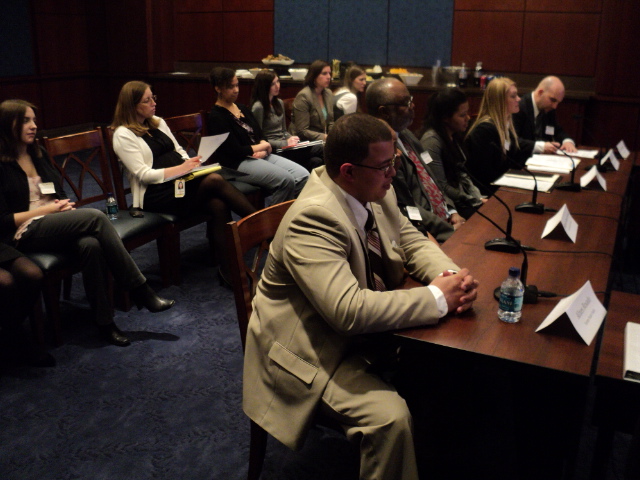
To mark the beginning of 112th Congress, CCAI hosted a round table discussion to bring federal policymakers together with adoptive families and foster youth.  The goal of the discussion was for individuals with direct foster care, foster care adoption, or international adoption experience to share what policies they would enact if given the opportunity based on the successes and barriers they faced.

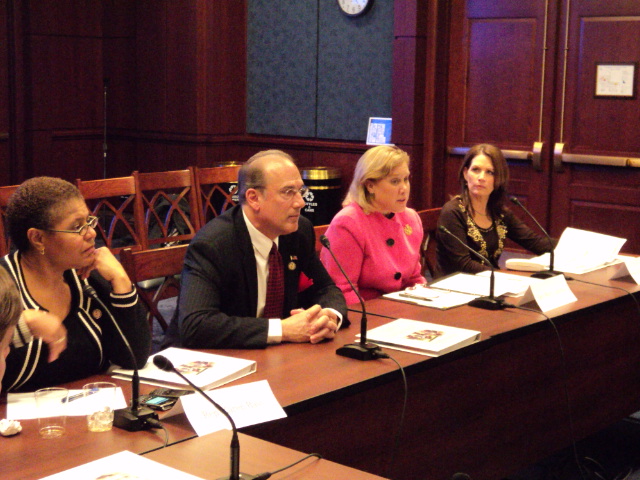
Sen. Mary Landrieu, Sen. James Inhofe, Rep. Michele Bachmann, and Rep. Karen Bass, the co-chairs of the Congressional Coalition on Adoption, convened other Members of Congress to discuss their legislative agendas based on what they heard directly from youth and families.  Sen. Roy Blunt, Sen. Ben Cardin, and Rep. Tom Marino attended in person, along with representatives from the offices of Sen. Amy Klobuchar, Sen. Tim Johnson, Sen. Chuck Grassley, Sen. Barbara Boxer, Sen. John Kerry, Rep. Jim Cooper, Rep. Dave Camp, Rep. Billy Long, and Rep. Dennis Cardoza.

Congressman Marino, an adoptive father himself, urged that children are our most precious resource, and we have an obligation to care for them.

Congresswoman Bass shared about her experience in the California state legislature and the time she spent traveling around the state talking to current and former foster youth.  One of the comments she often heard was, “I want someone to care about me who isn’t paid to do so.”

Congresswoman Bachmann commented that even after being a foster parent to over 20 adolescents herself, she is moved each time she hears the story of a foster youth.  She spoke about her legislative work on allowing children in foster care to remain in their school of origin despite moving out of the school district with each foster home move.

Senator Inhofe, an adoptive grandparent, recognized how challenging it is to navigate the intercountry adoption system.  As a U.S. Senator himeself, and his daughter, a tenured professor, they found the process complicated.  He shared his priority to remove bureacratic barriers to adoption to ensure an efficient process to place children in families.

Check back next week to see what the panel of individuals who have personal experience with these issues recommended, and learn how the Members of Congress responded.

Front: Alixes Rosado, former foster youth
L to R: Rep. Bass, Rep. Marino, Sen. Landrieu, Rep. Bachmann
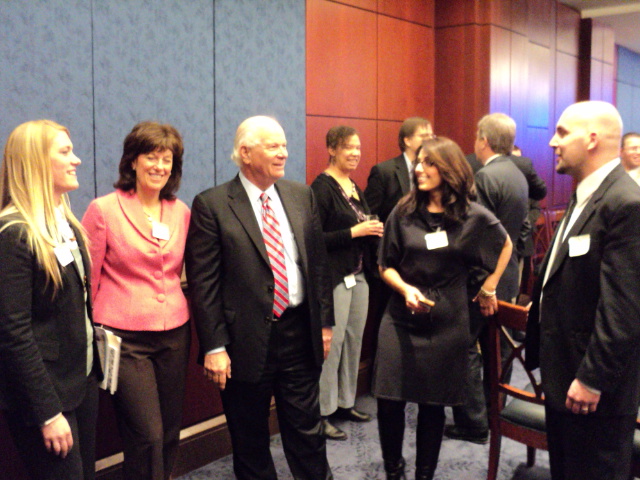
L to R: Nicole Dobbins, Debbie Riley, Sen. Cardin, Lindsay Ellenbogen, Jeromy Smith

What’s race got to do with it?

One long-standing topic of debate in child welfare has been the cause of the racial disparity that exists among children in foster care.  Black children, while only making up 15% of the total child population in the U.S., make up one-third of the children in foster care.

Early government mandated studies from 1986 and 1993 showed that there was not difference in child abuse rates when comparing black and white children.  These findings spurred conversations that child welfare workers were exercising a racial bias which was leading to more black children being brought into care and thus the racial disparity in the system.  In 1994, Congress responded by passing the Multiethnic Placement Act (MEPA) meant to prohibit states from delaying or denying foster care or adoption placement solely on the basis of race, color or national origin.  This law, in part, was meant to allow for and encourage the adoptions of black children out of foster care even when black adoptive families were not available.

Harvard Law School addressed this issue at a conference held last month named, Race & Child Welfare: Disproportionality, Disparity, Discrimination.  Elizabeth Bartholet, an expert on this topic, argued against earlier claims that a racial bias exists among child welfare workers which results in minority children being removed from homes at a higher rate.  Bartholet said that minority children do in fact experience higher rates of maltreatment, and therefore would make up a disproportionate rate of children in foster care.  For more information about the conference, see Daniel Heimpel’s account on the Huffington Post.

Photo Credit: Harvard Law School

Last week, Reuters Health published an article quoting Brett Drake, who recently released a study with data that affirms Bartholet’s statement, saying, “The problem is not that (Child Protective Services) workers are racists, the problem is that huge numbers of black people are living under devastating circumstances.  Mitigating poverty, and the effects of poverty, would be the most powerful way to reduce child maltreatment.”

Drawing advocates back to the main issue, a fellow speaker at the conference Richard Barth argued, “Should we be so worried that the child welfare system is unfair or racist that we allow minority children to be underserved and unprotected?”  According to the Harvard Law School article, “Barth noted that reducing disproportionality should not be the primary goal—it should be to improve the quality of services for all children”.

Interestingly, this long-standing debate on race and its impact on waiting children in foster care is one being discussed across the ocean as well. BBC News reported remarks recently from Mr. Martin Narey who just retired after five years as the chief executive at the United Kingdom’s leading children’s charity, Barnardo’s. The BBC article quotes Mr. Narey as stating that in the United Kingdom, “”The law is very clear. A child should not stay in care for an undue length of time while waiting for adoptive parents of the same ethnicity. But the reality is that black, Asian and mixed race children wait three times longer than white children.”  He expressed the opinion that adoption agencies working to place children in the UK’s foster care system with adoptive families allow delays in placement because they are reluctant to let white families adopt minority children.  In November, UK Children’s Minister Tim Loughton sent a letter to local officials expressing that the finding that sometimes “there may be over sensitivity on the grounds of ethnicity when it comes to the matching of children with prospective adopters” “troubled” him.

While debates may continue long into the future, child welfare experts in both the U.S. and U.K. can agree that a great need remains for adoptive families of all ethnic backgrounds to step forward and realize each waiting child’s right to a family.

Leaders come together for the sake of orphans

Last week, CCAI hosted a reception to highlight the need for the world’s orphans to find forever families and to encourage leaders and advocates to continue their work on these issues.  This reception took place the evening before the National Prayer Breakfast and was attended by federal policymakers, business executives, and world leaders.  Sen. Mary Landrieu and Sen. James Inhofe, the Co-chairs of the Congressional Coalition on Adoption, spoke on behalf of Congress’ adoption caucus highlighting the need for legislation to be created that will promote the well-being of children in need of families.

Sen. Landrieu reminded us all that these orphans do not have people to speak on their behalf, rather, it is our duty to speak out for these children in need:

Sen. Inhofe shared how his adoptive granddaughter from Ethiopia has enlightened his work on adoption policy:

Pictures from the event:

Sens. Landrieu and Inhofe
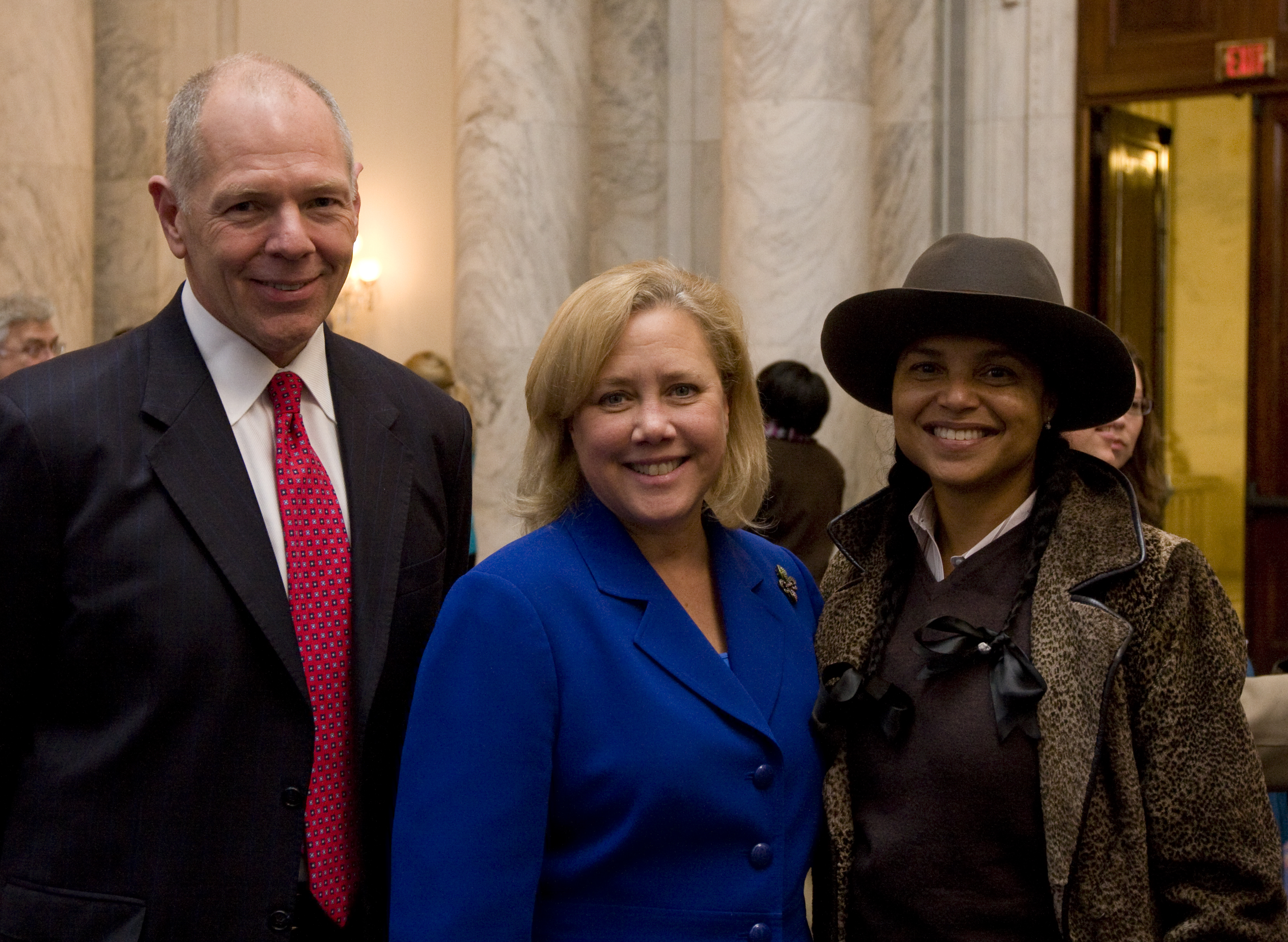
CCAI Board Member Elmer Doty, Sen. Landrieu, Actor and Foster Care Advocate Victoria Rowell
CCAI Executive Director Kathleen Strottman


Sen. James Inhofe with attendees
Attendees

What parents are saying about foster care adoptions

Child Trends, with support from the Dave Thomas Foundation for Adoption, hosted a webinar to examine key findings from the 2007 National Survey of Adoptive Parents (NSAP).  This survey was the first-ever to provide information about the well-being of adopted children and their families.  While the survey included on all types of the adoption, Child Trends’ webinar focused on foster care adoptions.

Some key findings include:

  • Nearly half of the children adopted in the U.S. are adopted by a relative and/or someone they knew prior to the adoption.
  • Among children adopted from foster care who have birth siblings, two out of five were adopted with one or more birth sibling.
  • Nearly half of all children adopted from foster care live in low-income households, a much higher percentage than any other form of adoption.
  • Cost of adoption was an important factor in choosing to adopt from foster care.
  • Majority of adopted children fare well on social/emotional indicators, but some problems markedly higher among those adopted from foster care.

Kathleen Strottman, CCAI’s Executive Director, spoke about how these findings will impact federal policy.  The number of children adopted out of foster care each year has improved only slightly over the past several years, therefore, it is necessary to use the data from this survey and information from the practice field in order to pass legislation that will promote foster care adoption.  Strottman pointed out that this study is important in identifying the motivation and needs of adoptive parents in order to address these areas.  For example, the cost of the adoption and the adoption subsidy was a significant determining factor for many adoptive parents.  Knowing this, advocates need to inform policymakers about the importance of the adoption subsidy in an effort to further promote adoption.

To view the full webinar, click here.

National Adoption Day reaches beyond courtrooms

The 11th annual National Adoption Day took place last Saturday, November 20th.  This year brought a number of new accomplishments to this national effort.  This year alone, more than 4,800 children were adopted on National Adoption Day–more than any year before!  Nearly 400 events took place across the country.  While judges, social workers, attorneys, CASAs, volunteers, and most importantly adoptive parents worked together to ensure successful events; celebrities, elected officials, and pro sports are now realizing the importance of this day.

For the first time ever, all 50 governors issued National Adoption Day and National Adoption Month proclamations along with numerous mayors of cities across the country.  President Obama issued his annual proclamation.  State courts, state legislatures, and city councils passed National Adoption Day resolutions.

Once again, the U.S. Senate and U.S. House of Representatives both passed National Adoption Day and Month resolutions with a total of 75 original co-sponsors.

Several elected officials expressed their support by attending events, such as Gov. Deval Patrick of Mass., or by writing op eds such as Rep. Jim Cooper of Tenn., or by issuing press releases, such as Sens. James Inhofe and Mary LandrieuLt. Gov. of New Jersey, Kim Guadagno opened up about her own adoption in an op ed she wrote for the day.

Academy Award nominated screenwriter and actress Nia Vardalos participated in the Los Angeles event by sharing her personal foster care adoption story.  Actor Willie Garson also shared his story of adopting his son from foster care.  Nia served as spokesperson this year, and participated in several interviews on the topic.

The Secretary of Health and Human Services, Kathleen Sebelius, kicked off National Adoption Day by finalizing two adoptions from the D.C. foster care system on Friday, Nov. 19th.  One boy was a 17 year-old who was being adopted by his friend’s mother.  He went on to share what his adoption day means to him through his blog post.

The New Orleans Saints also recognized the importance of the day by playing the National Adoption Day PSA and announcing to the 70,000 fans present at their November 21st game about the need to step forward and make a difference in the life of a child.

Numerous TV stations across the country featured stories about local families’ adoption on National Adoption Day.  In Atlanta, one boy shared what his adoption means to him. “There is no sadness here,” he said of his new home.

While 2010 presented many new successes for foster care adoption, there is much work to be done.  Thank you all for your efforts surrounding National Adoption Day.  We are looking forward to even more forever families to celebrate next year!

For the official National Adoption Day press release, click here.