Save the Adoption Tax Credit

CCAI is excited to serve as the Secretariat for the Executive Committee of the Adoption Tax Credit Working Group (ATCWG).  Save the Adoption Tax Credit, a national collaboration of 100 organizations that have united to support the cause of adoption, is an effort of the ATCWG. These are the other organizations on the Executive Committee with whom we are working closely:

The Adoption Tax Credit has existed since 2003 and has made adoption a more viable option for many parents who might not otherwise have been able to afford adoption, allowing them to provide children with loving, permanent families. Unfortunately it is due to “sunset” in its current form at the end of this year unless Congress and the Administration act.

The Adoption Tax Credit Working Group’s goals are to have an adoption tax credit that is:

  • Inclusive: Children, whether adopted from foster care, through intercountry adoption, or through private domestic adoption should be able to benefit from the adoption tax credit.
  • Permanent: The adoption tax credit should become a permanent part of the tax code to ensure continued support to those who bring children into families through adoption.
  • Refundable: The adoption tax credit should be refundable to ensure that families with moderate and lower incomes receive the full benefit of the credit.
  • Flat for Special Needs: All families who adopt a child with special needs should be eligible for a “flat” tax credit, meaning they can claim the maximum credit without documenting expenses. This distinction, which is already in current law, recognizes the fact that many of the expenses associated with adopting children with special needs show up after an adoption is finalized.

More than 100,000 children are currently in the U.S. foster care system awaiting forever homes. There are a growing number of children worldwide who are living in institutions, on the streets or in other situations outside of the care of a loving family.

The work of the adoption tax credit is not done.

To learn more about the effort to save the “A.T.C.” and to see the full list of the Adoption Tax Credit Working Group members, go to www.adoptiontaxcredit.org.

Or check out their Facebook page at www.facebook.com/AdoptionTaxCredit.

Adoption Today Features Article on Angels in Adoption™

Nominate an Angel in Adoption™!

By Kathleen Strottman and Allison Cappa

“Each time a man stands up for an ideal, or acts to improve the lot of others, or strikes out against injustice, he sends forth a tiny ripple of hope.” Robert F. Kennedy said so eloquently what we at the Congressional Coalition on Adoption Institute (CCAI) try to uphold daily and who we hope to esteem through our Angels in Adoption™ Program.

The Program began 14 years ago when a few Congressional offices began to brainstorm about the good that could come from honoring deserving constituents from their state and/or district who had impacted the life of a child in need of a loving family. That first year, in 1999, an awards ceremony was held on Capitol Hill to celebrate those very constituents. As co-founding Member of the Congressional Coalition on Adoption caucus and adoptive father Rep. Jim Oberstar puts it, “the first event was sparkling. There was so much enthusiasm and love.”

Since that time, Angels in Adoption™ has grown to be three days of events with over 1800 individuals, couples, and organizations recognized for the incredible work they have done to highlight the issue of foster care and adoption.  The Angels are invited to travel to Washington, D.C., where they learn how to advocate on behalf of children around the world waiting for a loving family to call their own. Additionally, they are honored at a prestigious Congressional Pinning Ceremony and at a very special Gala attended by senior members of the Executive Branch, US Senators, US Representatives and National Angels, like Kristin Chenoweth, First Lady Laura Bush, Patti LaBelle and Al Roker, who are using their celebrity status to promote adoption on a national and even global level. Furthermore, Angels in Adoption™ seeks to increase the public awareness of these individual deeds that profoundly impact a child’s life. The press from this event has spurred hundreds of human interest stories with the hope of inspiring others. Since the program’s inception, more than 1,800 Angels have been honored for their contributions to the cause of finding every child a home.

We all know the miraculous effect adoption has.  Because of Angels in Adoption that message is spreading. As 2011 National Angel in Adoption™, award winning actress (star of “My Big Fat Greek Wedding”), former National Adoption Day spokesperson, Nia Vardalos, said of the adoption of her daughter, “My husband and I were matched with our daughter via American Foster Care, and the minute we met her, our lives changed forever.  At three years old, our perfect little girl walked into our house, and turned it into a home.”

Do you know of someone you would like to nominate to a Congressional Office because adoption or fostering children has changed their life forever? Nominate them as an Angel in Adoption™ by visiting www.angelsinadoption.org. You can also complete a nomination form online for submission which will be passed along to an appropriate Congressional office. The deadline for this year’s nomination is July 6, 2012. 

The preceding article was featured on page eight of the June 2012 Issue of Adoption Today. See Adoption Today.

Foster Youth Interns Arrive in Washington!

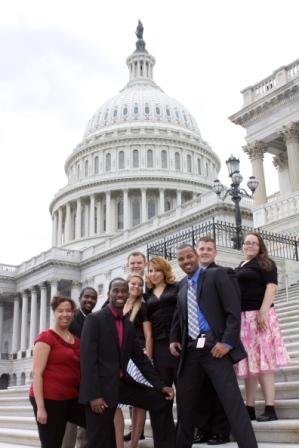
CCAI is extremely excited that our 15 Foster Youth Interns (FYI) arrive in Washington, DC today to begin their summer-long assignment on Capitol Hill.

This assignment provides individuals who have spent time in the United States foster care system with an opportunity to intern in a Congressional office, and share their experiences, opinions and unique perspectives with policymakers in Congress. This year marks the 10th anniversary of the program; 106 extremely talented, passionate and impressive individuals have participated in the past decade.

Welcome to Washington, FYIs. We’ve been waiting for you!

FYI Class of 2009
FYI Class of 2010
FYI Class of 2011
FYI Class of 2012

The high societal and financial costs of over medicating our nation’s foster youth

Yesterday, the Senate Committee on Homeland Security and Government Affairs held a hearing on the high societal and financial costs of over medicating our nation’s foster youth.    CCAI would like to commend Chairman Thomas Carper and Ranking Member Scott Brown for their leadership in addressing such an important issue.  While the findings of the GAO are shocking to say the least, it is sadly not surprising to learn that youth in our Nation’s foster care are being victimized in this way.  We not only can, but we must, do better.  Issues such as the overuse of psychotropic drugs and the lack of quality mental health care are ones that have come up time and time again in the past four years of Foster Youth Intern Reports.  These wise young leaders have identified several factors which contribute to the disturbing trends revealed by yesterday’s hearing.

First, it is important to bear in mind how the federal government currently finances the foster care system.  Under the law today, states on average receive a high level of reimbursement for a child who has special needs and for children who are in congregate care.  The rationale behind such policies is that it stands to reason that the care of such children would in fact be higher than a child without special needs or who could be cared for in an individual family.  Yet, without proper screening methods and controls, it is quite possible for states to improperly label children so that they can receive the highest level of funds available for the care of a child.  This is not to suggest that states are purposely lying about the needs kids have, but there is evidence to suggest that financing and budget decisions are playing a role in the care decisions being made on their behalf.

Secondly, many CCAI Foster Youth Interns (FYIs) report that their experience in receiving mental health services while in foster care was suboptimal.  They are right to point out that the professionals (doctors, therapists, etc.) they are in the care of are often new to the profession and least likely to be trained in state of the art treatments specific to the needs of youth in care.  This is due in part to the fact that they are most often receiving these services through Medicaid.  So in essence, these kids, who are acknowledged by all to have some of the most complex mental health issues to grapple with, are being treated by those least likely to have the training and skills necessary to treat them.

Thirdly, the fact remains that there is only one foster family for every four children who need foster care.  What this means is that children in foster care are being cared for in group homes and by foster families that are often stretched to the brink.  In these settings, the use of mind altering medication can become a way to “keep control” of kids behavior.  Year in and year out, FYIs have called on the federal government to increase its efforts to promote the recruitment and training of foster parents so that each and every child can have a family to give them the love and support they need to help them heal.

And finally, as the stories of the two children profiled by Diane Sawyer yet again prove the best medicine we can give these children is the family that they need and deserve.  As Keonte said yesterday, it was his adoptive parents who made him feel safe and loved enough to sort through the issues he faced because of his past.  It was his adoptive parents who sought out the top of the line treatment that has helped him heal.  And it was his adoptive parents who sat by his side as he stood before the US Congress to demand that this no longer be the case for other children.

Keonte testifying in Congress. Photo credit: ABC News from http://abcnews.go.com/blogs/headlines/2011/12/boy-12-tells-congress-of-years-on-stupid-meds/


Catch ABC’s 20/20 special tonight continuing the story on this topic.

The webcast and action guide are now available!

Yesterday, CCAI and Fostering Media Connections held national conversation on foster care and education, linking policymakers in D.C. and Los Angeles with researchers from Chapin Hall in Chicago, and teachers and former foster youth in Sacramento via webcast.  Watch the full webcast below, and be sure to read the Rescuing Forgotten Futures action guide for information about how anyone can help a foster youth succeed in school.

Join us for an Oct. 19 webcast on the intersection of education and foster care

Join us for a “National Conversation” on the intersection of education and foster care that will leave you with a reasonable expectation of radical social change on Wednesday, October 19th at 3pm ET RIGHT HERE.

When Americans contemplate the impending debate over education reform, the majority is not likely to consider the lessons to be learned from foster care.  Research consistently suggests that childhood trauma, placement instability and myriad other factors leave many students in foster care far behind their peers in almost all academic measures. Despite this reality, stakeholders from both child welfare and education across the country are proving that tight collaboration can yield dramatic results for students in foster care. This signals an opportunity to apply these lessons to wider populations of vulnerable students struggling through similar educational impediments.

On October 18th, the Senate Health, Education, Labor and Pensions (HELP) Committee will begin the long awaited overhaul of the Elementary and Secondary Education Act, commonly referred to as No Child Left Behind. It is doubtful that the ensuing media coverage will focus much attention on students in foster care, creating an incredible opportunity to merge the narrative of education reform with the bright spots in a nationwide effort to improve the educational outcomes of students in foster care.

In an effort to highlight and bolster this national movement, the Congressional Coalition on Adoption Institute (CCAI) and Fostering Media Connections (FMC) have organized an unprecedented “National Conversation” on the intersection of education and foster care.

On OCTOBER 19th, as Congress begins to publicly grapple with education reform, teachers and students In California, researchers in Illinois and policymakers in Washington DC will share effective strategies to improve educational outcomes for students in foster care. All the proceedings will be transmitted live, over the Internet. Further, CCAI and FMC will release a report laden with research, legislative history, on-the-ground journalistic accounts and a broad range of recommendations.

WHO:

Sen. Mary Landrieu: (D-LA): Co-Chair of the Senate Caucus on Foster Youth.

Sen. Chuck Grassley: (R-IA): Co-Chair of the Senate Caucus on Foster Youth.

George Sheldon: Acting Assistant Secretary Administration for Children and Families, U.S. Department of Health and Human Services

Cheryl Smithgall: Researcher Fellow at Chapin Hall at the University of Chicago

Mike Jones: Teacher and Co-Founder of Courageous Connection in Sacramento, CA

Carey Sommer: High School graduate through Courageous Connection

Jetaine Hart: Former CCAI Foster Youth Intern and current Educational Mentor for Foster Youth at Alameda County Office of Education, Foster Youth Services

WHEN: 12:00 PM PST – 1:30 // 2:00 PM CST – 3:30 // 3:00 PM EST – 4:30

DATA & RESEARCH: Find a link to the National Working Group on Foster Care and Education‘s 2011 fact sheet on educational outcomes for students in foster care entitled: “Education is the Lifeline for Youth in Foster Care”