Adoptions from Russia

In New Zealand, intercountry adoptions from Russia were suspended in 2006 due to changes in Russian legislation amid speculations regarding the well-being of children after their adoptions.  Just the beginning of this month, adoptions from Russia to New Zealand are resuming as a result of a permit granted.  This article reports how one family was just two months away from bringing home their child when adoptions were halted back in 2006.  Another family waited two years and made three trips to Russia in hopes of completing their adoption. These are similar to the frustrations now faced by American families who are currently waiting to adopt a Russian child.

Meanwhile, the needs of Russian orphans remain significant.  UNICEF estimates there are 4 million orphans in Russia who have lost one or both parents.  A New York Time article states, “The percentage of children who are designated orphans is four to five times higher in Russia than in Europe or the United States. Of those, 30 percent live in orphanages. Most of them are children who have been either given up by their parents or removed from dysfunctional homes by the authorities.”

Since June 2010, the U.S. State Department has continued to work with Russia to finalize a bilateral agreement on intercountry adoption.  Russian officials traveled to Washington, DC last month to participate in a fifth round of talks regarding this agreement.  The U.S. Dept. of State’s website reports, “the talks were fruitful, and further progress was made.”  The focus of these talks include ways that both U.S. and Russian officials can ensure that adoptive parents are both better screened and prepared for the realities of parenting.

In addition to the U.S. and New Zealand adoption agreements, Russia began drafting agreements with France, Spain, Britain, Ireland, and Israel last year.

Haiti: One Year Later

Yesterday marked the one year anniversary since the earthquake that devastated Haiti.  As we move into year two, CCAI’s report Renewed Promise: The Welfare of Children in Haiti highlights lessons learned from the emergency relief and recovery efforts that have taken place this past year, and focuses federal policymakers on the needs that continue to exist related to orphaned and vulnerable children in Haiti.

Be sure to also check out reports from other organizations:

Photo Credit: The Haiti Orphans Project


Streamlining in child welfare

Across the country, several states are working to make processes in child welfare and adoption more efficient.  Just last week in Pennsylvania, the state Supreme Court issued new rules meant to streamline the intercountry adoption process for PA residents.

The current intercountry adoption procedures that the U.S. Citizenship and Immigration Services and the U.S. Department of State operate under say that in order for a child’s adoption to be finalized abroad, both parents must be present in child’s country of origin.  This child would then enter the U.S. on an IR-3 or IH-3 visa and gain citizenship upon entering the U.S.  If only one parent is present, that parent receives custody for immigration purposes, however, the adoption will be legally finalized after entering the U.S., and the child is eligible for citizenship after the adoption is finalized here in the U.S.  In this scenario, the child immigrates with an IR-4 or IH-4 visa (the distinction is simply made depending on if the child’s country of origin is party to the Hague Convention on Intercountry Adoption).

In cases where only one parent is present, Pennsylvania courts have decided that parents are allowed to file a form petition and several required documents, instead of requiring a time-consuming process of duplicating paperwork from other government agencies.

Another example of child welfare-related processes being streamlined is in Iowa where child abuse and neglect complaints will now be directed to one centralized intake center, compared to their previous practice of having 99 separate counties accept reports.  The efficiency of this new process could prove vital in the state, which has a rate of reports at 59.6 per 1,000 children, compared to the national average of 43.1 per 1,000 children.

In Tennessee, a project was undertaken last year to improve the timeliness of foster care adoption.  The ultimate goal is to streamline the adoption process and move children into loving families  as soon as possible.  The idea grew out of a CCAI Advisory Board meeting conversation when Rep. Jim Cooper expressed concerns about inefficiencies in the child welfare system, and Elmer Doty, CCAI Executive Board Member, offered experts from his company to examine ways to improve the system.  Using Lean/Six Sigma tools and methodologies, experts from Vought Aircraft  (now owned by Triumph Group, Inc.) partnered with the Tennessee Department of Children’s Services to examine adoptions involving children who are in full guardianship with a family identified. What  resulted was a thorough, fact-based examination of the key processes of finalizing these adoptions, and finding ways to reduce the variance across regions.  Tennessee DCS officials began implementing recommendations last June and will begin tracking data over the next year.

Breaking down the barriers to adoption

Yesterday, I shared with you the heart-warming story of one of CCAI’s Angels in Adoption who, because of the International Adoption Simplification Act, are now able to adopt the two older siblings in a group of nine brothers and sisters.  Prior to this law, intercountry adoption policy prevented children 16 and older from being adopted.  This new law allows children up to age 18 to be adopted along with their half or full siblings who are under the age of 16.

Sen. Amy Klobuchar (D-MN) who introduced this bill joined the family on FOX News earlier today to talk about this law and what it means to them.

An article came out today that further explains this new law, along with information about another new adoption bill, the Help Haiti Act.  The Help Haiti Act provides an adjustment of status to ensures citizenship for the Haitian children who were provided with Humanitarian Parole following the January 12th, 2010 earthquake.

CCAI hosts intercountry adoption training

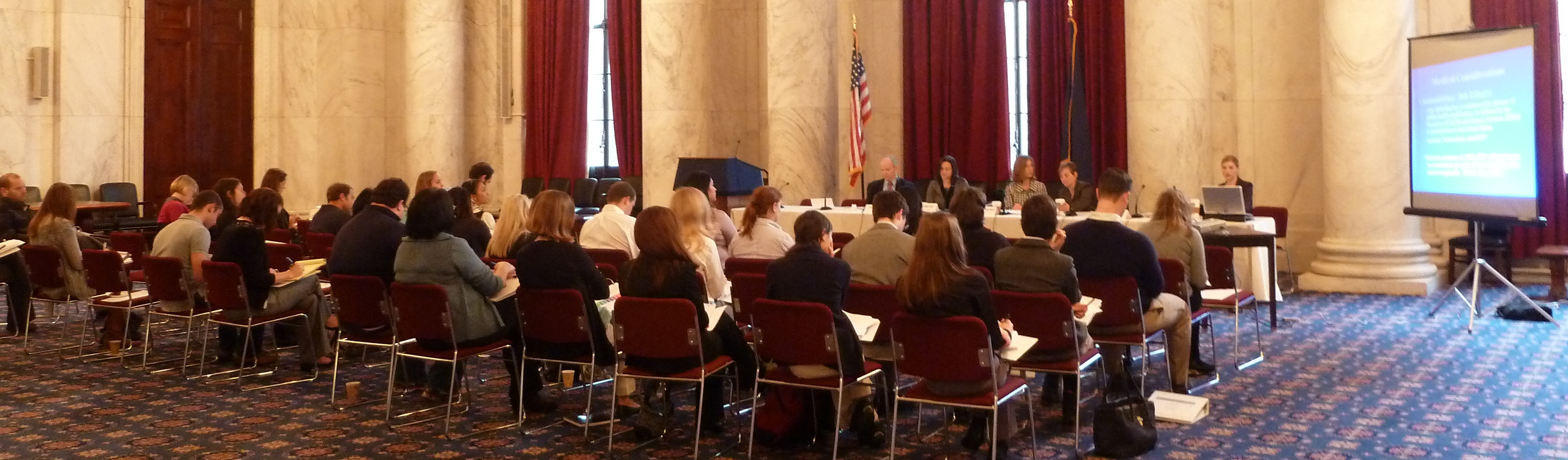
On Friday, December 10th, CCAI hosted a training for Congressional staff and caseworkers who handle intercountry adoption issues.  During the training, the Department of State and U.S. Citizenship and Immigration Services provided in-depth information about the international adoption process.  Our goal was to better equip Congressional staffers as they serve constituent families who are in the process of adopting.

Legislation that relates to immigration, intercountry adoption, and child citizenship was discussed, as well as the forms constituents need to file, and the visa processing.  Congressional staff had questions ranging from how legal permanent residents are treated versus U.S. citizens when adopting internationally, to where USCIS forms must be filed, to how a disrupted adoption affects prospective adoptive parents who are seeking to adopt again.

Over 50 Congressional offices participated in this training.  CCAI received positive feedback from attendees that the training was an effective tool to educate them on these processes and the unique cases of their constituent families.  CCAI is pleased to work with the Department of State and USCIS to make these trainings possible in an effort to serve adoptive parents and prospective adoptive parents.

Visit the Department of State’s Adoption website or USCIS’s Adoption pages for more information on their involvement in the intercountry adoption process.

Forgotten Children: International Adoption and the Global Orphan Crisis

The Daily Beast and Urban Zen co-hosted an event called Forgotten Children: International Adoption and the Global Orphan Crisis in an effort to draw attention to the topic.  Experts from the field of orphan care and adoption spoke about the growing need to address the orphan crisis.  This article summarizes the event and includes video clips of the expert panel.

Dr. Jane Aronson who has been nicknamed ‘the orphan doctor’, spoke about the realities of adoption from a health perspective.  She raised the concern that prospective adoptive parents are often not honest with themselves about their abilities related to the needs of the child they are seeking to adopt.  Aronson, along with others, called for better post-adoption services.

Deborra-Lee Furness, co-host of the event, wife of actor Hugh Jackman, and adoptive mother, discussed her view that adoption should be the third best option, after placing a child with their biological family, then placing a child with another family in their home community.

Filmmaker Deann Borshay Liem who was adopted from South Korea when she was 8 years old spoke about the impact of international adoption in her own life.  Her unique adoption story s the focus of two POV documentaries that aired earlier this year on PBS.  Liem raised the point that adopted children grow up, and as an adult adoptee she shared, “I gained tremendously by coming to this country.  But on the other hand, I lost everything I loved by coming to this country”—her family, identity, language, and even memories. “One does not replace the other.”  While sharing this perspective, Liem urged that the best interest of a child it is critical for children to have families and secure homes.

Dr. Sophie Mengitsu, who operates in Ethiopia, offered her suggestion that agencies that help international adoption must also help the communities from which these orphans come.  She went on to highlight the negative impact on development that is caused by living in an institution.

Ultimately, several possible solutions to improve international adoption and the global orphan crisis were raised that range from supporting the struggling communities to examining the root causes to providing better training for orphanage workers.

It is imperative to invest in children around the world, and to not delay in making this investment.