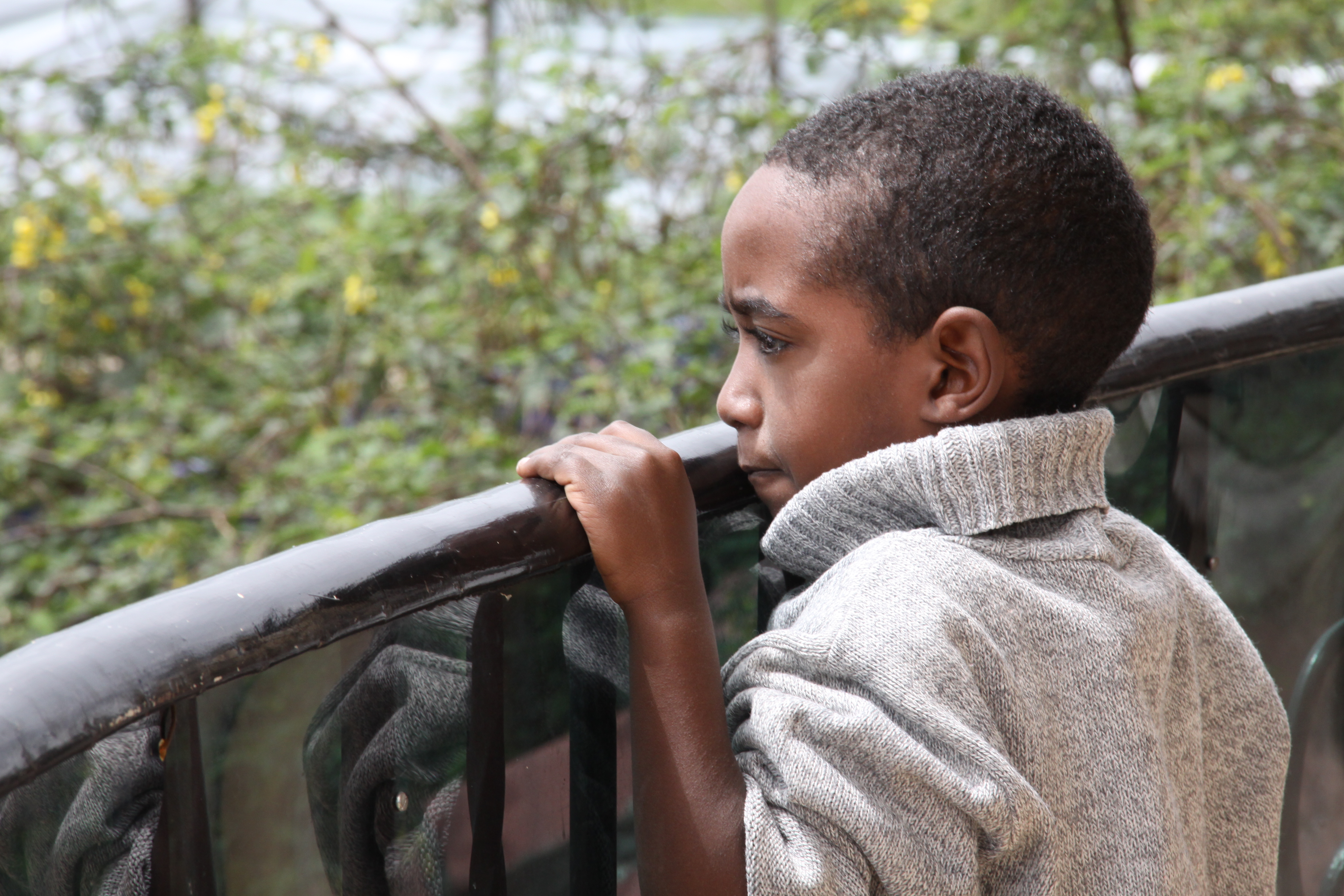
CDC launches health guidance site for children adopted internationally

The Center for Disease Control (CDC) has launched a new part of their website to assist prospective adoptive parents as they plan to bring home a child who they adopted internationally.  There is information about vaccines, medical exams, class A conditions, and finding a health care provider once back home in the U.S.  Also included is a section for news, updates, and useful links.

From the Center for Disease Control website:

Each year, parents in the United States adopt more than 12,000 children from all over the world. Adopting a child is a wonderful and exciting event for families. The health of the adopted child is one of many issues that parents need to address during the adoption process. Parents should be prepared for possible challenges during the adoption process and be aware that sometimes the process can be lengthy.

Children born in other areas of the world may have different health problems from those of children raised in the United States. Children may have been exposed to vaccine-preventable diseases that are rare in the United States. Some children are adopted from countries with high rates of diseases, such as tuberculosis, hepatitis, and HIV/AIDS. For all these reasons, knowing as much as possible about a child’s health will help parents get the right treatment and care for their child. Ensuring that adopted children are healthy will also help prevent the spread of dis

To visit the site, click here.

Orphan Sunday

On Sunday, November 7th people across the globe united for one cause, to stand for the orphan.  The movement, officially named Orphan Sunday, began in Zambia, was brought to the United States in 2003, and is now led by the Christian Alliance for Orphans (CAFO). Orphan Sunday exists to encourage the faith-based community to look beyond themselves and listen to God’s call to care for the orphan.

Hundreds of Orphan Sunday related events took place, whether it was a sermon, prayer meeting, concert, or fundraiser, with one goal in mind, to stir people’s hearts to care for, love and protect the orphan. One Orphan Sunday participant, Capital Life Church in Washington, DC, dedicated the entire Sunday service to orphan awareness and spearheaded a donation drive to collect goods for Mother Teresa’s Sisters of Charity orphanage in Addis Ababa, Ethiopia. The Friday before Orphan Sunday, Heartwork, an orphan ministry located in Colorado Springs, along with CAFO held an event devoted to prayer, worship and rousing attendees to care for orphans in their distress.

Trends in international adoptions from Ethiopia

Last week, I was reading an AP article on international adoption by David Crary that examined how Ethiopia’s adoption trend is in stark contrast to many other countries.  Crary highlighted that in 2004 when international adoptions peaked in the U.S., Ethiopia only accounted for 284 adoptions.  In 2010, the U.S. Department of State projects adoptions from Ethiopia will total 2,500.  At the same time, international adoptions in general have fell about 50% since 2004.

Ethiopia emerged in 2006 as one of the top five sending countries, which was the first time an African nation was in the top five.  Since then, the number of Ethiopian children adopted by U.S. families has steadily increased.  As Ethiopian adoptions have increased, China has implemented strict international adoption regulations and promoted domestic adoption within China, resulting in Ethiopia being near surpassing China and becoming the top sending country.

Last month, CCAI led a Congressional delegation to Ethiopia to meet with government leaders in an effort to build relationships between the U.S. and Ethiopia and ultimately promote positive adoption and orphan care policy.  As a result of the trip, Crary’s article states that Ambassador Susan Jacobs, Special Advisor for Children’s Issues for the U.S. Department of State, said that she was encouraged by meeting officials in Ethiopia because they are willing to work with the U.S.  This is important as Ethiopia is not yet party to the Hague Convention on Intercountry Adoption.

This increase in international adoptions from Ethiopia is not specific to the U.S.  While the U.S. is the most popular receiving country from Ethiopia, across the board adoptions from Ethiopia have increased.  Trailing the U.S., France adopted 445 Ethiopian orphans in 2009, followed by Italy (346 adoptions), the Netherlands (39 adoptions), Sweden (37 adoptions), and Finland (17 adoptions).

Per capita, Sweden is ranked number 1 for the number of international adoptions from any country according to their population.  Italy, France, and Finland all have higher per capita international adoption rates.  The U.S. is ranked 12th, even though by the numbers, significantly more children are adopted by U.S. families than any other country.

Freddie Mac Foundation’s Adoption Expo on Nov. 6th in DC

On Saturday, November 6th, the Freddie Mac Foundation, in partnership with NBC4 and Metropolitan Washington Council of Governments, will once again host an Adoption Expo to showcase local and national adoption organizations.

This free event will offer information from A to Z about the adoption experience and the resources available if you’re considering adoption. You will also have the opportunity to learn firsthand from experts in the field and families who have adopted. Information and resources will also be available for those who have already adopted.

WHEN: Saturday, November 6, 2010, from 11:00 a.m. to 3:00 p.m.

WHERE: Grand Hyatt Hotel, 1000 H Street, NW, Washington, D.C. Metro accessible (Metro Center – exit into hotel)

WHO IT’S FOR:

  • Anyone considering or currently pursuing adoption
  • Adoptive parents interested in learning about post-adoption resources

WHAT YOU WILL FIND:

  • More than 30 public and private adoption agencies and service providers specializing in:
    • Domestic Adoption
    • International Adoption
    • Special Needs Adoption
    • Post-Adoption Services
    • Information and Resources
  • Workshops [PDF 144K] for prospective and current adoptive parents, highlighting the adoption process and available support systems and resources
  • Parent-to-parent discussion groups featuring families who will share their experiences in adoption, both domestic and international
  • Information about children available for adoption in the Washington metropolitan area and beyond
  • Renowned adoption authors and a wide array of resource materials
  • Entertainment for children throughout the afternoon.

Click here to visit their website.

Webcast on the Adoption Tax Credit and Affordable Care Act

Last week, the White House hosted a webcast titled, “Helping American Families:  The Adoption Tax Credit and the Affordable Care Act.” Senior members of the Administration and leading advocates discussed the importance of the Adoption Tax Credit, and the key improvements made to the Credit under the Affordable Care Act.   The webcast features two families who are benefitting from the Adoption Tax Credit and who will share their stories about what adoption has meant for their family.  They were joined by leading advocates on the Credit: Bill Blacquiere, Bethany Christian Services; Barbara Collura, RESOLVE; and Chuck Johnson, National Council for Adoption.

During the webcast, Joshua Dubois, Executive Director of the White House Office of Faith-based and Neighborhood Partnerships, congratulates CCAI’s Angels in Adoption and announced the reception held at the White House in their honor the evening of October 5th.

To view the webcast, visit http://www.youtube.com/watch?v=mpHxyoHpu8Y or watch below:

Ethiopia Travel Diary: Day 2, Bantu

The day after we toured several sites in Addis Ababa and met with various U.S. and other government leaders, we headed out to spend the beginning of our second full day on the ground in a rural area named Bantu – the home area of Ethiopian President Girma Wolde Giorgis.

Our delegation arrived to the Buckner Bright Hope School in Bantu to find the 400 school children and many of their families and members of the Bantu community were also there to greet us.  The children were singing “Welcome, welcome,” and clapping when we arrived.

A local Ethiopian Orthodox Church choir performed a traditional and ancient song and dance, and then Senator Landrieu, Ambassador Jacobs, and Gary Newton spoke briefly with community elders.

Then our entire group visited some of the school’s classrooms and watched a few demonstrations of the children’s math and English-speaking skills.

It was very interesting to me to note how the school is now the focal point of the community of Bantu.  The school actually feeds the children who attend two meals a day and provides them stipends for uniforms.  At one point, I asked the Director of Buckner Bright Hope, Getahun Tesema, how many sibling groups attend the school, and he told me that only one child from each family in the community is able to attend because parents are unwilling to send all their children away from their housework.  I then asked Getahun how the school staff choose which child from a family to attend – Did they select the oldest? Youngest? Smartest? He explained to that they choose the weakest and most malnourished child in the family so they are fed the two daily meals the school offers and thus have a better chance of surviving childhood.  It was a humbling reminder to me of the vast needs families in Ethiopia face, that the school would use malnutrition as it’s guiding factor in approaching enrollment.