Adoption Today Features Article on Angels in Adoption™

Nominate an Angel in Adoption™!

By Kathleen Strottman and Allison Cappa

“Each time a man stands up for an ideal, or acts to improve the lot of others, or strikes out against injustice, he sends forth a tiny ripple of hope.” Robert F. Kennedy said so eloquently what we at the Congressional Coalition on Adoption Institute (CCAI) try to uphold daily and who we hope to esteem through our Angels in Adoption™ Program.

The Program began 14 years ago when a few Congressional offices began to brainstorm about the good that could come from honoring deserving constituents from their state and/or district who had impacted the life of a child in need of a loving family. That first year, in 1999, an awards ceremony was held on Capitol Hill to celebrate those very constituents. As co-founding Member of the Congressional Coalition on Adoption caucus and adoptive father Rep. Jim Oberstar puts it, “the first event was sparkling. There was so much enthusiasm and love.”

Since that time, Angels in Adoption™ has grown to be three days of events with over 1800 individuals, couples, and organizations recognized for the incredible work they have done to highlight the issue of foster care and adoption.  The Angels are invited to travel to Washington, D.C., where they learn how to advocate on behalf of children around the world waiting for a loving family to call their own. Additionally, they are honored at a prestigious Congressional Pinning Ceremony and at a very special Gala attended by senior members of the Executive Branch, US Senators, US Representatives and National Angels, like Kristin Chenoweth, First Lady Laura Bush, Patti LaBelle and Al Roker, who are using their celebrity status to promote adoption on a national and even global level. Furthermore, Angels in Adoption™ seeks to increase the public awareness of these individual deeds that profoundly impact a child’s life. The press from this event has spurred hundreds of human interest stories with the hope of inspiring others. Since the program’s inception, more than 1,800 Angels have been honored for their contributions to the cause of finding every child a home.

We all know the miraculous effect adoption has.  Because of Angels in Adoption that message is spreading. As 2011 National Angel in Adoption™, award winning actress (star of “My Big Fat Greek Wedding”), former National Adoption Day spokesperson, Nia Vardalos, said of the adoption of her daughter, “My husband and I were matched with our daughter via American Foster Care, and the minute we met her, our lives changed forever.  At three years old, our perfect little girl walked into our house, and turned it into a home.”

Do you know of someone you would like to nominate to a Congressional Office because adoption or fostering children has changed their life forever? Nominate them as an Angel in Adoption™ by visiting www.angelsinadoption.org. You can also complete a nomination form online for submission which will be passed along to an appropriate Congressional office. The deadline for this year’s nomination is July 6, 2012. 

The preceding article was featured on page eight of the June 2012 Issue of Adoption Today. See Adoption Today.

Foster Youth Interns Arrive in Washington!

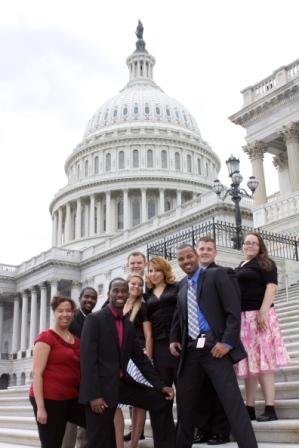
CCAI is extremely excited that our 15 Foster Youth Interns (FYI) arrive in Washington, DC today to begin their summer-long assignment on Capitol Hill.

This assignment provides individuals who have spent time in the United States foster care system with an opportunity to intern in a Congressional office, and share their experiences, opinions and unique perspectives with policymakers in Congress. This year marks the 10th anniversary of the program; 106 extremely talented, passionate and impressive individuals have participated in the past decade.

Welcome to Washington, FYIs. We’ve been waiting for you!

FYI Class of 2009
FYI Class of 2010
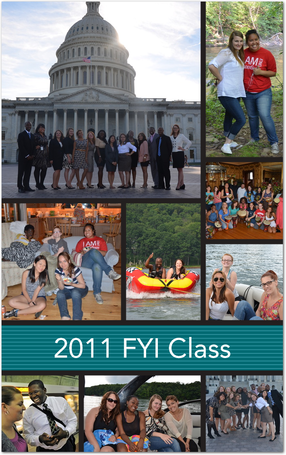
FYI Class of 2011
FYI Class of 2012

Family Matters

The following article can also be found in the 2012 April edition of Adoption Today magazine.

Almost ten years ago, I had the privilege of hearing a young woman by the name of Mary recount her adoption story.  A young leader and honor student, Mary, then 16, remembered being at the court hearing that was to put her on the path toward so called “independent living” when her judge stopped and asked her what it is she wanted from life.   Without hesitation, Mary replied, “I want what all kids want, I want a family.”  Luckily for Mary, the judge was so moved by her certainty that he simply ordered the system to, “make it happen.”  Even better, Mary soon learned that her long time caseworker was more than happy to make her a permanent part of his family.  And when asked to describe her first weekend with her new family she said, “it was just perfect, as if I was always meant to be there.”

Since then, I have met hundreds of young people with the same dream.  I have visited orphanages all over the world filled with children who dare not even dream of a family of their own, resigned to instead live out their life sentence to an orphanage.  The fact that children by design are best raised by at least one loving parent is not something we need scientific evidence to prove; we know it at our core.  That being said, there is, in fact, a great deal of scientific proof that a secure and loving relationship with a parent is one of the most critical elements of a child’s early development.  Without the stimulus that comes from such a relationship, a child’s brain will, over time, be damaged.  Such damage can lead to life long physical, intellectual and emotional consequences for these children.

In FY 2009, US government assistance for vulnerable children in developing countries amounted to $2.6 billion through almost 2,000 projects in more than 100 countries.  More than 20 offices in seven USG agencies operating under their respective mandates administer this assistance.  For the most part, this funding is used to support critical needs such as nutrition, health care, education and protection.  Little, if any, goes to helping children living outside of the care of a family find their way to a home.   What is more, the US government has no policy, strategy, guidance, plan or program that focuses explicitly on children outside of family care.

In an effort to change this reality, USAID recently hosted the first ever Evidence Summit on Protecting Children Outside of Family Care. The Summit brought together leading researchers and technical experts to assess the evidence to inform policies, strategies, and programs relevant to protecting children outside of family care in low-income and middle-income countries and to identify evidence gaps to shape the future research agenda. USAID has also committed to establish guiding principles for US government assistance and to develop a strategy by July 2012, to promote evidence-based responses to protect these vulnerable children.

This Summit and USAID’s clear commitment to focus on the needs of children outside of family care is a critical first step towards ensuring that fewer children are languishing in orphanages, living alone on the streets, having to raise their younger siblings or being exploited by traffickers.

To fully realize the goal of reducing the number of children living outside of family care, two major changes in existing U.S. policies and programs are required.  First, we must take the initiative to collect data on these children.  Because these children are omitted from what surveys and studies do exist (most of which are household based), they have fallen off the statistical map.  Getting a sense of how many children are indeed living outside of family care will not only help us to assess the need for services, it will also allow us to better measure our collective progress in meeting such needs.

Secondly, we will need to acknowledge that the best intervention for a child OUTSIDE of family care is to in fact make them a child INSIDE a family’s care.  To do this we need to embrace strategies to prevent child abandonment; strengthen and reunify families; and promote kinship care, domestic and international adoption for whom reunification is not possible.

To learn more about the USG Evidence Summit visit: www.hvcassistance.org/summit.cfm.

CCAI Foster Youth Interns Invited to Speak: How Can Churches Love, Support and Provide Guidance for Foster Youth

Mason McFalls, a resident and native of Georgia, entered foster care at the age of 7 with his brother. He recalls the church as being one of the only stable places in his world. His pastor was one of his most effectual mentors, helping his grades skyrocket. When he matriculated into University of Georgia and graduated with honors, he was proud to note that for the first time in his life he wasn’t labeled the foster kid and recalls, “I had seven job offers right out of college and none were handouts from being a foster kid. That felt great.” He now works for Morgan Stanley, has a steady girlfriend, and hopes to get married in the next year.

Last week, the Christian Alliance for Orphans hosted a webinar and invited three former Congressional Coalition on Adoption Institute (CCAI) Foster Youth Interns (FYI) to share their experiences in foster care and encourage churches in ways they can help foster youth.  The FYI Program is a highly esteemed Congressional internship for young adults who spent time in the foster care system.  Through the program, federal policymakers see firsthand the experiences of foster youth, and as a result use their power to make legislative change. In addition to Mason (2008 FYI Intern) the other panelists were Brittany Jean (2008 FYI Intern) and Richard Terrell (2011 FYI Intern) who each spoke briefly about their time in foster care and shared that mentors, foster families, and church life were inspirations to succeed.

Brittany Jean, also a native of Georgia, entered the system at 14, and says, “At that time I had no real direction…when I came into foster care. My foster parents were ministers and when I came they showed me love and the church became my second family…I came out of my shell and became the person I was supposed to become.” Married in 2009, Brittany remarked that more people from her church family, who mentored and clothed her, came to her wedding than from her biological family. She attended Georgia State University, majored in political science and interned for Congressman John Lewis.

Without hesitation, Brittany states the best way to change the foster system is within the church: “With the same love my foster parents gave me, I try to give to other people. People ask ‘what can I do, what can I do?’ I think there are a lot of misconceptions. I think there’s a personal [touch] of being a foster parent or a mentor, but you can also support financially, or raising community awareness, letting your church know, or giving them the option, you know, that these kids are here and they’re open and available for adoption, let the love of God lead you.”

Richard Terrell, resident and native of Minnesota, grew up in kinship care, a type of foster care in which a child is raised by a relative not in the nuclear family, and was raised by his grandmother. Richard entered foster care at a young age because of his mother’s drug addiction, and his father, although present, was not interested in having a son. He cites his pastor as his stand-in father, although he also views him as an older brother, a friend, a role model and a mentor.

Richard shared that his pastor encouraged him to apply for college, even when his grades weren’t great, he did not think he was smart enough, and his mother told him it did not matter. When he was accepted his freshman year to University of North Dakota (and later transferred to the North Central University in Minnesota) his pastor drove him to college and stayed the first week to set him up in the local area with a church and help him move in –and as Richard remembers “as if I were his own son.” Recently graduated, Richard now mentors other foster youth through his church, knowing the impact one mentor can have on the life of a foster kid.

How can communities of faith help?

When CCAI’s executive director, Kathleen Strottman opened up the Webinar discussion for questions, the panelists discussed some of the hardest challenges they faced and how the community can band together to help foster youth. Mason said that although he worked hard in school, moving school systems kept him consistently behind. Every school was on a different system; some were on semester, some on trimesters, block schedules, transitional schedules, floaters, and there were always different textbooks. If he was lucky enough to be in the same book, then the classes were on a different page. He felt like he was constantly playing catch up, always trying to teach himself. “That’s where the church stepped in,” he remembered. People offered to tutor him and donate books. By rallying together, churches could keep track of the schools in each district that have foster youth in need.

Today, as a foster youth advocate in his church, Mason works closely with a local youth center and hopes to change the pervasive stereotypes that foster kids are bad kids so that more church members open their homes up to foster youth. He cites the church as the reason he was extricated from his biological parents, who were addicted drug users. The close knit community never once wavered in their ties and continued to support him over the years by sending him clothes and care packages no matter how many times he moved schools, homes or districts. Mason concluded:  “sometimes I [was made to feel] like I cried wolf so many times the foster workers wouldn’t listen. That’s where the church steps in…when there’s something really going on, there’s someone really there to listen to you.”

Disappointed with many of her foster family placements, Brittany said, “It’s hard to come home to a house that doesn’t actually care about you. And I don’t think that’s fair to anyone.” But said that the church is a great place to recruit quality foster families.

Richard is a passionate proponent of grants and more scholarships for foster youth, especially those pursuing higher education saying, “I believe all educational systems should have some sort of scholarships set up for foster youth. I had to work 30-40 hour weeks just to pay for my education. And sometimes it wasn’t enough.” In fact, this was the very topic Richard wrote about in the annual Foster Youth Internship Report. To ease this burden, churches can raise funds to directly assist youth in the community or within their congregations go to college or even purchase school supplies and books.

In the end it was Brittany who summed it up all so well: “It doesn’t matter where I came from, it only matters where I’m going. Learning that really changed me…learning that foster care doesn’t end at eighteen.”

To listen to the webinar in its entirety and to view a list of “25 Things to Help Foster Youth” click HERE.


Educational Assistance for Foster Youth

Former CCAI Foster Youth Intern, Jeremy Long, responds to the recent USA Today article addressing the growing number of colleges and universities providing support for America’s foster youth. To read the full article click here: http://usat.ly/AegSmh

Our little friend Jiminy Cricket once said “when you wish upon a star, makes no difference who you are, anything your heart desires, will come true.” Take a second and visualize something you once wished upon a star for. Maybe you wished for something as big as finding the cure for cancer or as simple as getting an A in a class. Whatever the wish, it was something you strongly desired to have in life. If your wish came true, great, if not, that’s fine to, but the point is that you had even the slightest hope it could come to be.

Now imagine a world in which wishes and dreams feel out of your reach. A world where the odds always seem stacked against you and you almost never get to experience what it is like to have a dream come true. This is the world in which too many of the half a million youth currently in U.S. foster care live.  Like most of us, they have wished upon a star. However, they don’t have the luxury of wishing to be the Laker’s new star forward. Their dreams are to be placed in a quality foster home where the parents treat them like their own, to have someone to celebrate their life’s accomplishments with, and not having to worry about where they will lay their head or fill their stomachs that night.

There is one dream that many youth, both in and out of foster care, share which is the opportunity to go to college and achieve graduation. A recent study published by Casey Family Programs found that only 3-7% of the 70% who plan to attend college actually graduate with a bachelor’s degree. That would mean out of nearly 500,000 youth, 350,000 have plans to attend college but only 11,000 are actually graduating with a degree. What is happening to the other 339,000 youth who wanted so desperately to obtain a higher education?

I remember my first day of college. I was terrified, scared of what was going to happen after my mom and my best friend left me to fend for myself in a sea full of party hungry teenagers hoping they spend their parents’ money wisely on an extremely expensive education. Yes, I was in foster care, but my story is very unique compared to most foster care alumnae. I was placed in a foster home that gave me the mom to celebrate with when goals were accomplished, someone who would make sure my stomach was full and my head was well rested. I had someone who made sure she did everything in her power to make me a part of that 3-7% of youth who graduated with a degree. I had the dream of graduating college and she made me believe that dream was possible. And because of her support, I went on to college and I graduated. Currently, I sit as the youth engagement coordinator for Mile High United Way’s youth success initiative.

As I said, I was one of the lucky ones. A large percentage of former foster youth are attending college after “aging out” of foster care, meaning they have no family, no system who is responsible for them. At 18, they are alone making decisions that will have lifelong consequences. Many are first generation college students so they also suffer from the fear that this is a dream that is beyond someone like them. Finally, since they are most often on their own financially, these youth have to work their way through college.  Add the stress, the work, the pressures and questions that college brings to the life of any young person and you can see why so many fail to finish.

USA Today’s article “Programs Help Foster Youth Achieve College Success” describes the work that programs like Guardian Scholars are doing to better support youth along their path to graduation. All too often we see youth on the right track to success, but the lack of support both emotionally and financially derails any chance they had of getting ahead and no human being should ever be denied the ability to obtain happiness and self-worth.  In the words of a current scholar from UCLA’s program, Guardian Scholar programs provide youth “a community that I can always rely on.” I think the most important word in that statement is always. Always being able to rely on the community, always being able to say that one has friends and family he can call on in a time of need, stress, or hardship.  There is incredible power in always being able to say one always has that.

And what articles like the one in USA Today show is this. It is ALWAYS possible for each and every youth in care to achieve their dreams. They just need a Jiminy Cricket or Gepetto to guide them towards making them reality.

Foster Youth Internship Program deadline approaching!

January 6th is the deadline to submit applications for the 2012 CCAI Foster Youth Internship Program.  This program brings current and former foster youth from across the country to intern in Congressional offices for a summer internship.  During the program, interns participate in a number of advocacy and professional development activities.  They have the opportunity to share their firsthand knowledge of the strengths and weaknesses of foster care with policymakers who can affect change.

See how these former interns were impacted by the program:

“I recommended the FYI program to a friend of mine who ultimately interned through FYI the year after I did. Like me, he has also stated that he felt this was a life changing opportunity for him. I continue to encourage foster care alumni who I know to apply for this program because I feel that this is a wonderful opportunity to see our nation’s capitol, to learn about the political structure of our legislature and to meet other people who have similar life experiences to themselves.”

“Due to being an intern with FYI, CCAI asked me to help them pick interns for a couple of the other classes, which was an honor but a grueling decision to have to make. CCAI also contacts me every Christmas to send me cards and gifts, which makes me feel like they are remembering me and caring about my future. I have also nominated a number of people I know for Angels in Adoption and their selection has been one of the few ways I have felt that I have been able to thank them in the way that they truly deserve. Thanking these people has been a delight for me and for the people who were recognized and I feel that the legislators who made the choices were more educated for having learned about them.”

“The FYI program was where I discovered what I actually wanted to do; how I wanted to impact the foster care system. For nearly three years I had been passionate about reforming the foster care system, but it was during my time on the Hill that I realized how I wanted to change it. While direct service was rewarding to me, I felt like I wasn’t able to change the foster care system on a substantive level. The FYI program didn’t just teach me legislative ideas, it inspired me and emboldened me to create my own ideas.”