Congressional Roundtable on Adoption-Friendly Workplaces Celebrates Industry Leaders and Calls for Enhanced Workplace Benefits

Washington, D.C., October 17, 2024 – The Congressional Coalition on Adoption Institute (CCAI) in partnership with the Dave Thomas Foundation for Adoption (the Foundation), hosted the Congressional Roundtable on Adoption-Friendly Workplaces on September 24 in the U.S. Capitol Visitor Center to gather public and private leaders to discuss strategies for enhancing workplace benefits for adoptive and foster families.
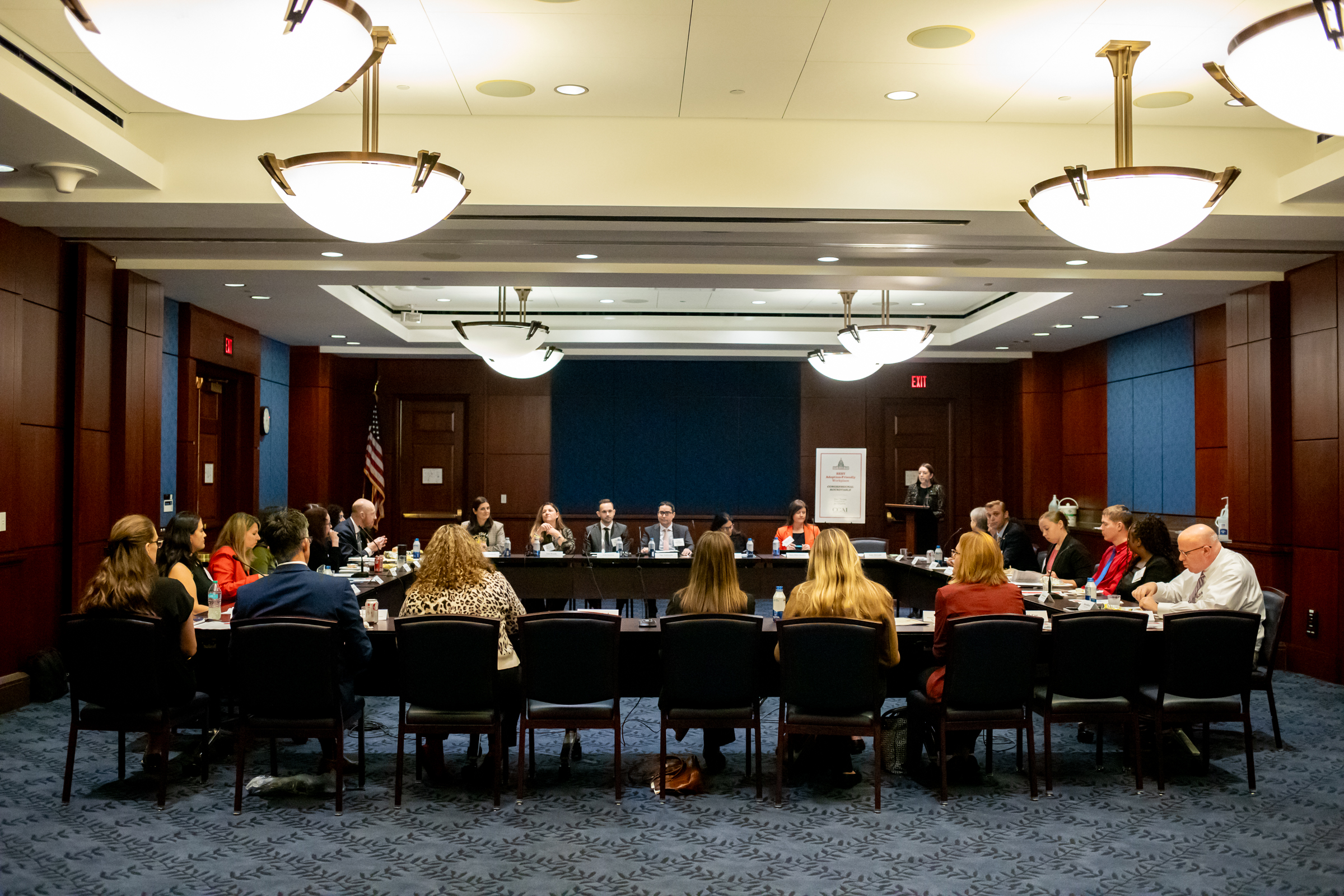
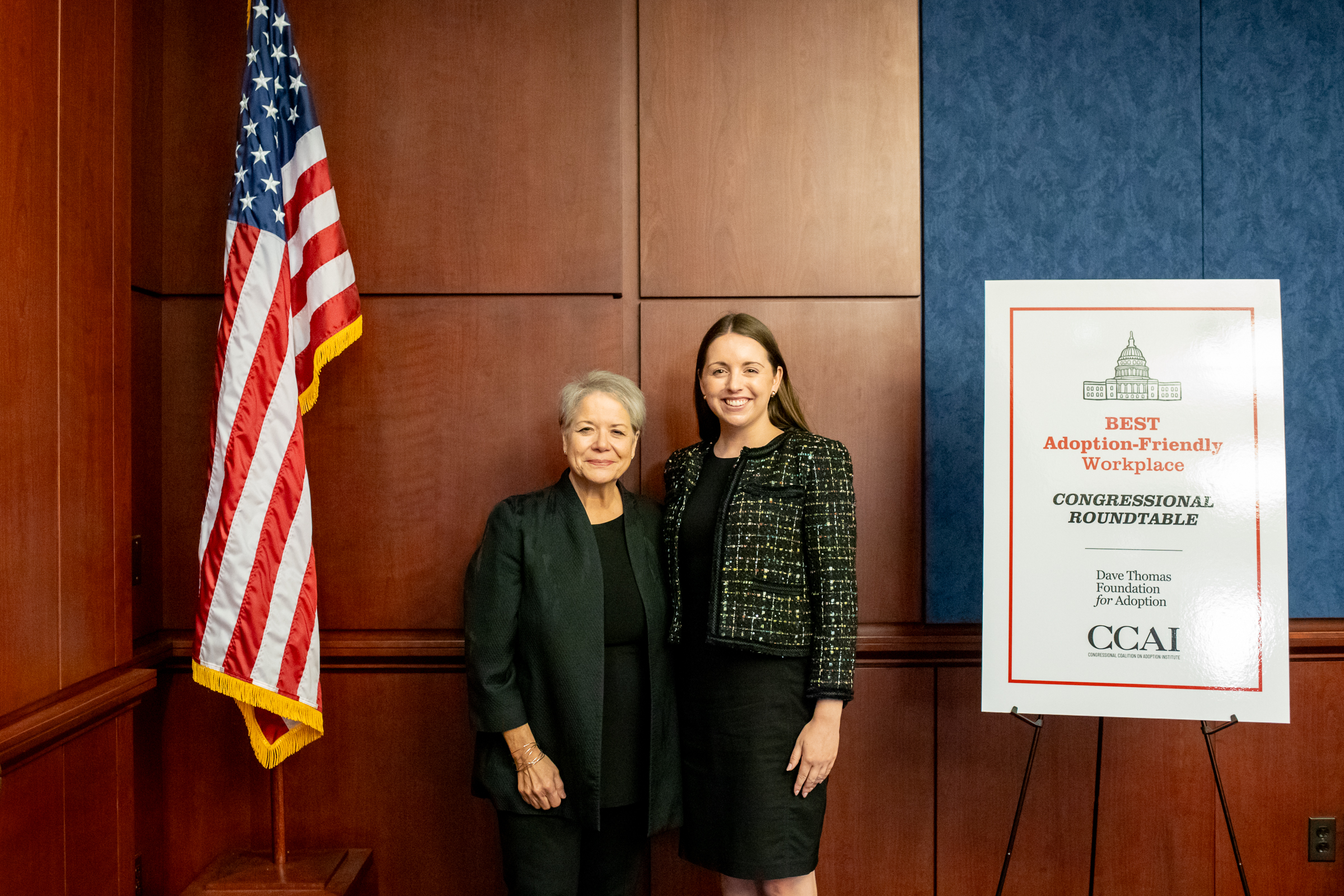
CCAI Executive Director Kate McLean welcomed attendees by stating, “Around this table are nationally ranked Adoption-Friendly Workplaces, congressional staff, and various supporters, but above all, we share the belief that every child deserves a family, and every family deserves a caring community.” McLean continued with, “communities play an important role in helping families thrive, and more specifically, today we’ll discuss how workplaces in the community can help families thrive.”

More than 30 years ago, Dave Thomas, founder of the Foundation and The Wendy’s Company, led an initiative advocating for adoption benefits in the workplace. To him, it was just “the right thing to do.” The Dave Thomas Foundation for Adoption carries that legacy forward through the Adoption-Friendly Workplace program, which encourages U.S. businesses, governments, and nonprofits to provide their employees with adoption and foster care benefits. It offers a toolkit to inform policies and share stories of impact.

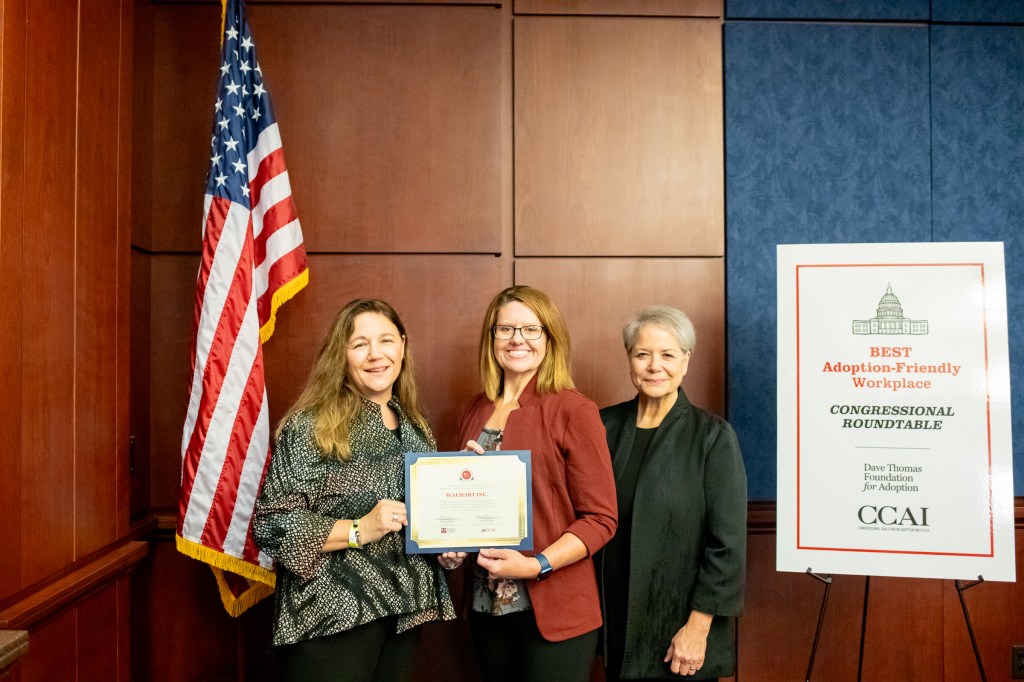
The Foundation partners with RTI International, a nonprofit research institute, to conduct the Best Adoption-Friendly Workplace survey, which evaluates companies based on financial reimbursement for adoption expenses (45%), paid leave for adoptive parents (45%), and the percentage of employees eligible for those benefits (10%). Each year, the 100 Best Adoption-Friendly Workplaces list is released to recognize organizations leading the way in making adoption and foster care supported options for every working parent. View the list of 100 Best Adoption-Friendly Workplaces of 2024.

In opening remarks, U.S. Representative Pete Stauber (MN-08), a Congressional Coalition on Adoption (CCA) Caucus member, shared that he is a foster and adoptive father himself. He and his family are familiar with the critical need to support adoptive and foster families. Rep. Stauber commended the adoption-friendly companies for their efforts in making adoption and foster care more attainable and affordable, which he noted can make all the difference. As an active member of the Caucus, Stauber said he “remains deeply committed to strengthening families and prioritizing permanency for children.”

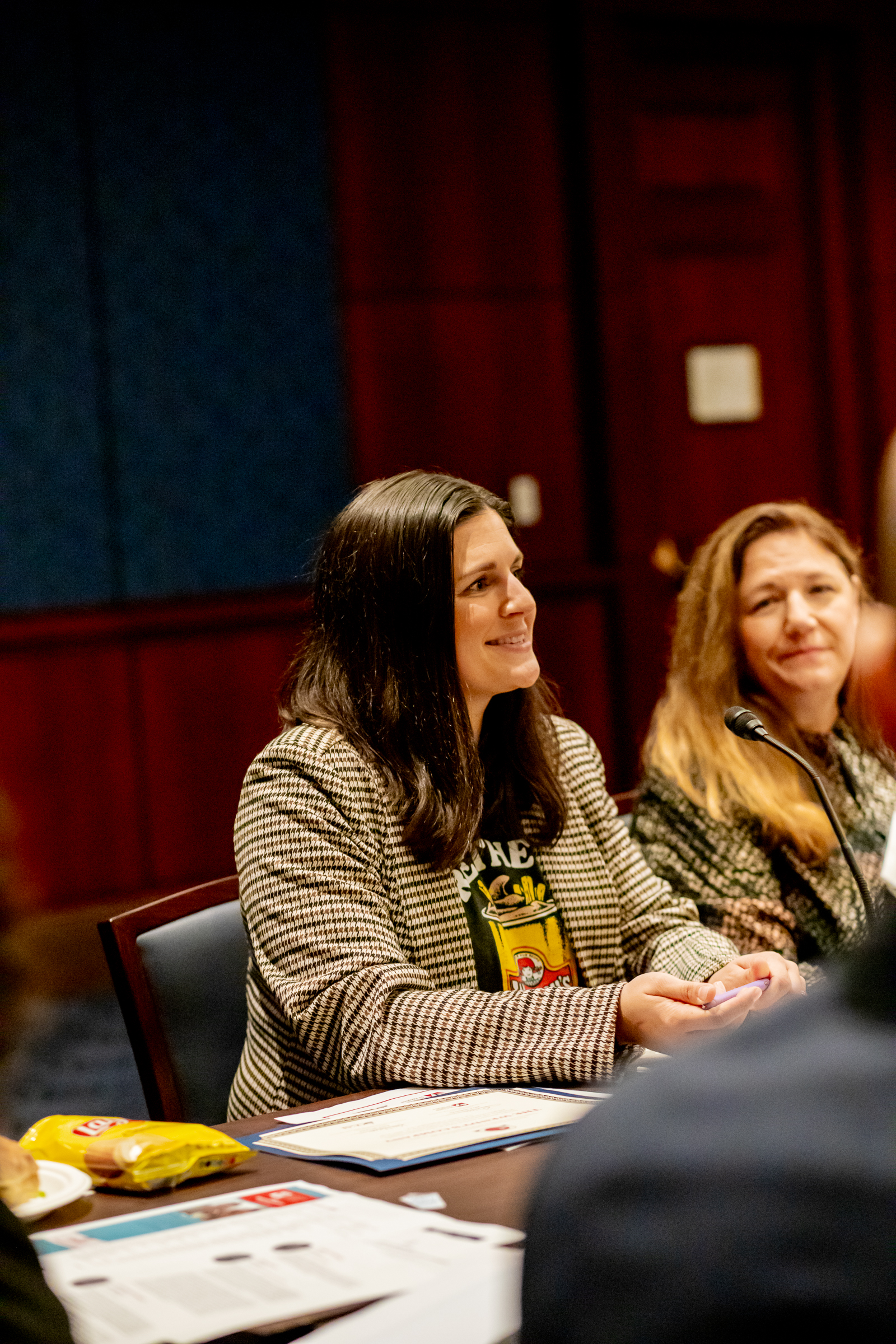
The congressional event featured a panel and roundtable discussion with representatives from organizations named on the Foundation’s prestigious 100 Best Adoption-Friendly Workplaces list of 2024. Panelists included:

  • Aney Chandy, Head of Diversity, Equity & Inclusion at Ferring Pharmaceuticals;
  • Allison DeRoberts, Director, Public Affairs at The Wendy’s Company;
  • Tige Nishimoto, Solutions Director at TCG, Inc.;
  • Josh Newton, Benefits & Wellness Specialist at Walker & Dunlop; and
  • Lisa Woods, Vice President, Physical and Emotional Wellbeing at Walmart, Inc.

The panel was moderated by Mary Ellen Smalley, Director of Brand and Cause Awareness at the Foundation, to highlight the need for continued advocacy to improve adoption and foster care benefits for working parents. The panelists shared their organizations’ best practices, insights, and challenges in promoting adoption and foster-friendly policies, underscoring the importance of making adoption and foster care accessible for employees across the country.
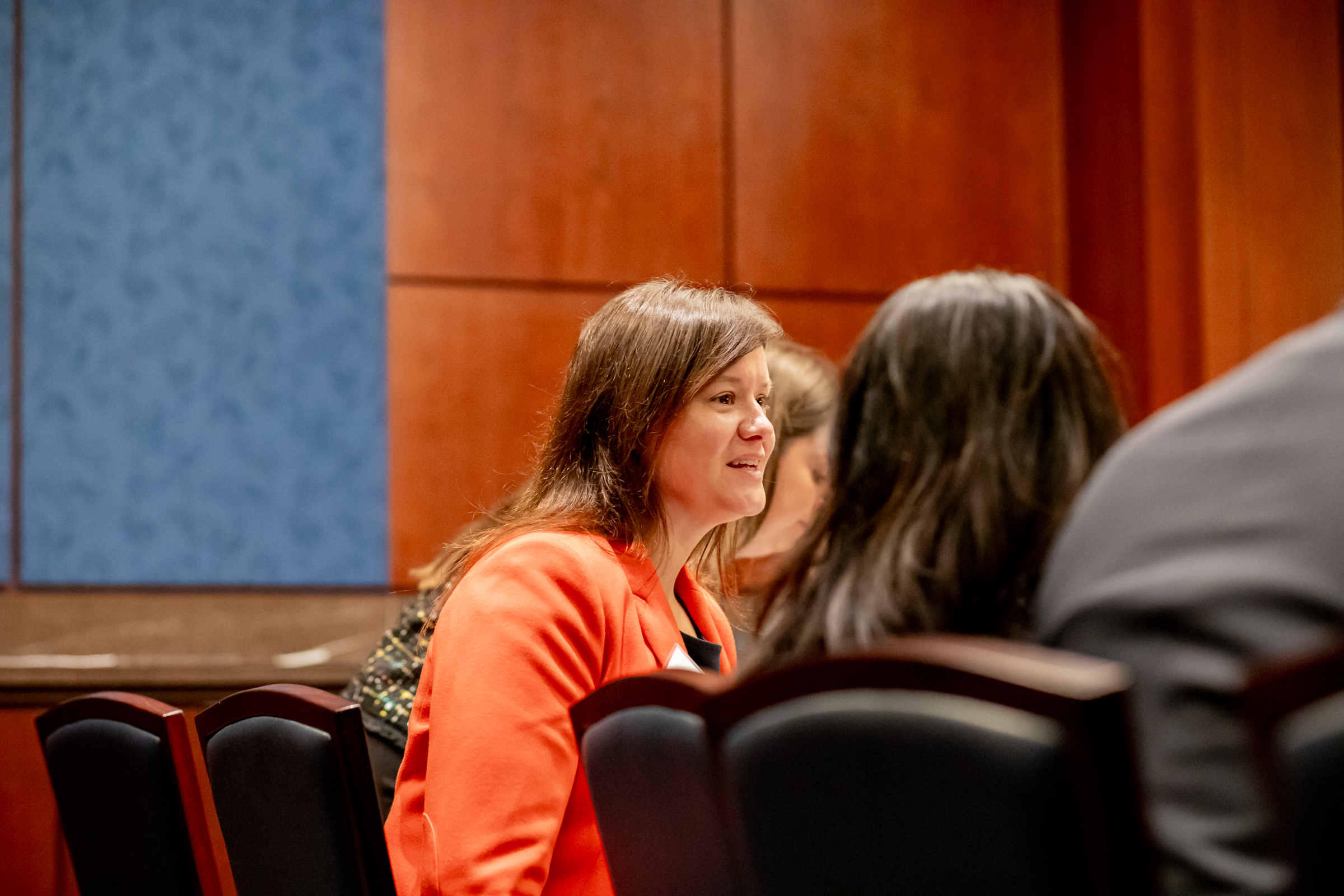
Allison DeRoberts, Director of Public Affairs at The Wendy’s Company, opened the panel and highlighted the Company’s continued commitment to adoption through its partnership with the Foundation. Wendy’s® leads the way in adoption-friendly values through employee benefits, supplier and franchisee engagement, in-restaurant campaigns, and fundraising efforts. With this, permanent emeritus status on the Best Adoption-Friendly Workplace list was granted to Wendy’s for their unparalleled commitment to adoption and adoption benefits.“This cause is embedded in the fabric of our culture at Wendy’s. Since the start of our partnership, Wendy’s franchisees, crew members, suppliers and restaurant support teams have raised more than $316 million for the Foundation, helping expand their work to build public awareness of the urgent need for foster care adoption,” said DeRoberts.

Aney Chandy, Head of Diversity, Equity & Inclusion at Ferring Pharmaceuticals stated, “Ferring Pharmaceuticals’ purpose is grounded in helping people on their family-building journey through the products we offer, so it was important for us to extend this support to our employees in whatever form they choose to build their families.” Ferring provides an extensive range of family building benefits, including among other benefits, payment of unlimited adoption expenses and 26 weeks of paid parental leave, earning Ferring the top spot on the 2024 Best Adoption-Friendly Workplace list.

The event went on to serve as a platform to recognize the achievements of the 2024 Best Adoption-Friendly Workplaces and discuss how to enhance benefits and support for families pursuing adoption or foster care. Rita Soronen, President & CEO of the Foundation, provided closing remarks and stated, “Whether you’re at the top of the list or you’re number ninety-nine, we value what you’re doing, and are so incredibly grateful for your commitment to supporting all the ways that families are formed.”

For more information on the 100 Best Adoption-Friendly Workplaces or to register for the 2025 survey, visit the Dave Thomas Foundation for Adoption website.

About Congressional Coalition on Adoption Institute

For 23 years as an organization uniquely founded “by Congress, for Congress,” CCAI has been an established, trusted resource for the Congressional Coalition on Adoption, the largest bicameral, bipartisan congressional member organization in the U.S. Congress.

CCAI works to engage Members of Congress on issues of domestic and international child welfare policy. CCAI works to provide federal policymakers with the information and resources needed to make informed policy decisions through its core programs, including the Congressional Resource Program, Angels in Adoption®, Foster Youth Internship Program®, and 20/20 Vision Program.

About Dave Thomas Foundation for Adoption

The Dave Thomas Foundation for Adoption is a national, nonprofit public charity dedicated to finding permanent homes for the more than 140,000 children waiting in North America’s foster care systems. Created by Wendy’s founder Dave Thomas who was adopted, the Foundation implements evidence-based, results-driven national service programs, foster care adoption awareness campaigns and innovative grantmaking. To learn more, visit davethomasfoundation.org.

***********************************************************************

Congressional Coalition on Adoption Institute (CCAI) is a 501(c)(3) nonprofit, nonpartisan organization founded in 2001 to eliminate the barriers that prevent children from being part of a safe, nurturing, and permanent family.

For more information or to learn about the work of the Congressional Coalition on Adoption Institute, visit https://www.ccainstitute.org or contact info@ccainstitute.org or (202) 544-8500.
In My Eyes: Limitations of the Affordable Care Act for Foster Youth

Dustin Haley
Dustin Haley

Today’s guest blog post is written by Dustin Haley, a CCAI 2013 intern, University of Texas undergraduate student, and former foster youth.

As the Affordable Care Act (ACA) is rolled out, many former foster youth will have increased availability for medical coverage.  Starting in 2014, youth who aged out of foster care will be eligible to remain on Medicaid until age 26, a huge win for child welfare advocates and former foster youth.

Youth in college will now have the peace of mind of always having their health insurance covered, and will not have to choose between books and medical care.  Former foster youth who are working part time will also be able to support themselves without having the unnecessary burden of healthcare costs. However, limitations to the ACA will negatively impact many of the former foster youth. As a former foster youth myself, I am all too familiar with these restrictions but it wasn’t until I started interning with CCAI that I learned I could advocate to change this policy.

First Focus, a bipartisan advocacy organization, recently took a look at this regulation, in addition to the rest of the ACA as it applies to foster youth.  They found that as it stands now, coverage will only be guaranteed to those who remain in the state where they resided when they were 18.  This is a huge issue for foster youth around the nation, as they often travel to different states for extended periods for school, jobs, or internships.  Many also move to be closer to support systems, whether they are close friends or extended family.  First Focus points out that restrictions on residency only apply to foster youth, not to adopted children nor to youth raised in a traditional family.

During CCAI’s summer Foster Youth Internship (FYI) Program, foster youth from around the nation come to DC work on Capitol Hill.  Most all of them come from different states and thus are not eligible to receive Medicaid in DC.  Since I’ve started interning at CCAI, I’ve learned about one of last summer’s interns, who ended up needing medical treatment, but experienced difficulties because he was not in his “home” state.

I contacted Josh to learn more about his experience and he explained how he had just returned from a trip to Ecuador when he started as an FYI participant last summer.  Soon thereafter, Josh started to experience serious stomach issues stemming from possible parasites contracted while abroad.  He went to a quick-service clinic in DC and had to pay full cost for treatment.  Unfortunately, the practitioners in the clinics are not specialists and could not figure out what he had contracted.  Seeing a specialist in DC would have cost Josh too much money out of pocket and was thus forced to fly back to Tennessee.  He was able to get the proper treatment from a specialist there and he soon recovered.

I too have run into the same struggles as Josh since being out of my home state—Texas—and completing my internship in DC this semester.  I recently injured my knee, but due to the limitations on Medicaid, I was not able to seek out treatment.  Had I seen a doctor, they would have surely ordered X-Rays and possibly an MRI.   Without insurance, these bills quickly add up.  My struggles, along with the struggles of all foster youth, should not be lost on child welfare advocates.

The Center for Medicaid and Medicare Services recently opened up to debate the section of the Affordable Care Act regarding former foster youth.   Organizations have been able to submit comments, many of which proposed medical coverage for former foster youth irrespective of the state they resided in when they were 18.   I, for one, hope to see change that eventually leads to greater benefits to the youth.

Educational Assistance for Foster Youth

Former CCAI Foster Youth Intern, Jeremy Long, responds to the recent USA Today article addressing the growing number of colleges and universities providing support for America’s foster youth. To read the full article click here: http://usat.ly/AegSmh

Our little friend Jiminy Cricket once said “when you wish upon a star, makes no difference who you are, anything your heart desires, will come true.” Take a second and visualize something you once wished upon a star for. Maybe you wished for something as big as finding the cure for cancer or as simple as getting an A in a class. Whatever the wish, it was something you strongly desired to have in life. If your wish came true, great, if not, that’s fine to, but the point is that you had even the slightest hope it could come to be.

Now imagine a world in which wishes and dreams feel out of your reach. A world where the odds always seem stacked against you and you almost never get to experience what it is like to have a dream come true. This is the world in which too many of the half a million youth currently in U.S. foster care live.  Like most of us, they have wished upon a star. However, they don’t have the luxury of wishing to be the Laker’s new star forward. Their dreams are to be placed in a quality foster home where the parents treat them like their own, to have someone to celebrate their life’s accomplishments with, and not having to worry about where they will lay their head or fill their stomachs that night.

There is one dream that many youth, both in and out of foster care, share which is the opportunity to go to college and achieve graduation. A recent study published by Casey Family Programs found that only 3-7% of the 70% who plan to attend college actually graduate with a bachelor’s degree. That would mean out of nearly 500,000 youth, 350,000 have plans to attend college but only 11,000 are actually graduating with a degree. What is happening to the other 339,000 youth who wanted so desperately to obtain a higher education?

I remember my first day of college. I was terrified, scared of what was going to happen after my mom and my best friend left me to fend for myself in a sea full of party hungry teenagers hoping they spend their parents’ money wisely on an extremely expensive education. Yes, I was in foster care, but my story is very unique compared to most foster care alumnae. I was placed in a foster home that gave me the mom to celebrate with when goals were accomplished, someone who would make sure my stomach was full and my head was well rested. I had someone who made sure she did everything in her power to make me a part of that 3-7% of youth who graduated with a degree. I had the dream of graduating college and she made me believe that dream was possible. And because of her support, I went on to college and I graduated. Currently, I sit as the youth engagement coordinator for Mile High United Way’s youth success initiative.

As I said, I was one of the lucky ones. A large percentage of former foster youth are attending college after “aging out” of foster care, meaning they have no family, no system who is responsible for them. At 18, they are alone making decisions that will have lifelong consequences. Many are first generation college students so they also suffer from the fear that this is a dream that is beyond someone like them. Finally, since they are most often on their own financially, these youth have to work their way through college.  Add the stress, the work, the pressures and questions that college brings to the life of any young person and you can see why so many fail to finish.

USA Today’s article “Programs Help Foster Youth Achieve College Success” describes the work that programs like Guardian Scholars are doing to better support youth along their path to graduation. All too often we see youth on the right track to success, but the lack of support both emotionally and financially derails any chance they had of getting ahead and no human being should ever be denied the ability to obtain happiness and self-worth.  In the words of a current scholar from UCLA’s program, Guardian Scholar programs provide youth “a community that I can always rely on.” I think the most important word in that statement is always. Always being able to rely on the community, always being able to say that one has friends and family he can call on in a time of need, stress, or hardship.  There is incredible power in always being able to say one always has that.

And what articles like the one in USA Today show is this. It is ALWAYS possible for each and every youth in care to achieve their dreams. They just need a Jiminy Cricket or Gepetto to guide them towards making them reality.