
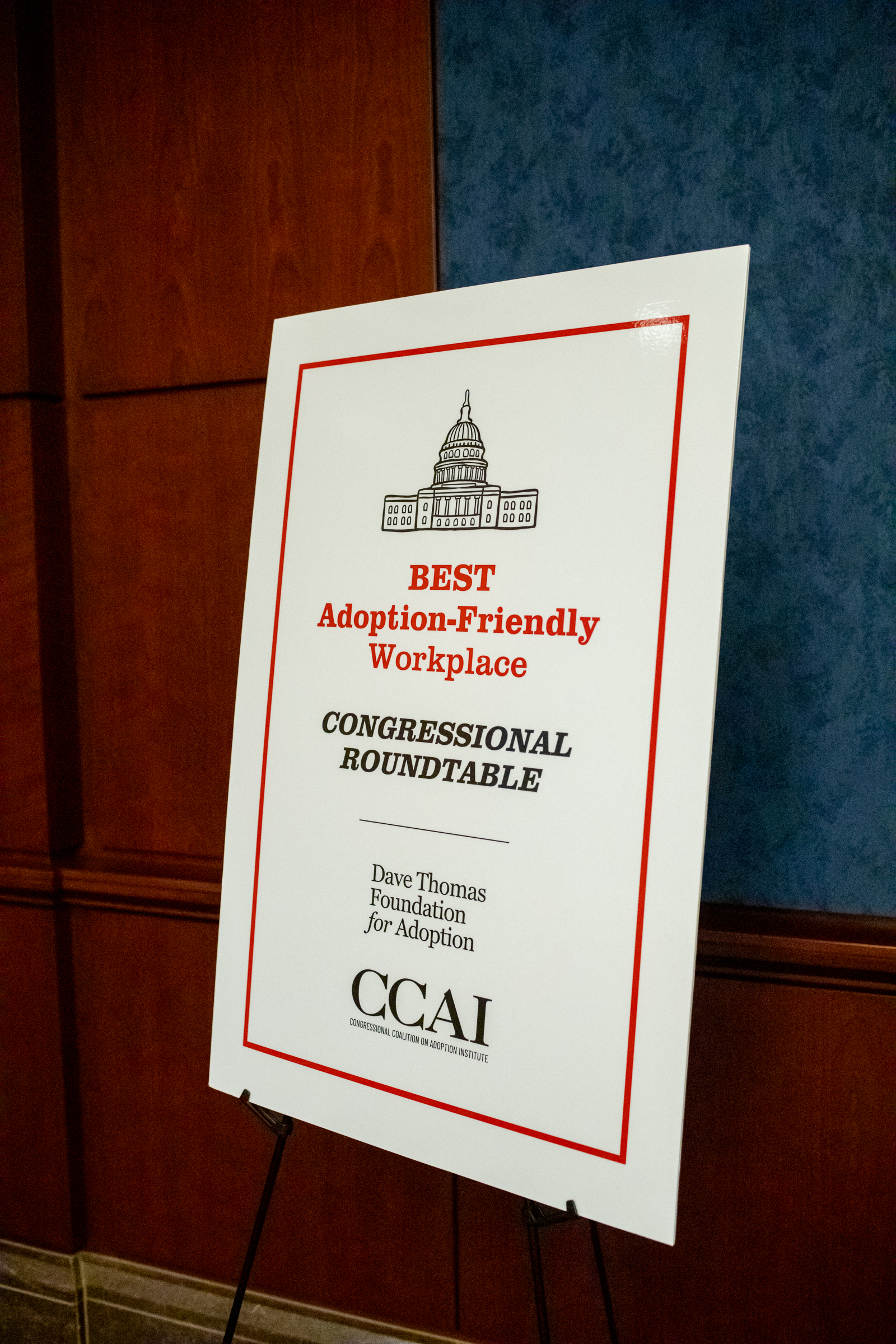
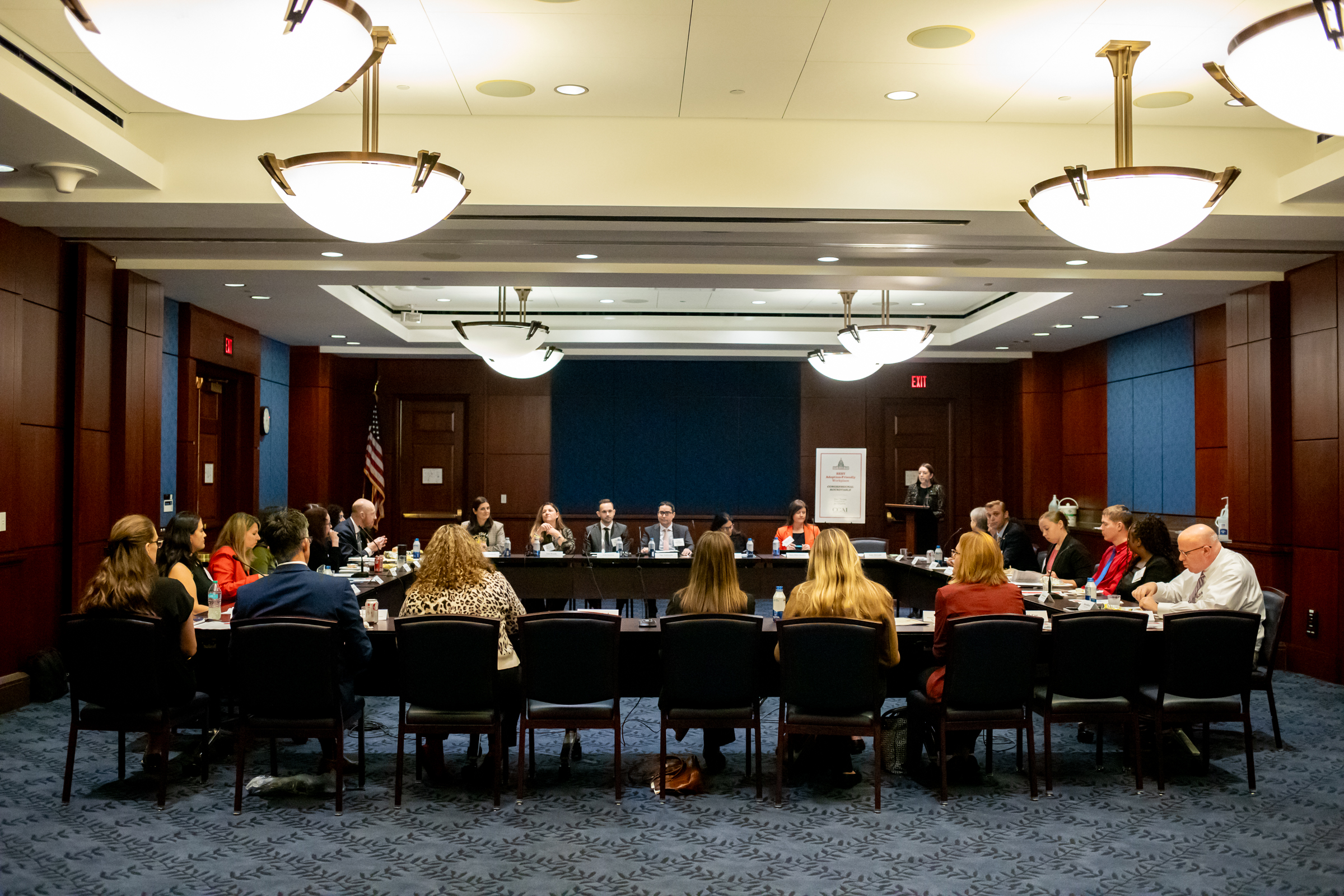
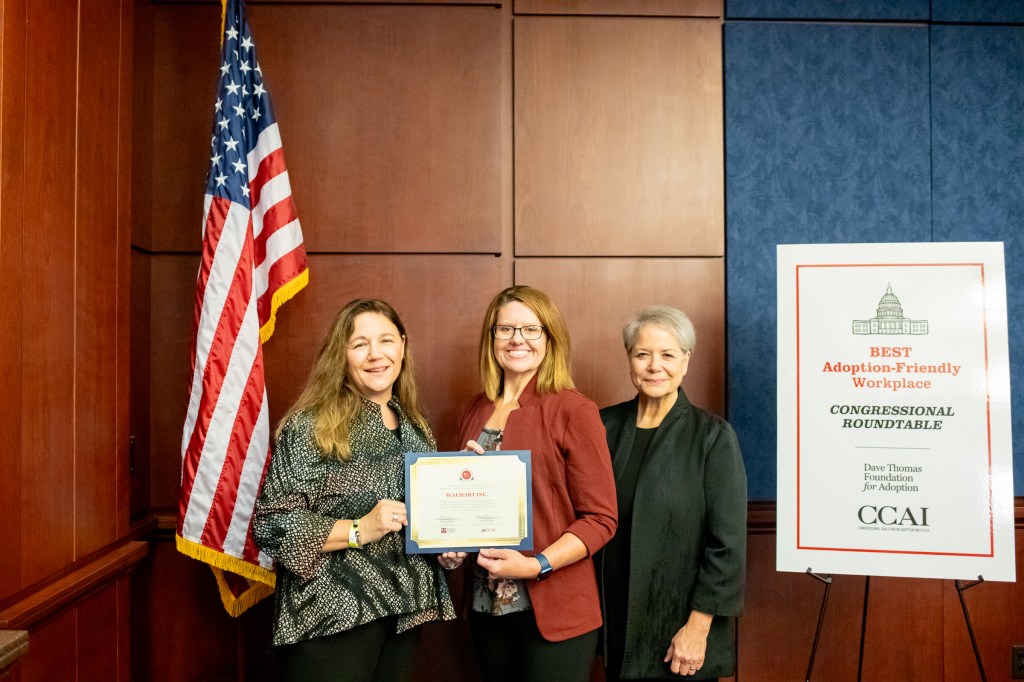
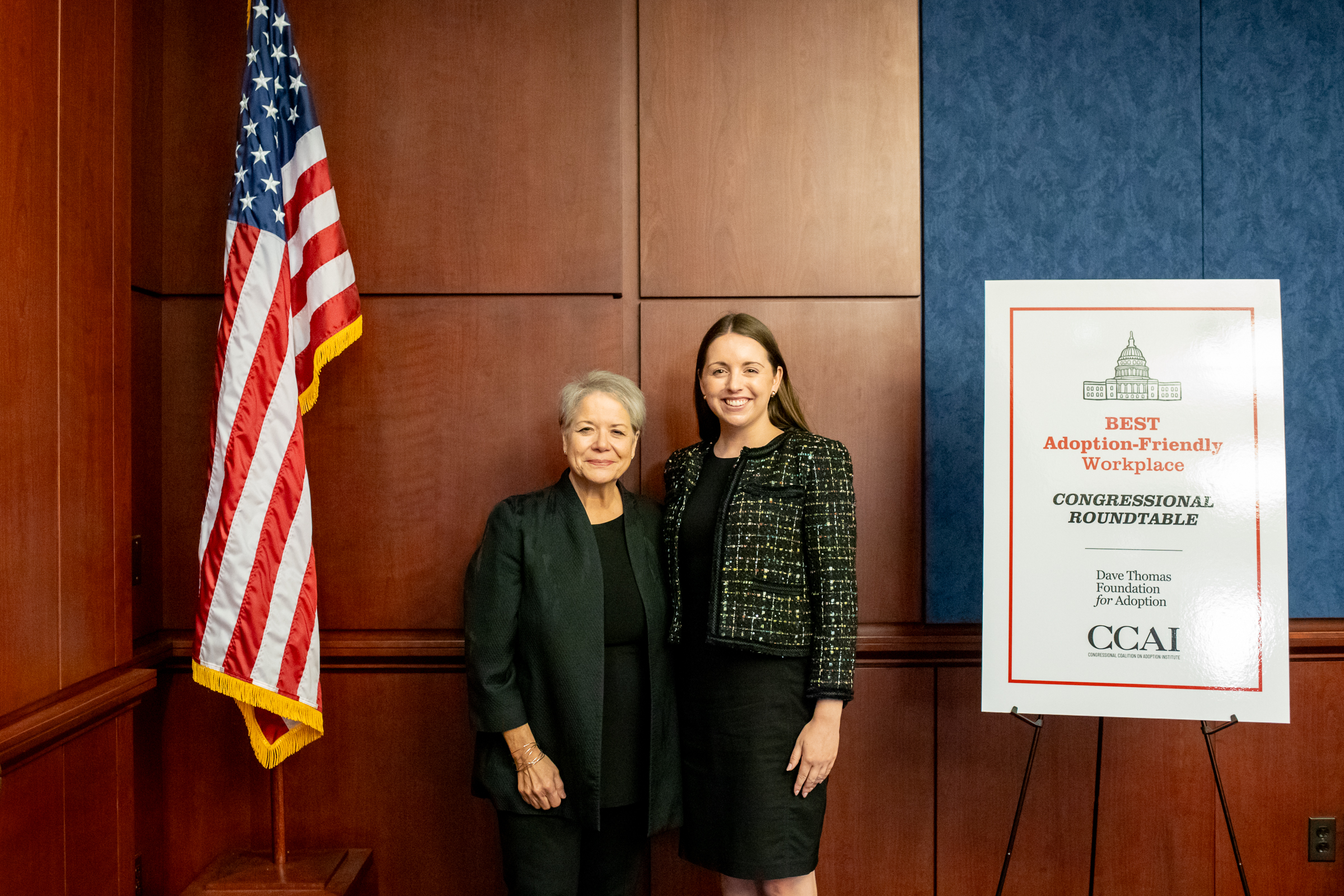
Washington, D.C., October 17, 2024 – The Congressional Coalition on Adoption Institute (CCAI) in partnership with the Dave Thomas Foundation for Adoption (the Foundation), hosted the Congressional Roundtable on Adoption-Friendly Workplaces on September 24 in the U.S. Capitol Visitor Center to gather public and private leaders to discuss strategies for enhancing workplace benefits for adoptive and foster families.
CCAI Executive Director Kate McLean welcomed attendees by stating, “Around this table are nationally ranked Adoption-Friendly Workplaces, congressional staff, and various supporters, but above all, we share the belief that every child deserves a family, and every family deserves a caring community.” McLean continued with, “communities play an important role in helping families thrive, and more specifically, today we’ll discuss how workplaces in the community can help families thrive.”
More than 30 years ago, Dave Thomas, founder of the Foundation and The Wendy’s Company, led an initiative advocating for adoption benefits in the workplace. To him, it was just “the right thing to do.” The Dave Thomas Foundation for Adoption carries that legacy forward through the Adoption-Friendly Workplace program, which encourages U.S. businesses, governments, and nonprofits to provide their employees with adoption and foster care benefits. It offers a toolkit to inform policies and share stories of impact.
The Foundation partners with RTI International, a nonprofit research institute, to conduct the Best Adoption-Friendly Workplace survey, which evaluates companies based on financial reimbursement for adoption expenses (45%), paid leave for adoptive parents (45%), and the percentage of employees eligible for those benefits (10%). Each year, the 100 Best Adoption-Friendly Workplaces list is released to recognize organizations leading the way in making adoption and foster care supported options for every working parent. View the list of 100 Best Adoption-Friendly Workplaces of 2024.


In opening remarks, U.S. Representative Pete Stauber (MN-08), a Congressional Coalition on Adoption (CCA) Caucus member, shared that he is a foster and adoptive father himself. He and his family are familiar with the critical need to support adoptive and foster families. Rep. Stauber commended the adoption-friendly companies for their efforts in making adoption and foster care more attainable and affordable, which he noted can make all the difference. As an active member of the Caucus, Stauber said he “remains deeply committed to strengthening families and prioritizing permanency for children.”
The congressional event featured a panel and roundtable discussion with representatives from organizations named on the Foundation’s prestigious 100 Best Adoption-Friendly Workplaces list of 2024. Panelists included:
- Aney Chandy, Head of Diversity, Equity & Inclusion at Ferring Pharmaceuticals;
- Allison DeRoberts, Director, Public Affairs at The Wendy’s Company;
- Tige Nishimoto, Solutions Director at TCG, Inc.;
- Josh Newton, Benefits & Wellness Specialist at Walker & Dunlop; and
- Lisa Woods, Vice President, Physical and Emotional Wellbeing at Walmart, Inc.
The panel was moderated by Mary Ellen Smalley, Director of Brand and Cause Awareness at the Foundation, to highlight the need for continued advocacy to improve adoption and foster care benefits for working parents. The panelists shared their organizations’ best practices, insights, and challenges in promoting adoption and foster-friendly policies, underscoring the importance of making adoption and foster care accessible for employees across the country.
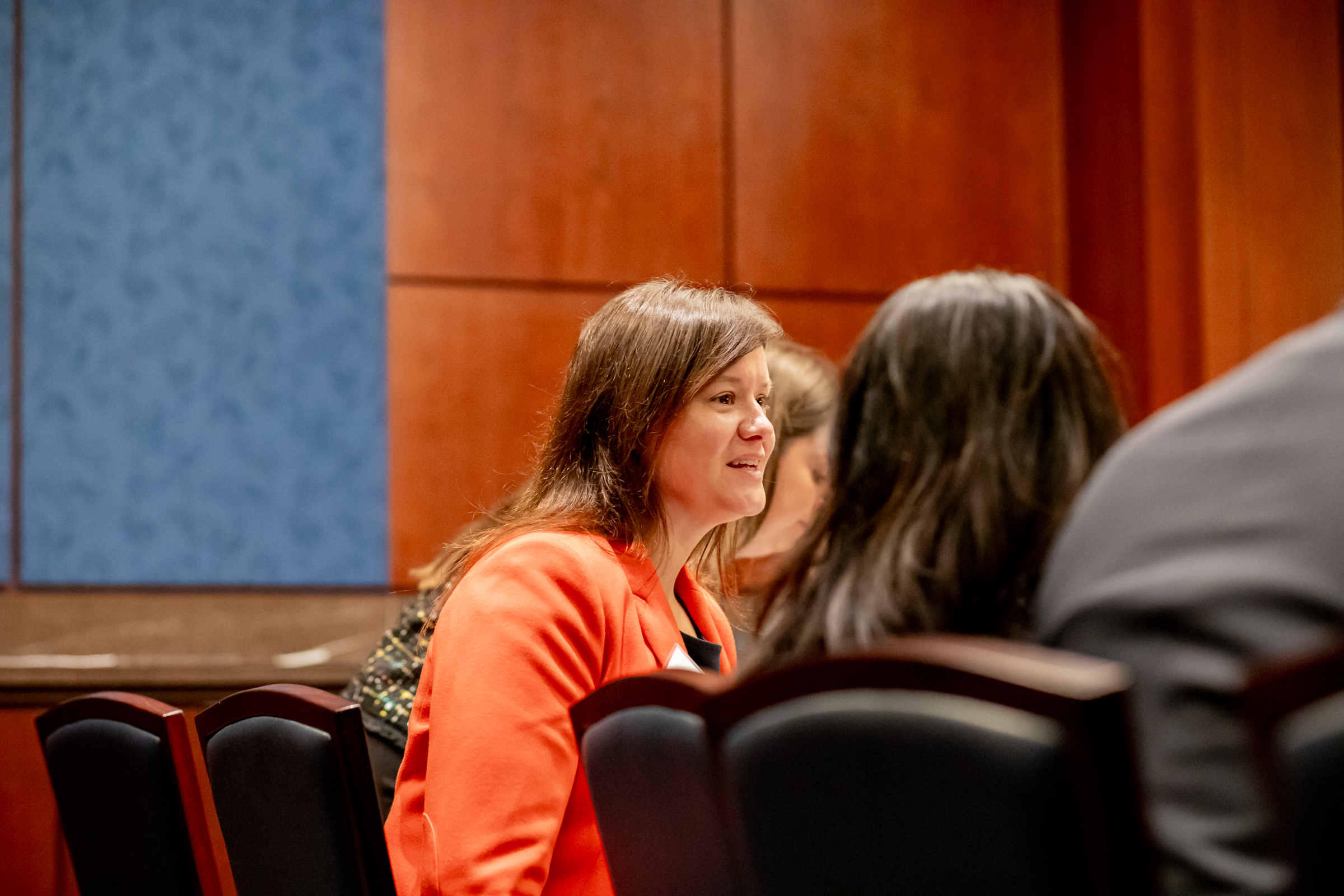


Allison DeRoberts, Director of Public Affairs at The Wendy’s Company, opened the panel and highlighted the Company’s continued commitment to adoption through its partnership with the Foundation. Wendy’s® leads the way in adoption-friendly values through employee benefits, supplier and franchisee engagement, in-restaurant campaigns, and fundraising efforts. With this, permanent emeritus status on the Best Adoption-Friendly Workplace list was granted to Wendy’s for their unparalleled commitment to adoption and adoption benefits.“This cause is embedded in the fabric of our culture at Wendy’s. Since the start of our partnership, Wendy’s franchisees, crew members, suppliers and restaurant support teams have raised more than $316 million for the Foundation, helping expand their work to build public awareness of the urgent need for foster care adoption,” said DeRoberts.
Aney Chandy, Head of Diversity, Equity & Inclusion at Ferring Pharmaceuticals stated, “Ferring Pharmaceuticals’ purpose is grounded in helping people on their family-building journey through the products we offer, so it was important for us to extend this support to our employees in whatever form they choose to build their families.” Ferring provides an extensive range of family building benefits, including among other benefits, payment of unlimited adoption expenses and 26 weeks of paid parental leave, earning Ferring the top spot on the 2024 Best Adoption-Friendly Workplace list.


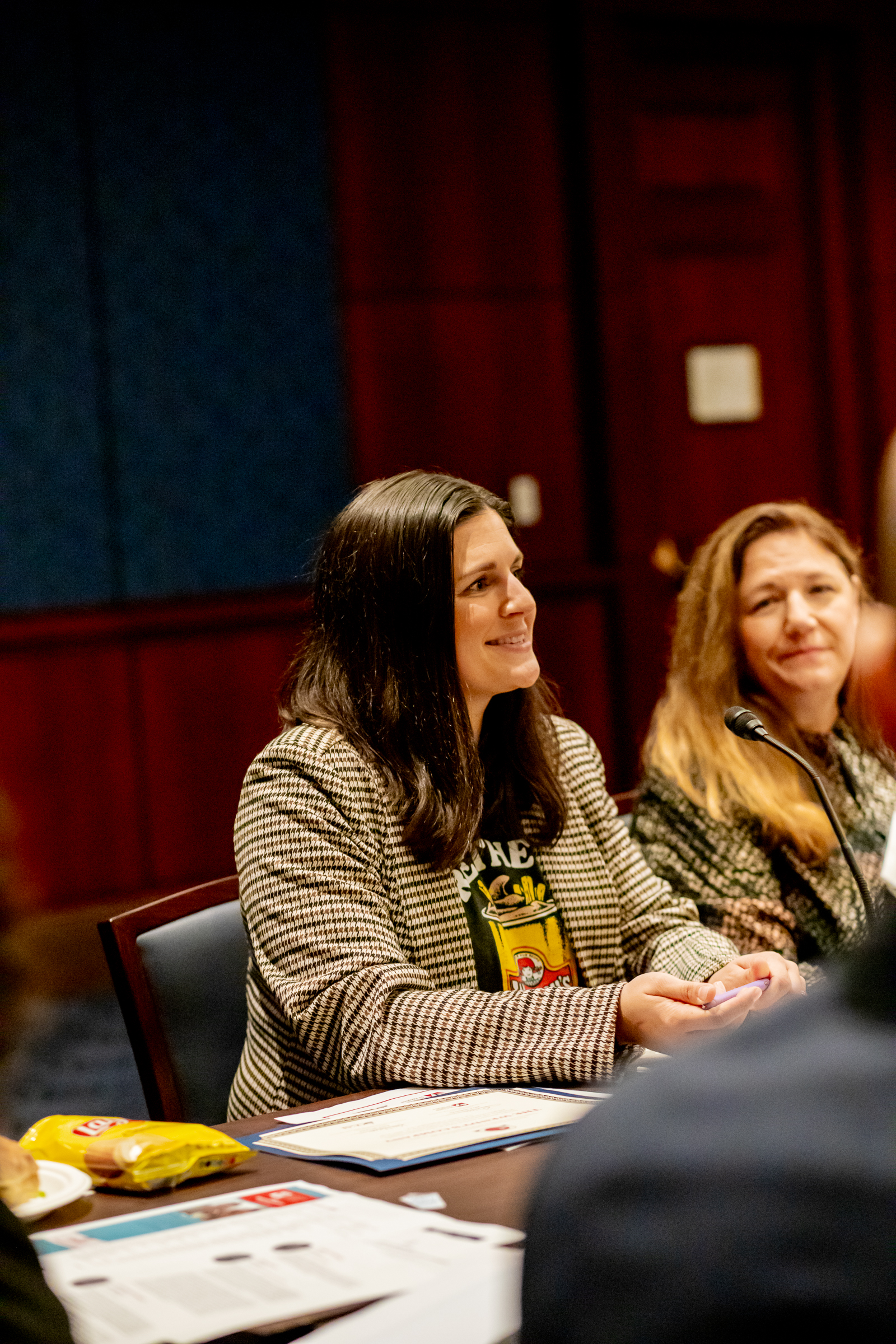
The event went on to serve as a platform to recognize the achievements of the 2024 Best Adoption-Friendly Workplaces and discuss how to enhance benefits and support for families pursuing adoption or foster care. Rita Soronen, President & CEO of the Foundation, provided closing remarks and stated, “Whether you’re at the top of the list or you’re number ninety-nine, we value what you’re doing, and are so incredibly grateful for your commitment to supporting all the ways that families are formed.”
For more information on the 100 Best Adoption-Friendly Workplaces or to register for the 2025 survey, visit the Dave Thomas Foundation for Adoption website.
About Congressional Coalition on Adoption Institute
For 23 years as an organization uniquely founded “by Congress, for Congress,” CCAI has been an established, trusted resource for the Congressional Coalition on Adoption, the largest bicameral, bipartisan congressional member organization in the U.S. Congress.
CCAI works to engage Members of Congress on issues of domestic and international child welfare policy. CCAI works to provide federal policymakers with the information and resources needed to make informed policy decisions through its core programs, including the Congressional Resource Program, Angels in Adoption®, Foster Youth Internship Program®, and 20/20 Vision Program.
About Dave Thomas Foundation for Adoption
The Dave Thomas Foundation for Adoption is a national, nonprofit public charity dedicated to finding permanent homes for the more than 140,000 children waiting in North America’s foster care systems. Created by Wendy’s founder Dave Thomas who was adopted, the Foundation implements evidence-based, results-driven national service programs, foster care adoption awareness campaigns and innovative grantmaking. To learn more, visit davethomasfoundation.org.




***********************************************************************
Congressional Coalition on Adoption Institute (CCAI) is a 501(c)(3) nonprofit, nonpartisan organization founded in 2001 to eliminate the barriers that prevent children from being part of a safe, nurturing, and permanent family.
For more information or to learn about the work of the Congressional Coalition on Adoption Institute, visit https://www.ccainstitute.org or contact info@ccainstitute.org or (202) 544-8500.


 Congressional Coalition on Adoption Institute