
2010 FYI Hosts Chafee Panel
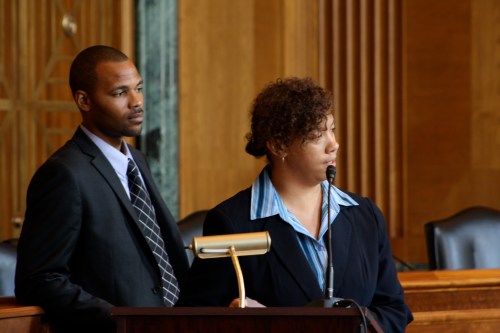
Last week, the Senate Finance Committee hosted a panel examining how Chafee has been working over the past 10 years. Nicole Marchman, 2010 FYI and intern for the Majority Senate Finance Committee, took advantage of Chafee’s upcoming review by proposing this event. She invited a panel of former foster youth to testify on the effectiveness of the Chafee program. Each panelist was a member of CCAI’s 2010 Foster Youth Internship Class. Nicole also moderated the panel along with 2010 FYI, Markus McQueen.
Barbara Pryor, Legislative Assistant at Senator Rockefeller and Laurie Rubiner, Vice President for Public Policy for Planned Parenthood served as respondents for the panel. Both served a major roll in passing the John Chafee Foster Care Independence Act in 1999.
 LaTasha Hayes is finishing her junior year at California State University Stanislaus. She is swiftly approaching the age limit for her Chafee education stipend. LaTasha recommended extending the age beyond 23, which would account for youth who start school later than age 19.
 Jeremy Long is a recent graduate from the University of Northern Colorado who has been fortunate to have only one placement during his time in the foster care system. Because Jeremy learned life skills from his foster mother, he didn’t need the funds appropriated by Chafee for adult skills classes. Jeremy proposed a screening for benefits needed by each youth so that no funds would be wasted when they could be supporting another youth in need.
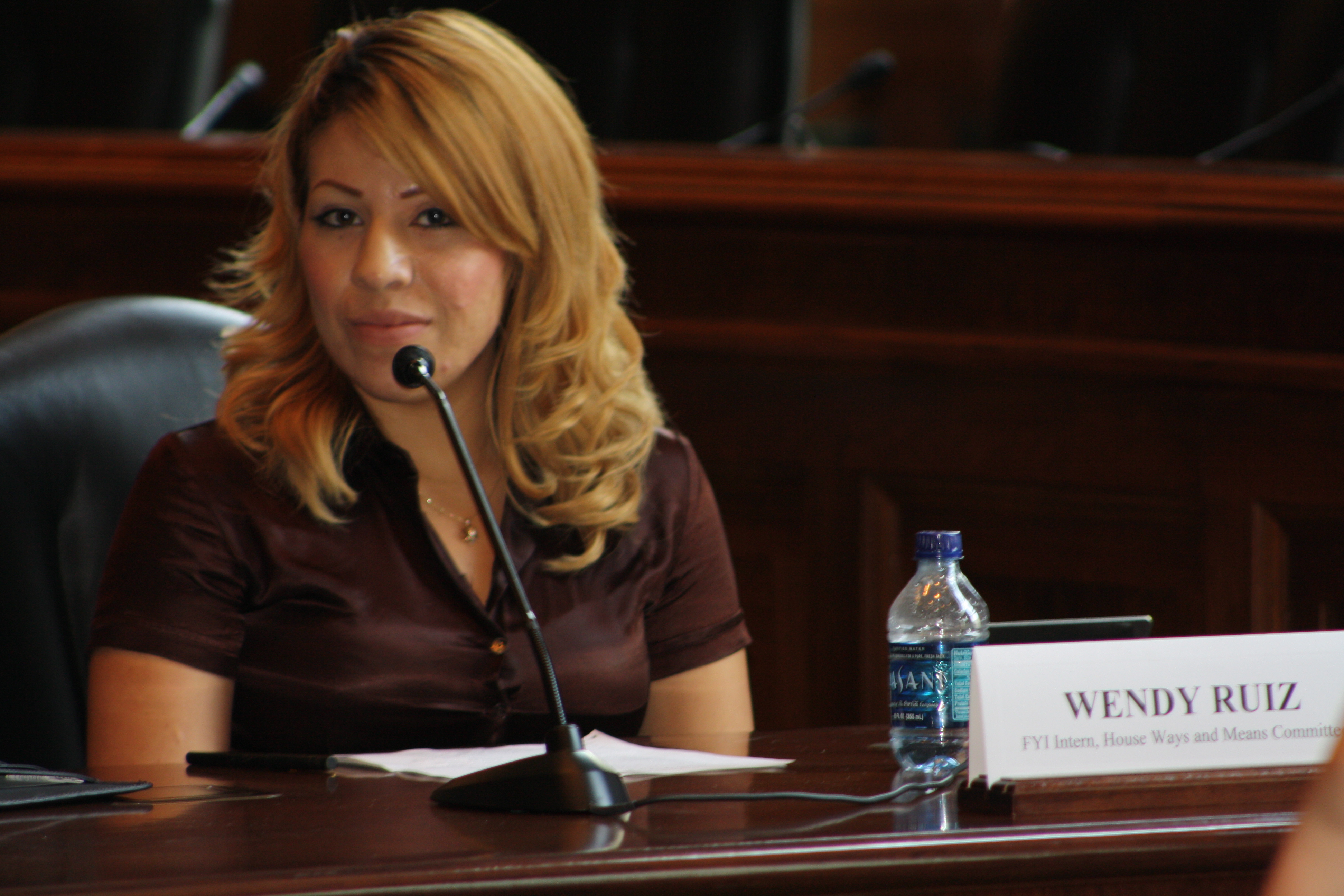 Wendy Ruiz was denied Chafee funding when she started school in 2007 at Los Angeles City College due to budget cuts. In order to keep track of funds, Wendy proposed a database to track funds across states. This accountability would allow to know how many youth they are serving and how many youth are being denied.
 Sam Martin grew up in kinship care in Seattle, Washington. Sam is passionate about bringing support to kinship care providers and youth in kinship care. These situations are often in just as much need of funds as foster care families and Sam believes they should receive assistance the Chafee.
The difference a mentor can make
Sam Martin, 2010 Foster Youth Intern, shares his story about how one person can make a difference in the life of a foster youth.
Finding homes for older kids in foster care.
Advocates in this field all know the horrific statistic that there are currently over 175,000 youth age 13 and older in the foster care system. And each year, almost 30,000 youth ‘age out‘ of the foster care system to devastating outcomes of homelessness, incarceration, unemployment, or substance abuse.
The current issue of Fostering Families Today includes an article titled “Choosing Teens,” about one family’s experience with adopting an older youth in foster care. Denise and Bruce Kendrick from Texas were foster parents to younger children in care for years before realizing the horrible fact that there are tens of thousand of youth who will never know what it is like to belong in a family. One day, while reviewing the local Child Protective Services (CPS) website for educational updates they read the profiles of teenagers who were in need of homes. They scrolled through page after page of older teens waiting for someone to want and love them. The Kendricks instantly knew that they wanted to adopt an older teen. They inquired about one of the profiles they read and spoke with a worker at CPS who began the process of trying connect Denise and Bruce with the teenager they fell in love with while on the website.
After starting the adoption process they received a phone call informing them that an out-of-state relative had emerged and wanted to adopt the teen. Though they were saddened they would not be able to complete the adoption, they did not lose sight of their desire to provide a family for a teen in care. Denise and Bruce soon found another teenage boy, Brandan. They were prepared for and were determined to make Brandan a part of their family. Although Brandan did suffer from attachment issues he was given the helped he needed professionally and the love he need personally.
The article closes by saying, “Brandan is finding joy in the little things these days, like a dad who knows how he likes his burger cooked, and a mom who packs his lunch. The clock is ticking toward […] a time that for teens who are never adopted brings great hardship and for many, grim outcomes. But Brandan is a teen who was chosen.”
Last month, CCAI hosted a Congressional briefing to draw attention to the need for better foster adoptive parent recruitment models to be used in the field and supported by the federal government. This article goes to show that innovative methods, such as online photolisting, is just one effective way that older youth in care can find a family to call their own.
How can the federal government improve foster adoptive parent recruitment?
In continuing to celebrate National Foster Care Month, CCAI hosted a briefing last week to discuss what the federal government can be doing to improve parent recruitment for youth in foster care.
In an effort to bring lessons learned in the field to impact federal legislation, CCAI convened this briefing to present data and trends in foster care, and share lessons learned from successful parents recruitment models. This briefing examined data related to older youth, who more frequently languish in care and are more likely to age out of care without any promise of permanence. Agency representatives shared information about their innovative recruitment models and how federal policy was supporting their work or if policy barriers needed to be removed to allow for best practices to be used in the field.
The panel spoke to over 40 Congressional staff and adoption professionals. Click here or on the image below to view the full footage of the briefing. Also, the materials presented are available at CCAI’s website. Be sure to check back in a few days for a 2-page in-depth summary of lessons learned that were presented at the briefing.

The panel echoed the need for an increase in federal funding to support post-adoption services. In addition, several unique components of their models were shared, including:
1. Using local TV and radio media to raise awareness in the community
2. Using child-focused recruitment to identify any connections the youth may already have to caring adults that could become an adoptive parents, such as a teacher, mentor, or extended family member.
3. Using the same software and technology that debt collectors use to find extended family members who may be adoption options.
4. Bringing agency representatives to recruitment events so that adults start the adoption process before even leaving the event where they have just heard from youth themselves, social workers, and other adoptive parents.
5. Allowing relationships to build naturally by using a mentor-to-adopt model.
Are you my mother?
 We all remember reading the children’s book Are You My Mother? and laughing at the comedy in the confused baby bird trying to find his mother. Unfortunately, searching for a mother is the reality for kids in foster care, and this Sunday is another painful reminder of this. They have been removed from their home in an effort to protect their safety, but the cost of a safer life is sometimes a lonely life. Read below to hear from Betty, a young adult who spent years in foster care searching for a mother before finally being adopted.
Sunday is Mother’s Day! Children and parents will be heading off to church, having Sunday brunch, planting in the garden and just spoiling mother by bringing breakfast in bed. What about the 26,000 of the 463,000 children in foster care nationwide who age out of foster care to live on their own? How do they celebrate Mother’s Day? For those fortunate enough, the day is spent with the “family” they have built for themselves. However, many are not fortunate and this May 9th will be a day of longing for that essential connection.
Sunday marks my 8th anniversary spending Mother’s Day with my adoptive mom; and the 8th year since the death of my biological mother. Because of this, Mother’s Day is a very special day to me. I take the time to thank my biological mother for bringing me into this world and spoil the mother I now have. Mom and I love to go shopping, go out to eat, spend a day here and there in New York, and listen to Christmas music in the car together when we’re feeling down. We volunteer together or just hang out and chat about life when we miss each other. I never look at my adoptive mom as my “adoptive” mom, but rather as my mother I always had. It’s funny how fast my mom and I bonded when I first moved in. I never had anyone to read books to me, take care of me when sick, or just spend time with. So at the age of 14, I was reading Dr. Seuss books, learning how to cook, and learning how to be a regular kid.
This Mother’s Day I’m going to go visit my biological mother’s grave and plant sweet pea flowers in honor of her for bringing me into life. My mom would always call me her little sweet pea and I would hate it. Now that I’m older, I love sweet peas flowers and buy the scent at Bath & Body Works; and it always gives me sweet memories of her. The second portion of the day will be spent with the best mother in the world in my eyes. I won’t spoil the surprise I have in store for her, but I can tell you no matter how we spend the day, it will be like any other mother and daughter; and I’m grateful to have her in my life.

For children who are displaced from their biological family, Mother’s Day is about the big things and also about the little things in between it all. Thank you to all you moms out there. Happy Mother’s Day!!!!
 Congressional Coalition on Adoption Institute