2010 Foster Youth Interns Leave Their Mark on Capitol Hill

CCAI is proud to announce the release of the 3rd annual policy recommendations report authored by the 2010 Foster Youth Internship Class.  Nicole, Sam, Jeremy, Serena, LaTasha, Markus, Wendy, Josh, and Victor spent their summer in DC reading reports and analyzing legislation related to 3 major topics in child welfare: Federal Financing, the Adoption and Safe Families Act, and the Chafee Foster Care Independence Act.  This report is their way to forever leave their mark on federal policymakers.

These individuals arrived in DC with passion and a purpose: to improve the foster care system for their 463,000 brothers and sister in care.

Markus spent his summer learning about the Adoption and Safe Families Act.  It was 2 years after he had aged out of the California foster care system before he even learned that there is such as thing as foster care adoption.  He spent 16 years in foster care not knowing that kids were adopted from foster care, or that this could have been an option for him.

Wendy chose to spend her summer studying federal financing of the foster care system.  She entered care after years of watching her widowed father struggle with grief and later alcoholism.  Wendy’s frustration was that had her father known about services available to them, she and her siblings could have avoided being placed in foster care.

As you read through the pages, remember the 9 individuals who made themselves vulnerable in sharing their personal stories.  They have spent a collective 81 years in the foster care system and have many ideas to share about how to improve the system.

How can we address the shortage of adoptive homes for kids in foster care?

CCAI convened a group of adoption experts to present data and trends in foster care and share lessons learned from five successful foster and adoptive parent recruitment models. While not by design, a considerable amount of the briefing examined data and program examples related to placing older youth who more frequently languish in care.  As the highlighted programs are demonstrating, there is no such thing as an unadoptable child, merely unfound families.

Experts from around country flew to DC to share success and lessons learned with federal policymakers and advocates.  Rrecruitment programs that were represented include:

1) Wendy’s Wonderful Kids

2) Wait No More

3) Real Connections (Rhode Island)

4) You Gotta Believe! (New York)

5) Weekend Miracles (DC and Los Angeles)

While each of the programs presented during the briefing were unique, it could not help but be noted that the presenters and the programs they presented on had some of the same lessons learned.  When making future federal funding and policy decisions, federal policymakers should keep in mind the following:

1) Resource Gaps –Every one of the highlighted recruitment programs was in essence filling in a human or financial resource gap in the public system.  In the case of Wendy’s Wonderful Kids the solution was a full time, trained worker, in Wait No More these gaps were filled through a partnership with the faith based community and in Real Connections, the solution lie in providing services the system did not have the staff to provide.  Congress needs to figure out how to either help support the public private partnership model across the board or consider other ways to promote these gaps being filled.

2) Youth Voice – Another key theme throughout was that youth in the system should not only have a voice but a choice in their own long term permanency planning.  As important, they need to be appropriately supported and encouraged when exercising that right. 

3) Data Mining – These successful programs found that much of the information and relationships needed to secure a permanent placement for the child was already somewhere in the children’s case file (i.e information about a teacher/mentor, mention of extended families).  This information was just not being mined for.  Presenters universally agreed that making this tool a part of their programs was a critical part of their ultimate success.

4) Messaging – Presenters agreed that how and what messages were conveyed to prospective adoptive parents is a key factor to success.  In the case of WWK, the fact that recruitment was child centered was key and Wait No More stressed the need to be open and honest about the realities of parenting previously traumatized children.  And all agreed that the central message should be that older kids need a family just as much as younger children and that parenting an older child is just a rewarding.

For a full summary of briefing, click here.

Had I known how to save a life…

Mentoring has longtime been an accepted practice of encouraging young people to set positive goals, improve their attitude, and help them meet challenges of everyday life.  For youth in foster care, these trusting relationships are vital in helping youth cope with their current situation and past loss.  Over the years, study after study has confirmed what common sense tells us, that mentoring in successful in promoting school success and discouraging unsafe activities.

Just last year, a study on mentoring was concluded that found mentoring also has a positive effect on mental health outcomes.  The study’s participants reported greater satisfaction in life and lower symptoms of post-traumatic stress disorder.  This is significant in that youth in foster care are far more likely to suffer from PTSD in addition to ADHD, bipolar disorder, depression, and many other mental illnesses.

These findings suggest that even for the most vulnerable children, rigorous intervention efforts can make a difference and may lead to better outcomes and healthier futures,” said Heather Taussig, PhD, the study’s researcher.

Each Congress, several pieces of legislation related to mentoring are introduced.  While it is important to express our support for legislation that encourages this successful and effective activity, what’s more important is making the decision to become a mentor.  There are youth in your own community who could benefit from you taking an interest in their life.  To be inspired, see the powerful advertisements from the Casey Family Program’s campaign to promote mentoring.  To find out how to become a mentor, visit Mentor.org.

2010 FYI Hosts Chafee Panel

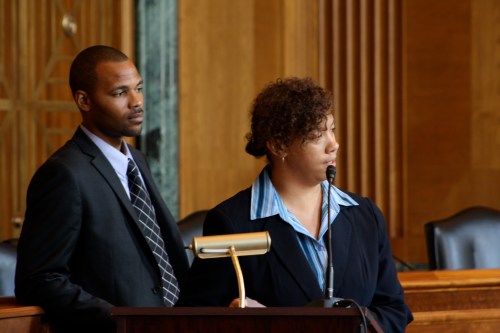
Last week, the Senate Finance Committee hosted a panel examining how Chafee has been working over the past 10 years.  Nicole Marchman, 2010 FYI and intern for the Majority Senate Finance Committee, took advantage of Chafee’s upcoming review by proposing this event.  She invited a panel of former foster youth to testify on the effectiveness of the Chafee program.  Each panelist was a member of CCAI’s 2010 Foster Youth Internship Class. Nicole also moderated the panel along with 2010 FYI, Markus McQueen.

Barbara Pryor, Legislative Assistant at Senator Rockefeller and  Laurie Rubiner, Vice President for Public Policy for Planned Parenthood served as respondents for the panel. Both served a major roll in passing the John Chafee Foster Care Independence Act in 1999.

LaTasha Hayes is finishing her junior year at California State University Stanislaus. She is swiftly approaching the age limit for her Chafee education stipend. LaTasha recommended extending the age beyond 23, which would account for youth who start school later than age 19.

Jeremy Long is a recent graduate from the University of Northern Colorado who has been fortunate to have only one placement during his time in the foster care system. Because Jeremy learned life skills from his foster mother, he didn’t need the funds appropriated by Chafee for adult skills classes. Jeremy proposed a screening for benefits needed by each youth so that no funds would be wasted when they could be supporting another youth in need.

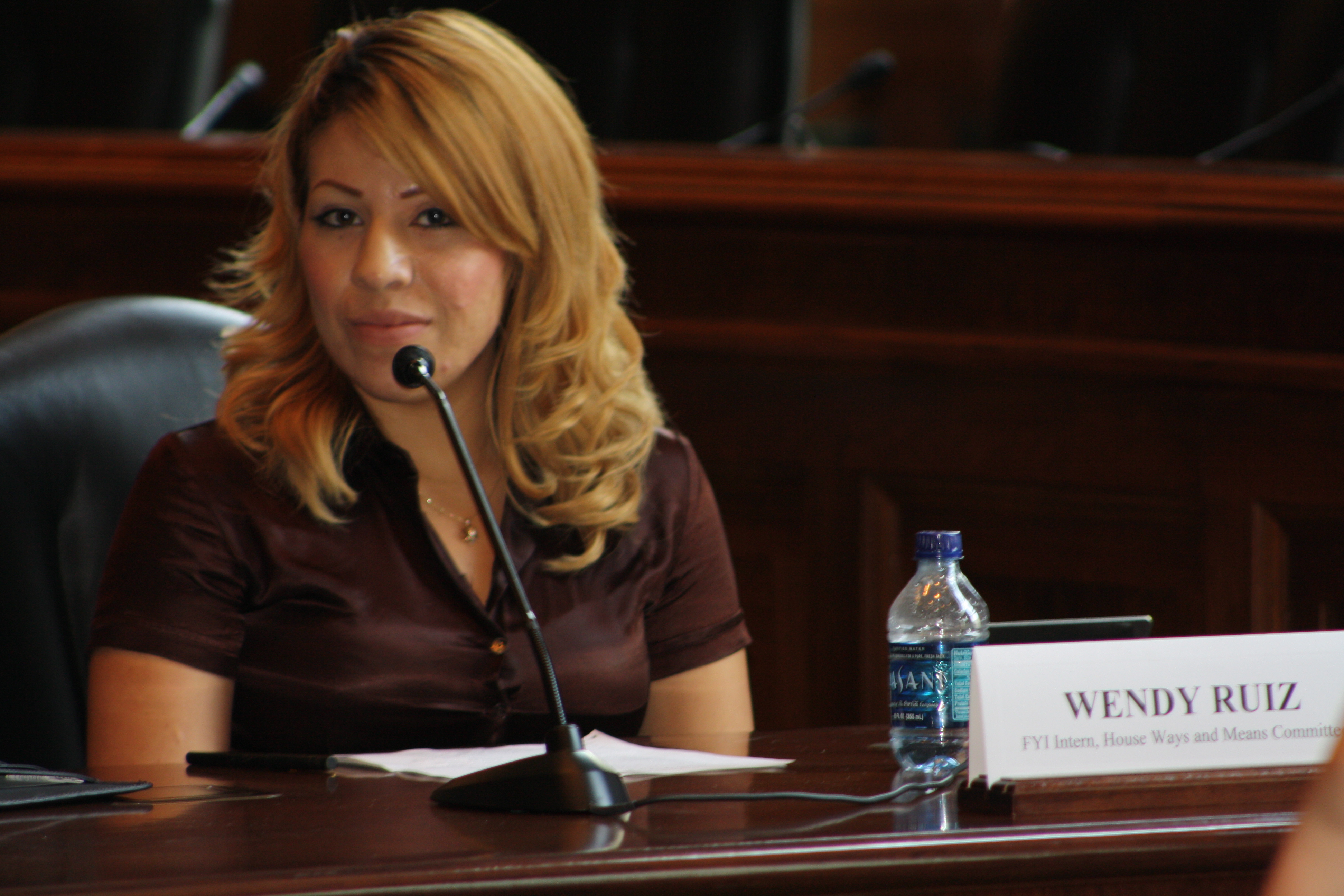
Wendy Ruiz was denied Chafee funding when she started school in 2007 at Los Angeles City College due to budget cuts. In order to keep track of funds, Wendy proposed a database to track funds across states. This accountability would allow to know how many youth they are serving and how many youth are being denied.

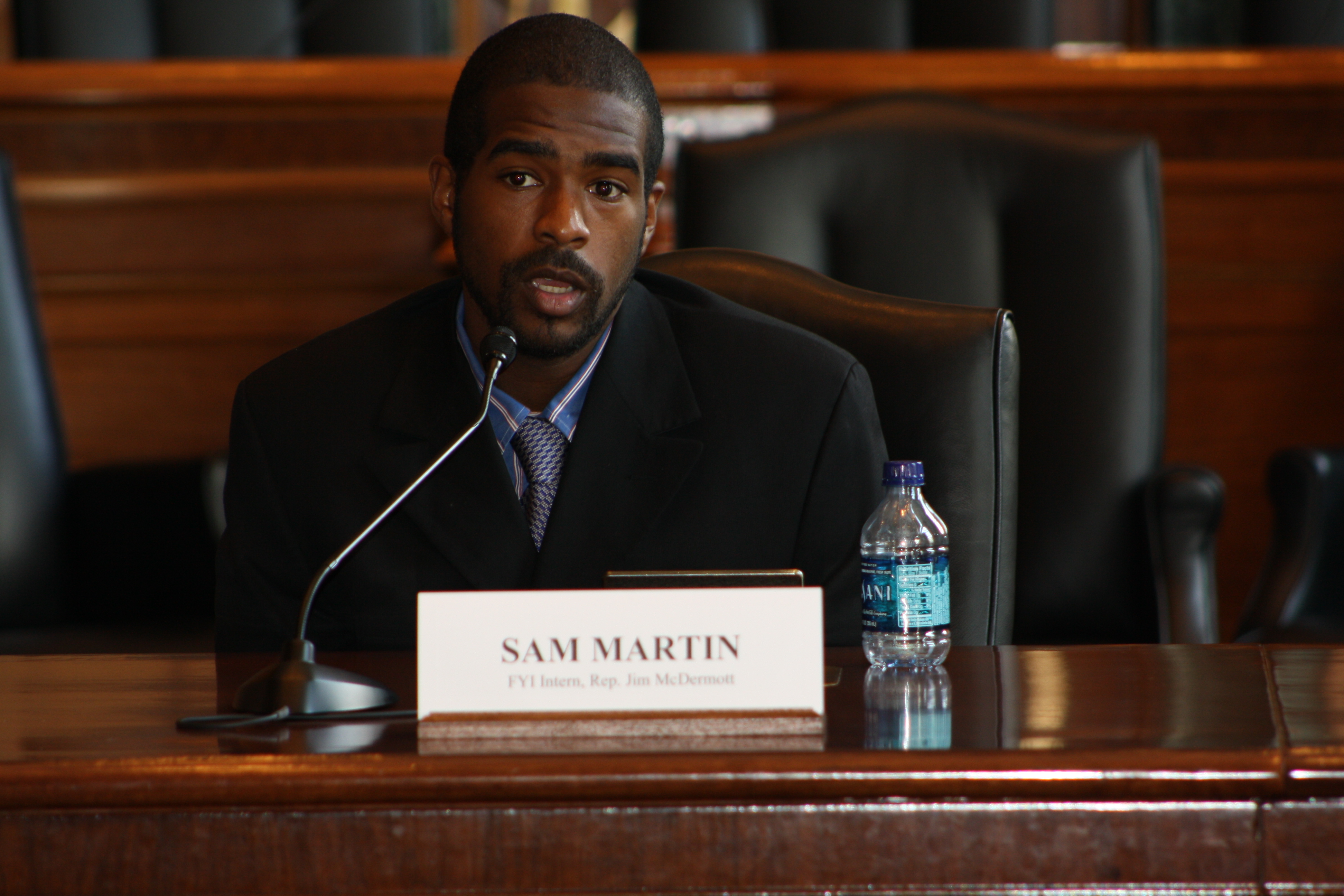
Sam Martin grew up in kinship care in Seattle, Washington. Sam is passionate about bringing support to kinship care providers and youth in kinship care. These situations are often in just as much need of funds as foster care families and Sam believes they should receive assistance the Chafee.


Shades of Gray

I have been spending this summer in Washington, DC as a Foster Youth Intern for the Congressional Coalition on Adoption Institute. Foster Care Alumni of America scheduled and planned a boat cruise for a few of the foster youth interns. On this cruise, I had the opportunity to meet Brian Samuels, the Commissioner of the Administration on Children, Youth and Families. He was selected by President Obama himself to work in the Obama Administration. We began to talk at the beginning of the cruise. Some of the things we were talking about were related to the funding of the foster care system. I talked to him about the work I was doing in Rep. Jim McDermott’s (WA-07) office, which was focused more on extending the waiver program to Washington State. From then on we got into a very deep conversation about the real issue of foster care.

Initially Bryan told me that he was not convinced that the waiver program would bring upon the change that I had expected in the foster care system. He said that if states were not motivated to improve the system with all the funding they receive now; why would they be more motivated with looser uses of the money. When I heard that I changed my entire perspective on how I saw the financing of the system. It was clear that not everything was so black and white and what I thought was the solution turned out not to be the solution at all.

Bryan Samuels opened my eyes to the biggest issue of the foster care system. People will cross-reference and find data in all these different areas of the foster care system but that is the same as trying to compare apples to oranges. He said many of the issues that surround the foster care system cross multiple different issues. Bryan spoke to me about his experience about being the Chief of staff for the Department of Education. He talked about how in the education system people would figure out the problem but not focus on it. He correlated it to the fact that if kids don’t get to see siblings let’s not keep looking at why kids don’t get to see siblings. Let’s focus on allowing kids to see brothers and sisters.

This experience made me realize that I don’t have all the answers and also allowed me to expand my horizons. It was also a great honor to meet Mr. Samuels. It is also very good to be able to see the potential flaws in the suggestions I have made. I know that it doesn’t discredit me at all but I know now the other side of the argument and I can look for potential flaws in my proposal. Without the opportunity to talk to Mr. Samuels none of this would have been possible and the CCAI report would have been just a little less prepared. Thank you again Foster Care Alumni of America, Orphan Foundation of America, and CCAI.