A Reflection on CCAI’s Recent Trip to Haiti

CCAI’s Director of Programs, Allison Cappa Coble, reflects on her August 2014 visit to Haiti as part of CCAI’s 20/20 Vision Program:

The Congressional Coalition on Adoption Institute’s (CCAI) most recent 20/20 Vision Program Delegation trip to Haiti was an unforgettable experience. It was heartbreaking and inspiring. It was a glimpse into the worst parts of human injustice and reminders that there are passionate people who are bringing hope to the orphaned. Joining CCAI was Representative Michele Bachmann (R-MN), Dr. Karyn Brand Purvis, Director of the Institute of Child Development at Texas Christian University, CCAI Advisory Board Member and Founding Executive Director Kerry Hasenbalg, Brooke Eastburn of Safe Families for Children Minnesota, and several friends supporting the work of Restavek Freedom Foundation in Haiti.  By partnering with both public and private entities, CCAI’s 20/20 Vision Program goal is to increase positive dialogue and the exchange of information among private sector individuals, foreign and domestic government officials and Members of Congress. And it is our experience that once these powerful individuals have met with the most vulnerable, they will speak and act on their behalf.

2014_CCAI_Haiti-028

Prior to working on child welfare issues, I, like many others, believed an orphanage provided safety from the streets, food for children who would otherwise go hungry and the possibility of an education. Our delegation to Haiti visited orphanages that spanned the entire spectrum; from well-resourced to under-resourced orphanages, to deplorable conditions – and each showed us that absolutely nothing can replace the love and security a family can offer. Yes, many of these children might have a bed and a roof over their head, but Dr. Karyn Purvis  taught us that if you listen and watch closely you’ll see these children are deeply traumatized. You’ll notice that laughter is missing, you’ll see babies that remain listless as you enter the room and when you go to hold a young child he will stiffen rather than know how to melt in your embrace. These are children who have not been loved well, but, rather, have experienced the severest types of abuse and/or neglect.
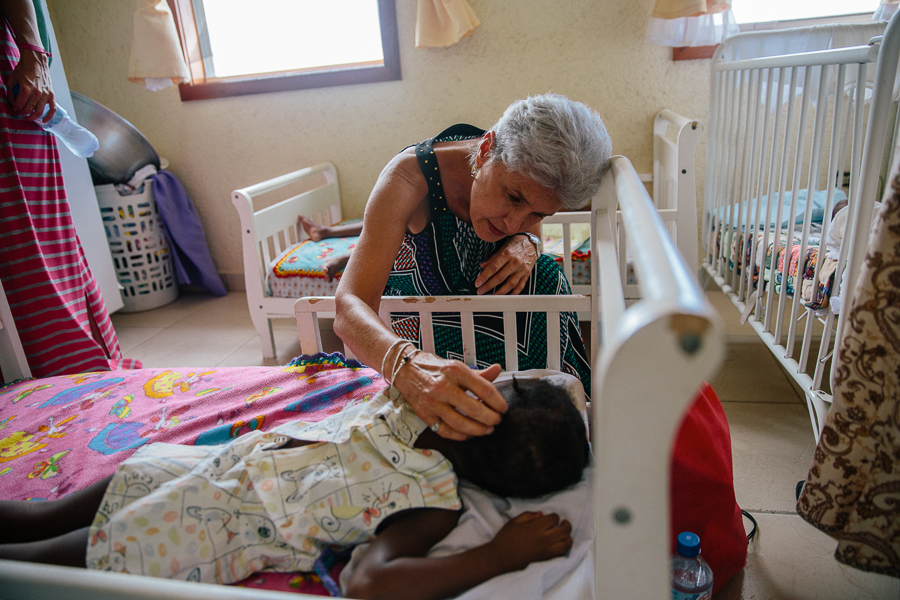
2014_CCAI_Haiti-025
Dr. Karyn Purvis visiting a child in an orphanage

We think sometimes that poverty is only being hungry, naked and homeless. The poverty of being unwanted, unloved and uncared for is the greatest poverty.” Mother Teresa

Thankfully, we did visit some organizations that are doing incredible work on the ground. Restavek Freedom is standing up for the 300,000 child slaves, known as restavek, in Haiti. It is through their tireless efforts that enslave children who have not only been pushed beyond their physical limits, but struggle to know their worth, have found freedom and a better life. Healing Haiti’s Grace Village is a faith-based organization whose orphanage prioritizes reunifying children with their families if and when at all possible by providing employment opportunities and school fees to families in poverty so that children can remain with their biological families whenever safe and possible to do so. They also are open to children being adopted when adoption is in the best interest of the child.
2014_CCAI_Haiti-001

Additionally, the delegation met with IBESR (Haiti’s Institute of Social Welfare), USAID and UNICEF. The dialogue between the delegation and these government officials was very positive. It was encouraging to see a sincere emphasis being placed on deinstitutionalizing children whether through reunification or adoption efforts, as well as making strides to eliminate the corruption, bureaucracy and abuse of power that too often keep children in harm’s way.

2014_CCAI_Haiti-030
Representative Michele Bachmann at a meeting with IBESR officials

As I reflect on all that has been accomplished through this delegation, I am most proud of the fact that CCAI exists to be the storyteller of the vulnerable. That the children who are living in constant fear and whose voices have been silenced are now being heard. And not heard by just anyone, but by influential lawmakers and private sector leaders who have the power to protect the powerless. Their stories will break your heart. But they will also change you. And we believe that if Members of Congress and influential leaders take the time to hear and experience them, they will take steps to protect children and to make it easier for loving families to come together. While CCAI has worked tirelessly for thirteen years fighting to make a loving family a reality for each and every child, we realize this is a daunting task and there are many forces working against this vision. But within us we have faith, love and a family comprised of advocates who feel as strongly as we do that we must respond to the desperate pleas heard by orphaned children around the world. So just as we have done in Haiti, we’ll continue to share their stories. Because they’re worth it.

photo
A loving caregiver at Redeemer Orphanage

Photo Credit: Erica Baker

Senator Grassley’s Speech on the Senate Floor Highlights CCAI Foster Youth Intern

Last night, Senator Chuck Grassley (R-IA) gave a floor speech highlighting Amnoni Myers, a member of CCAI’s 2014 Foster Youth Intern Class, and her experience in the United States foster care system. In the blog below, Amnoni tells her story—the adversity she faced in the system and her experiences this summer on Capitol Hill. We are so proud of you, Amnoni!

Senator Chuck Grassley with Amnoni Myers

My Story

Growing up in the Department of Children and Families (DCF) was not an easy experience. I became a ward of the state the day I was born, addicted to drugs and abandoned in the hospital as a result of my parents’ involvement with drugs, criminal activity and poverty. My Great Aunt took my two siblings and me in and cared for us for ten years. Not having the opportunity to be raised by my biological parents was extremely difficult because I did not have a natural support system to aid me in my success. I encountered trauma at a very young age resulting from various types of abuse and neglect. At the age of ten, I was reunified with my mother but after a short two years, my mother voluntarily returned my siblings and me back to the state without notice. Because incidents of abuse and neglect persisted, DCF took permanent custody of us. At the age of 12, I was placed in non-relative foster homes, where I then continuously moved around until the age of 18. Growing up with so many challenges made me unable to see how my life would eventually be used for good.

My Experience as a Foster Youth Intern

I feel very fortunate that despite the challenges I had to overcome, I was able to attend college and recently graduate with a degree in Social Work and Sociology. Having a college education gives me more opportunities to advocate and give a voice to those without one. In addition to my degree, my life experiences also prepared me for my time as a CCAI Foster Youth Intern this summer. When I applied for the Foster Youth Internship, I was initially afraid of the possibility of opening up and facing my past, but I quickly recognized that this opportunity would be a life-giving experience as I would finally have the chance to give voice and perspective to the challenges that foster youth face. My time on Capitol Hill has been amazing thus far—I have been able grow both personally and professionally. Although I was anxious about whether I was equipped to handle the workload of a Congressional Internship, being here gives me the chance to develop a healthier sense of myself. CCAI’s staff challenge me to reach my maximum potential by putting in my best effort as I write my policy recommendations for Congress and work hard to achieve maximum results while I’m here in the program.

Interning with Senator Grassley

Interning for Senator Chuck Grassley also provides me with an opportunity to develop professionally. The Senator provided a platform for me to share my unique experiences in a way that brings firsthand perspective to the job. I have been able to work on special projects specifically related to federal child welfare policy because the Senator is a leader of the Foster Care Caucus and my perspective is valued in the office because of my journey in the foster care system. My supervisor encourages me to not only share my perspective with her, but also with the other interns in the office. The skills I am learning through CCAI and in the Senator’s office are very transferable, and are preparing me for the next season of my life.

My Future

After my summer here with CCAI, I will participate in a fellowship with Bayshore Christian Ministries in East Palo Alto, California, working in community development and serving underprivileged youth and their families. My time here on Capitol Hill has prepared me for this, because I am now able to see how policy directly affects lives. I faced many challenges growing up, and until working in the Senate I was unable to see how Members of Congress advocated for people. But since working with Senator Grassley, I can now see and appreciate all the hard work Members of Congress do. My experience here with CCAI and Senator Grassley give me confidence to continue my advocacy efforts in California. I hope to return to Capitol Hill in the near future because I would like to continue to invest in others in the same way CCAI invests in me!

To read the full transcript of Senator Grassley’s speech, click here. To watch the floor speech, click here.

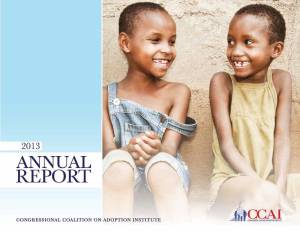
CCAI Releases 2013 Annual Report

Annual Report

The Congressional Coalition on Adoption Institute (CCAI) is proud to announce the release of our 2013 Annual Report. As we reflect on 2013, we are proud to highlight CCAI’s involvement in raising awareness of the millions of children in our nation and around the world without a loving family. From hosting a delegation of Guatemalan judges and child welfare professionals on a three city tour of the United States to organizing Congressional briefings and honoring the inspiring stories of adoption and family through our 15th annual Angels in Adoption Program, we believe we accomplished our mission to break down the barriers which prevent these children from realizing their basic right to a family. We hope you enjoy this brief review of all that last year entailed for CCAI!

To read CCAI’s 2013 Annual Report click HERE!

To make a donation in support of CCAI’s work or learn more about our partnership opportunities, click here or contact info@ccainstitute.org.

Wanted (and Needed): Home Sweet Home, At Any Age

As CCAI continues to celebrate National Foster Care Month and highlight the stories of older youth in foster care awaiting adoptive families, we are honored to share the story of one adoption professional who also bears the title of adoptive mom: Susan Stockham. 

DerricksAdoptionDayFamilybytheBay
Susan and adoptive son, Derrick, and their family.

  As an adoption professional, I have had the privilege of representing clients in over 2,500 adoptions.  While the majority has been newborns, the ones that have really grabbed my heart are the older children and adults.  My oldest adoptee was almost 60. There is no age limit on who can be adopted. The desire to be a part of a family does not extinguish with age. The tears that shed at these final hearings are often sweeter knowing these families are created by mutual choice, as older adoptees must consent to their adoption.

 Since 2012, approximately 23,000 kids age out of foster care each year without a permanent home, without family, and without a dependable adult to rely on for guidance and assistance. Many have not completed their high school education. Few complete college. They are at higher risks for homelessness, joblessness, incarceration, depression, and suicide. They are victimized physically, financially and many by identity theft before they even reach the age of 18. Many embark on adulthood with no one whom they can rely on. Many still want and need a family and a place to call home.

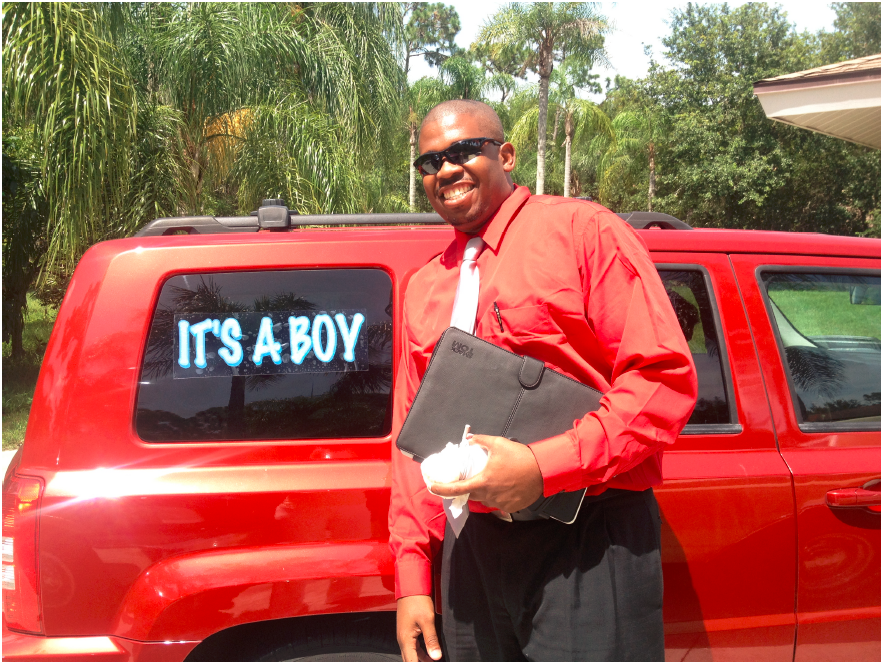
 For almost ten years we have opened our hearts and our home to a number of these kids. Some have stayed only a few weeks or months, some for many years. Our walls are full of photos of our ‘extended family’. But five years ago one very special young man came into our lives and asked us if we would adopt him. “You are already a part of our family,” I said. “But I want to make it legal. Permanent,” he replied. So we did. On our adoption day we decorated our car with “It’s a boy” stickers and drove to the court.  When the Judge asked my son why he wanted to be adopted, he responded, “You never know what a difference you make in someone else’s life. I am thankful that my Mom touched mine and took her time to invest in me.  As a result of her love and the love of my family, the pain of my years in foster care is beginning to be erased.  I want to be an advocate like her and let others know that someone believes enough in them, and to know that they are not defined by their past, but only by their dreams of the kind of person they want to be.”

 At 11:30 AM, on a beautiful sunny Friday, joined by fifty or more of our family and friends, the Judge legally pronounced us a family.  Our tears of joy were shared by everyone present. We celebrated for  three days so that those who could not make it to the hearing could still be a part of our becoming a family.

Derrick
Derrick on his adoption day.

 Our relationship has deepened over the years. My son has stretched us as much as we have him. In becoming a part of our family he has seen that being committed to one another does not mean that families have to be perfect, or always agree. Putting down permanent roots has given him the courage to spread his wings. When he first moved out of state, both homesick and overwhelmed, he called and said, “I can’t do this, I want to come home.”  After reassuring him that he could always move back home, we talked through the problems and by morning he was resolved to stay and conquer his fears. It has been a privilege to watch him grow into the confident man he has become. He is now working on his Ph.D. in public advocacy in order to be a voice for those in care, fighting to increase their chances of becoming successful adults.  He encourages everyone to adopt older kids, in or out of care saying, “When you adopt an older child at least you know what you are getting.”  But, that is one of those areas where we may not agree.  We never knew on the day he chose us just how much more joy he would bring into our lives.  This summer we will again be expanding our family by adopting one more young adult.  What will you be doing to increase the success for our kids aging out of care?  My sons and I encourage you to open your heart and your home to become a mentor or family to just one more.

Hear more voices of those who have aged out. 

Making Unadoptable Unacceptable

CCAI is founded upon the ideal that every child in the world both needs and deserves a safe, loving and permanent family. And we exist to identify the legal and policy barriers that prevent children from realizing this basic right. As we continue to celebrate National Foster Care month, it is important to remember that foster care is not meant to be a permanent solution for children. Children need families and yet of the 101,666 children available for adoption out of foster care in FY 2012, only 52,039 were adopted. Even more concerning, children age nine or older, while accounting for 48 percent of the total number of children in foster care, accounted for only 25 percent (13,184) of these adoptions (U.S. Department of Health and Human Services, 2013).

We are not the only ones who believe that there is no such thing as an unadoptable child.  Our friends and partners at the Dave Thomas Foundation for Adoption not only advance this message every day, they practice what they preach.  In celebration of National Foster Care Month, CCAI is excited to share the perspective of a social worker who has successfully recruited adoptive families for those children the foster care system said could not be adopted.  In his five years as a Wendy’s Wonderful Kids Recruiter in Wyoming, Bryan Cook has been instrumental in helping many kids find permanent homes.  Below he speaks of the tools he has on hand, as well as some of the challenges he faces in his daily work to connect children and youth with a loving forever family. 

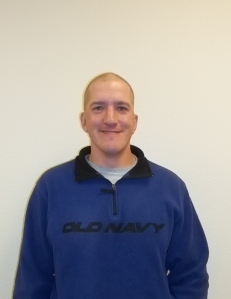
Bryan

Wendy’s Wonderful Kids (WWK) is a signature program of the Dave Thomas Foundation for Adoption. This program focuses on finding forever families for older youth in foster care. Our mantra is that every child/youth deserves a forever family, and our core belief is “unadoptable is unacceptable.” The Dave Thomas Foundation for Adoption was started in 1992 by the founder of Wendy’s Restaurants, Dave Thomas, and WWK began in 2004.

Many barriers exist in the search for adoptive families—Wyoming is the ninth largest state geographically but has the lowest population of any state, with roughly 500,000 residents. Because of our small population, there are fewer potential adoptive families, and our communities are spread out and rural. Many of the smaller communities in our state may not have the therapeutic, medical or educational services that youth on our caseloads will need when transitioning into their adoptive families.

Wyoming has a lack of pre- and post-adoptive support services for families. This lack of support often reduces the rate of permanency for youth from foster care. I’ve needed to become knowledgeable about all of the services provided in a given city, and researched many online support resources to provide this information to families.

I must be very creative in my search for families. I often partner with foster care coordinators and private adoption agencies to locate prospective families. I also use newspaper, radio, television and even social media to raise public awareness of the need for adoptive and foster families. I do a lot of file mining to locate birth family members for the youth as well as other connections. I then build a genogram for the youth and reach out to the identified family members. Building a genogram and family tree also helps the youth gain a sense of belonging and self. I contact large employers throughout our state to speak with their employees about adoption, and reach out to churches and religious organizations to educate them about the need.

WWK’s child-focused recruitment technique stresses the importance of face-to-face meetings with the youth as often as possible to build a strong relationship. It also helps recruiters better understand the needs of the children and identify the best possible family. This practice produces strong results and makes the youth feel as though they are part of the recruitment process and that their voices are heard. It’s especially important for the older youth on the case load because they typically have a history of multiple placements and abandonment. They long to feel as though they belong and to have lasting relationships.

Late last year I was able to attend the high school graduation for a young man on my caseload. It was a 600-mile round trip in wintry conditions, but I made it. I had promised him I would make it. His caseworker and family members did not attend the ceremony, so he was very glad to see me. By having a strong relationship with him I was able to be there on the proudest day of his life. We were able to take some pictures together, and we even ate the cake that he had made for the occasion. It made me very happy to do it, and I realized that even the smallest of gestures make a world of difference. Moments like this strengthen my resolve and remind me how important our job is.

I am proud to be a youth advocate, mentor and adoption recruiter for youth growing up in foster care. It truly is an honor.

Bryan Cook
Wendy’s Wonderful Kids recruiter
Wyoming
 

Celebrate Family

Celebrate Family
By Kathleen Strottman

The word for family in Spanish is “familia”, in Mandarin Chinese its “jia”, in Russian its “sem-ya”, in Indonesian its “Kelurga” and in Swahili the word for family is “jah-mee.” In all 6,500 spoken languages in the world, there is a word for family. While the word family is said differently in each, its importance to children is universal.  Everywhere in the world, the family is known by all as the very basic unit of society, the unit into which children are born and through which they are meant to reach their full human potential.

When speaking of family, American comic George Burns once said, “Happiness is having a large, loving, close-knit family …who lives in another city.”  And humorist, Erma Bombeck described the family as “a strange little band of characters trudging through life sharing diseases and toothpaste, coveting one another’s desserts, hiding shampoo, borrowing money, locking each other out of our rooms, inflicting pain and kissing to heal it in the same instant, loving, laughing, defending, and trying to figure out the common thread that bind us together.”  Former First Lady Barbara Bush put it perfectly when she said “family means putting your arms around each other and being there.”

These heart-felt tributes to family are matched equally by scientific evidence that a loving family plays a fundamentally important role in the development of a child.  Co-founder of Head Start, Dr. Urie Bronfenbrenner put it this way: “In order to develop normally, a child requires activity with one or more adults who have an irrational emotional relationship with the child. Somebody’s got to be crazy about that kid. That’s number one. First, last, and always.”

I have been blessed to attend some of the best schools in the United States.  And in the 25 years of my education, I have learned many of life’s certitudes.  I learned that the square root of 144 is 12.  I learned that every sentence must have a subject and a verb.  And I learned that the force that takes an object from a higher point to a lower one is called gravity.  I cannot tell you precisely when it was that I learned that family matters.  Maybe it was through the countless times that my parents demonstrated their “completely irrational love” for me.  I never once doubted that they would be there for me. I grew up completely secure in the idea that they would always protect me. And because they showed me every single day how special I was, I grew up believing that I could do anything.

Maybe I have learned how much family matters when I became a mother to three children. Like my mother before me, I would go as far as to lay down my own life for my kids. Believe me, Dr. Brofenbrenner, I know what you mean by CRAZY.  Is there a parent reading this blog who would not admit to being crazy in love with your children?  What makes the love we feel for our children so amazing is that it is a pure and unconditional love, like no other we have experienced.

And that is why CCAI exists.  Because we believe with all our hearts that every child in the world not only deserves to know that kind of love, but needs to.  We know that a nurturing relationship with a parent is not a luxury meant only for a precious few, but a biological necessity of all children everywhere.  And our heart is heavy with the knowledge that there are children all over the world who because of cultural and policy barriers don’t know that kind of love.  Some don’t have it because they have a disability and their parents live in a place where they are told to believe these children are cursed.  Others don’t have it because they are older, and society has told them to just hold on for the day that a family is no longer necessary.

And we think that is simply unacceptable.

In 2011, the almost 700 people in attendance at our 13th annual Angels in Adoption dinner were brought to tears as national award winner Scott Fujita, a six foot five, 250 lb. linebacker for the Cleveland Browns talked about what his five foot two Japanese American parents meant to him.  He said, “you can’t put a face on love and you can’t tell me what a family is supposed to look like, but we all certainly know what a loving family is supposed to feel like.”

Take a minute today to watch the video. I hope it reminds you of how important family has been in your own life and inspires you to do more to help every child in the world know this kind of crazy love.