What does Mother’s Day mean to a former foster youth?

Lacy, a former Foster Youth Intern, shares what Mother’s Day means to her this year as she is in the process of being adopted at 27 years old.

In thinking about Mother’s Day, and in finalizing my adoption with my long time parents, I was asked about what Mother’s Day means to me this year, and to me that means thinking about what has changed since getting closer to finalizing the adoption.

To be honest, I’m not sure that much about the relationship has changed – my adoptive mother has always been there, been available when I needed to talk to someone about life and what that bring, and has always had an open door for me to go through when needed.  I do think, however, that my willingness to accept these things from her has changed dramatically over the years. Despite me leaving their home upon turning 18 to attend college, and going through years where I didn’t think I needed parents (because I knew everything I needed to know at 18, right? ) there availability and being there has been unwavering.
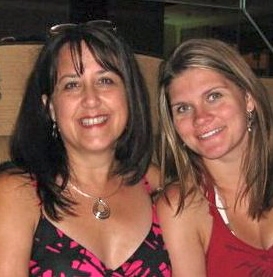
Lacy and her mom

Over time, seeing that consistency, has allowed me to trust that consistency a little more every time I needed it. So despite the times that I thought I was completely alone, and that I had no one, the truth is the relationship and security I so desperately sought was always there – it was a matter of me being open to it. In regards to Mother’s Day, I feel that I am still learning what a mother is, more importantly what a mother role looks like in my life, but because of the solidification that adoption brings, and the consistency that my adoptive parents have brought to my life, I have no doubt that whatever I think a mother is to me, I know that she will be there.

Happy Mother’s Day!!

–Lacy Kendrick Burk

Social workers make a difference…

Throughout March, Social Work Month is being celebrated by social work professionals and students across the country.  I wanted to take this opportunity to highlight how social workers are helping children to remain a part of or find safe and loving families.

One of our former Foster Youth Interns, Christina Miranda, recently spoke at our New Congress Forum to address legislative priorities for this Congress.  One of the areas needing reform that she highlighted was the child welfare workforce.  Christina said that social workers and caseworkers need more support to achieve the goals of their positions.  “Social workers have a major influence on making critical and life changing decisions for families and youth.  They need to have skills and training to inform their decision-making and ultimately promote the best interest of children and families.”

Christina went on to explain that as a social worker herself, she has seen the qualifications for caseworker positions vary from state to state, or even between different regions of the same state.  “In some localities, you have social workers with a Master of Social Work degree, but in other areas, you have caseworkers doing the same job, but with a Bachelor’s degree in Art.”  These caseworkers do not have the educational background to inform their work.

Survey results published in 2005 by APHSA on the child welfare workforce showed that:

  • nearly 10% of all child welfare worker positions remain vacant, which requires existing workers to maintain higher caseloads than national or state standards
  • the average child protective services worker’s tenure is about 3 years, meaning that some workers are “in foster care” less time than the children they serve
  • the average incumbent child welfare caseworker’s salary was about $35,000, which is less than teachers, police officers, firefighters, or other public service positions

While supporting and developing the child welfare workforce is an important part of child welfare reform and promoting better outcomes for youth in care, Christina did not see specialized professional training and support end with social workers.  “Everyone from child protection to child welfare administration, from guardian ad litems to family court judges, from state legislators to Members of Congress need to be aware of issues affecting children in foster care.”


Perspectives on this Congress’ legislative priorities

In an article from last week, CCAI’s shared in part the discussion that took place at our 112th New Congress Forum where Members of Congress addressed their legislative agendas for this year.  It was a vigorous and insightful hour-long discussion.  Perhaps the most captivating out of all of the speakers at the round table were the individuals who had direct experience with the foster care system or domestic and intercountry adoption.

Alixes Rosado bravely began with his story explaining while life on the streets was tough he felt the streets were safer and more loving than some of his foster homes.  After hearing this, Sen. Mary Landrieu expressed her interest in working to improve the foster parent recruitment processes across the nation to promote quality homes and better support foster parents.

Christina Miranda, also a former foster youth, changed schools 6 times between the age 11 and 18, and discussed the difficulties this school instability posed to her educational success.  Rep. Michele Bachmann highlighted a piece of legislation she introduced last Congress and plans to continuing working on, “School Choice for Foster Kids Act which would allow foster parents to send any foster child to his or her original school.”  To this, Sen. Landrieu said she would introduce a companion bill in the Senate to encourage the passage of this law.

Panel of individuals who shared their personal stories.

Samuel and Mildred Stewart adopted 3 children from foster care.  They stressed the need for mental health services to be provided to adopted children, as they have and continue to struggle to find services for their son.  She suggested how helpful it would be for families if parents had services, such as support groups or respite care.

International adoptive parent, Jeromy Smith, told his moving story of adopting his daughter and son from Kenya.  “Orphans struggle not only with physical poverty, but with relational poverty. Every night millions of kids—both those with empty stomachs and full stomachs—go to bed wondering if anyone, anywhere will ever love them.  Their souls ask the question, ‘Do I even matter?”  Read his full remarks here.

Nicole Dobbins, Executive Director of Voice for Adoption and former foster youth, stated, “I sometimes have to pinch myself when I say ‘executive director’ because it is hard for me to believe sometimes, when I think about where I have come from. I am delighted to share in the context of both my professional and personal capacity, if it will help push the agenda on foster care and adoption policy, because waiting children truly deserve to be at the forefront of every discussion.”  Read her full remarks here.

Executive Director of C.A.S.E., Debbie Riley shared that from her experience as both an adoptive mother and adoption  professional, “according to adoptive parents, one of the greatest post-adoption support needs is mental health services provided by someone who knows adoption.”

These speakers brought most of the room to tears with their personal stories and helped Members realize that the 112th Congress has some work ahead of them to improve foster care and adoption.  Members shared their commitment to use their position to bring about change for these children and families.

Leaders come together for the sake of orphans

Last week, CCAI hosted a reception to highlight the need for the world’s orphans to find forever families and to encourage leaders and advocates to continue their work on these issues.  This reception took place the evening before the National Prayer Breakfast and was attended by federal policymakers, business executives, and world leaders.  Sen. Mary Landrieu and Sen. James Inhofe, the Co-chairs of the Congressional Coalition on Adoption, spoke on behalf of Congress’ adoption caucus highlighting the need for legislation to be created that will promote the well-being of children in need of families.

Sen. Landrieu reminded us all that these orphans do not have people to speak on their behalf, rather, it is our duty to speak out for these children in need:

Sen. Inhofe shared how his adoptive granddaughter from Ethiopia has enlightened his work on adoption policy:

Pictures from the event:

Sens. Landrieu and Inhofe
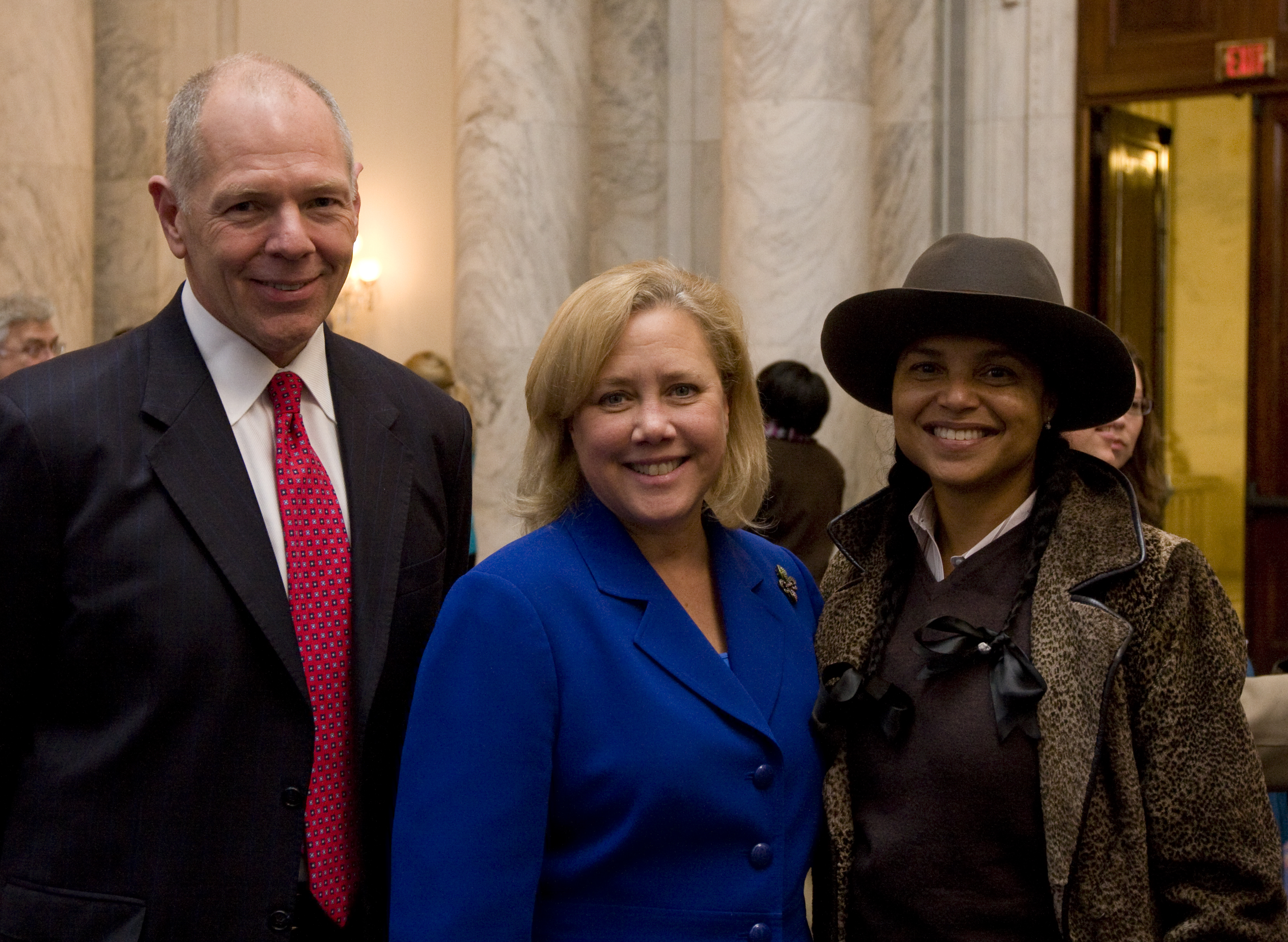
CCAI Board Member Elmer Doty, Sen. Landrieu, Actor and Foster Care Advocate Victoria Rowell
CCAI Executive Director Kathleen Strottman


Sen. James Inhofe with attendees
Attendees

Your daughter is so lucky to have you.

As I was riding the train home from work last night reading essays from some of the 120 Foster Youth Intern (FYI) hopefuls, a conversation behind me caught my attention.  There was a man on the phone evidently talking to his soon-to-be college graduate daughter.  He was giving her advice on upcoming job interviews, telling her how many days to wait before she should follow-up, even right down to a specific reply when turning down a job offer.  I sat there reflecting on how beneficial just one conversation like this would have been to the foster youth whose life stories I was reading.  I wanted to turn around and say to the man, “your daughter is so lucky to have you.”

I went back to reading the FYI essays wondering where these former foster youth would receive guidance such as this that each young adult needs.

One applicant spoke about the need for people to step up and offer guidance to youth who have the desire to attend college, “This was a challenge I had to face alone and I think that many youth give up on this dream because they don’t know where to start.  I think if educational opportunities were provided to youth, they would take it.”

Another applicant wrote, “Many times foster youth only need someone to take an interest in their future and well-being.  Providing them with tools and resources will help to ensure youth are on the path to receiving degrees instead of homelessness, unemployment, or incarceration, as many foster youth face once they are emancipated.”

Instead of feeling proud and excited about being celebrated for the achievement of graduating from high school and being accepted into college, I was troubled by the fact that I knew that there were many other foster youth should have been there with me.

In a few short months, the 2011 Foster Youth Interns will arrive in DC full of passion and ideas for improving the road ahead for those still left behind in the system.