
Joy. Hope. Peace. Family.

Happy Holidays from your friends at CCAI!

Dear Friends:

Meet one of CCAI’s Angels in Adoption™, the Merkouris Family. Until earlier this month, U.S. immigration law prevented their two older children from being adopted with the rest of their seven siblings. Recognizing this law as a barrier preventing these children from finding a permanent, loving family, Congress amended this law and now thousands of older children can find homes through adoption.  This is just one of the many examples of CCAI’s work. Every day we are working to identify the legal and policy barriers that prevent children from realizing their basic right to family and ways that federal policymakers might eliminate these barriers.

Sadly, there are still laws and policies that stand between a waiting child and a loving home.  With your generous support, CCAI can bring joy, hope and peace into the lives of orphans and foster children around the world. As the year draws to a close, please consider becoming a monthly or quarterly CCAI partner, or help to fulfill CCAI’s mission by sending in a year-end gift.

Thank you for your past, present and future involvement, without which CCAI would not exist.  Our friends, volunteers, and donors allow us to provide the necessary programs that bring about actual change in the lives of orphans and foster children around the globe. We are so thankful for you. Have a wonderful holiday!

Warm wishes,

 

Kathleen Strottman

Executive Director
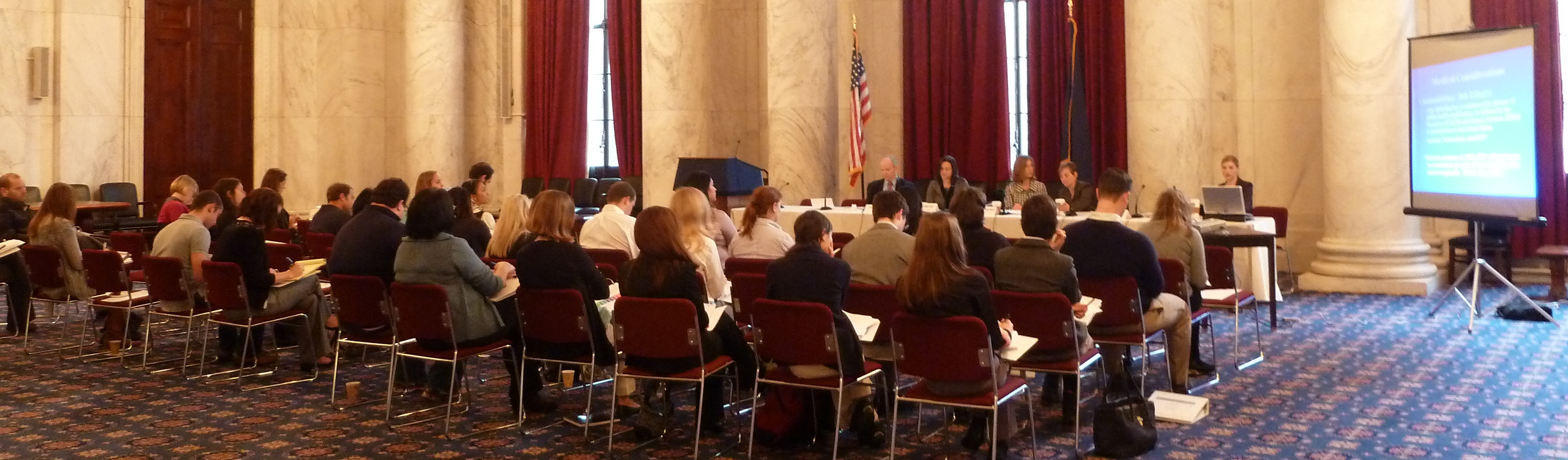
CCAI hosts intercountry adoption training

On Friday, December 10th, CCAI hosted a training for Congressional staff and caseworkers who handle intercountry adoption issues.  During the training, the Department of State and U.S. Citizenship and Immigration Services provided in-depth information about the international adoption process.  Our goal was to better equip Congressional staffers as they serve constituent families who are in the process of adopting.

Legislation that relates to immigration, intercountry adoption, and child citizenship was discussed, as well as the forms constituents need to file, and the visa processing.  Congressional staff had questions ranging from how legal permanent residents are treated versus U.S. citizens when adopting internationally, to where USCIS forms must be filed, to how a disrupted adoption affects prospective adoptive parents who are seeking to adopt again.

Over 50 Congressional offices participated in this training.  CCAI received positive feedback from attendees that the training was an effective tool to educate them on these processes and the unique cases of their constituent families.  CCAI is pleased to work with the Department of State and USCIS to make these trainings possible in an effort to serve adoptive parents and prospective adoptive parents.

Visit the Department of State’s Adoption website or USCIS’s Adoption pages for more information on their involvement in the intercountry adoption process.

foster youth internship opportunity

To highlight that CCAI is accepting applications for our 2011 Foster Youth Internship program now through January 7th, I wanted to share a quick video clip and update from Nicole, one of our 2010 FYIs.

During the program, Nicole shared that she faced many barriers while in foster care, such as lack of educational stability, which as a result led to her dropping out of high school, though she later earned her GED.  She lost contact with her sisters because of the lack of sibling rights that exist.  In addition, she was never taught basic life skills, such as how to cook.  These barriers and recommendations for ways the system can address them was included in the 2010 FYI Policy Report that was distributed to policymakers and advocates across the country.

Nicole was an exceptional FYI intern while spending the summer in DC, and was offered a permanent position with her placement where she continues to work today.  Just recently, she was featured on Ms. E HeartLady’s talk radio show to discuss her experiences in foster care.  Here at CCAI, we are proud to call Nicole a former FYI intern, and are excited to see where her experience and passion will take her in the future!

If you know of any former foster youth who may be interested in this program, please encourage them to visit http://www.ccainstitute.org/fyiapply or contact CCAI.

What parents are saying about foster care adoptions

Child Trends, with support from the Dave Thomas Foundation for Adoption, hosted a webinar to examine key findings from the 2007 National Survey of Adoptive Parents (NSAP).  This survey was the first-ever to provide information about the well-being of adopted children and their families.  While the survey included on all types of the adoption, Child Trends’ webinar focused on foster care adoptions.

Some key findings include:

  • Nearly half of the children adopted in the U.S. are adopted by a relative and/or someone they knew prior to the adoption.
  • Among children adopted from foster care who have birth siblings, two out of five were adopted with one or more birth sibling.
  • Nearly half of all children adopted from foster care live in low-income households, a much higher percentage than any other form of adoption.
  • Cost of adoption was an important factor in choosing to adopt from foster care.
  • Majority of adopted children fare well on social/emotional indicators, but some problems markedly higher among those adopted from foster care.

Kathleen Strottman, CCAI’s Executive Director, spoke about how these findings will impact federal policy.  The number of children adopted out of foster care each year has improved only slightly over the past several years, therefore, it is necessary to use the data from this survey and information from the practice field in order to pass legislation that will promote foster care adoption.  Strottman pointed out that this study is important in identifying the motivation and needs of adoptive parents in order to address these areas.  For example, the cost of the adoption and the adoption subsidy was a significant determining factor for many adoptive parents.  Knowing this, advocates need to inform policymakers about the importance of the adoption subsidy in an effort to further promote adoption.

To view the full webinar, click here.

Forgotten Children: International Adoption and the Global Orphan Crisis

The Daily Beast and Urban Zen co-hosted an event called Forgotten Children: International Adoption and the Global Orphan Crisis in an effort to draw attention to the topic.  Experts from the field of orphan care and adoption spoke about the growing need to address the orphan crisis.  This article summarizes the event and includes video clips of the expert panel.

Dr. Jane Aronson who has been nicknamed ‘the orphan doctor’, spoke about the realities of adoption from a health perspective.  She raised the concern that prospective adoptive parents are often not honest with themselves about their abilities related to the needs of the child they are seeking to adopt.  Aronson, along with others, called for better post-adoption services.

Deborra-Lee Furness, co-host of the event, wife of actor Hugh Jackman, and adoptive mother, discussed her view that adoption should be the third best option, after placing a child with their biological family, then placing a child with another family in their home community.

Filmmaker Deann Borshay Liem who was adopted from South Korea when she was 8 years old spoke about the impact of international adoption in her own life.  Her unique adoption story s the focus of two POV documentaries that aired earlier this year on PBS.  Liem raised the point that adopted children grow up, and as an adult adoptee she shared, “I gained tremendously by coming to this country.  But on the other hand, I lost everything I loved by coming to this country”—her family, identity, language, and even memories. “One does not replace the other.”  While sharing this perspective, Liem urged that the best interest of a child it is critical for children to have families and secure homes.

Dr. Sophie Mengitsu, who operates in Ethiopia, offered her suggestion that agencies that help international adoption must also help the communities from which these orphans come.  She went on to highlight the negative impact on development that is caused by living in an institution.

Ultimately, several possible solutions to improve international adoption and the global orphan crisis were raised that range from supporting the struggling communities to examining the root causes to providing better training for orphanage workers.

It is imperative to invest in children around the world, and to not delay in making this investment.

CDC launches health guidance site for children adopted internationally

The Center for Disease Control (CDC) has launched a new part of their website to assist prospective adoptive parents as they plan to bring home a child who they adopted internationally.  There is information about vaccines, medical exams, class A conditions, and finding a health care provider once back home in the U.S.  Also included is a section for news, updates, and useful links.

From the Center for Disease Control website:

Each year, parents in the United States adopt more than 12,000 children from all over the world. Adopting a child is a wonderful and exciting event for families. The health of the adopted child is one of many issues that parents need to address during the adoption process. Parents should be prepared for possible challenges during the adoption process and be aware that sometimes the process can be lengthy.

Children born in other areas of the world may have different health problems from those of children raised in the United States. Children may have been exposed to vaccine-preventable diseases that are rare in the United States. Some children are adopted from countries with high rates of diseases, such as tuberculosis, hepatitis, and HIV/AIDS. For all these reasons, knowing as much as possible about a child’s health will help parents get the right treatment and care for their child. Ensuring that adopted children are healthy will also help prevent the spread of dis

To visit the site, click here.